
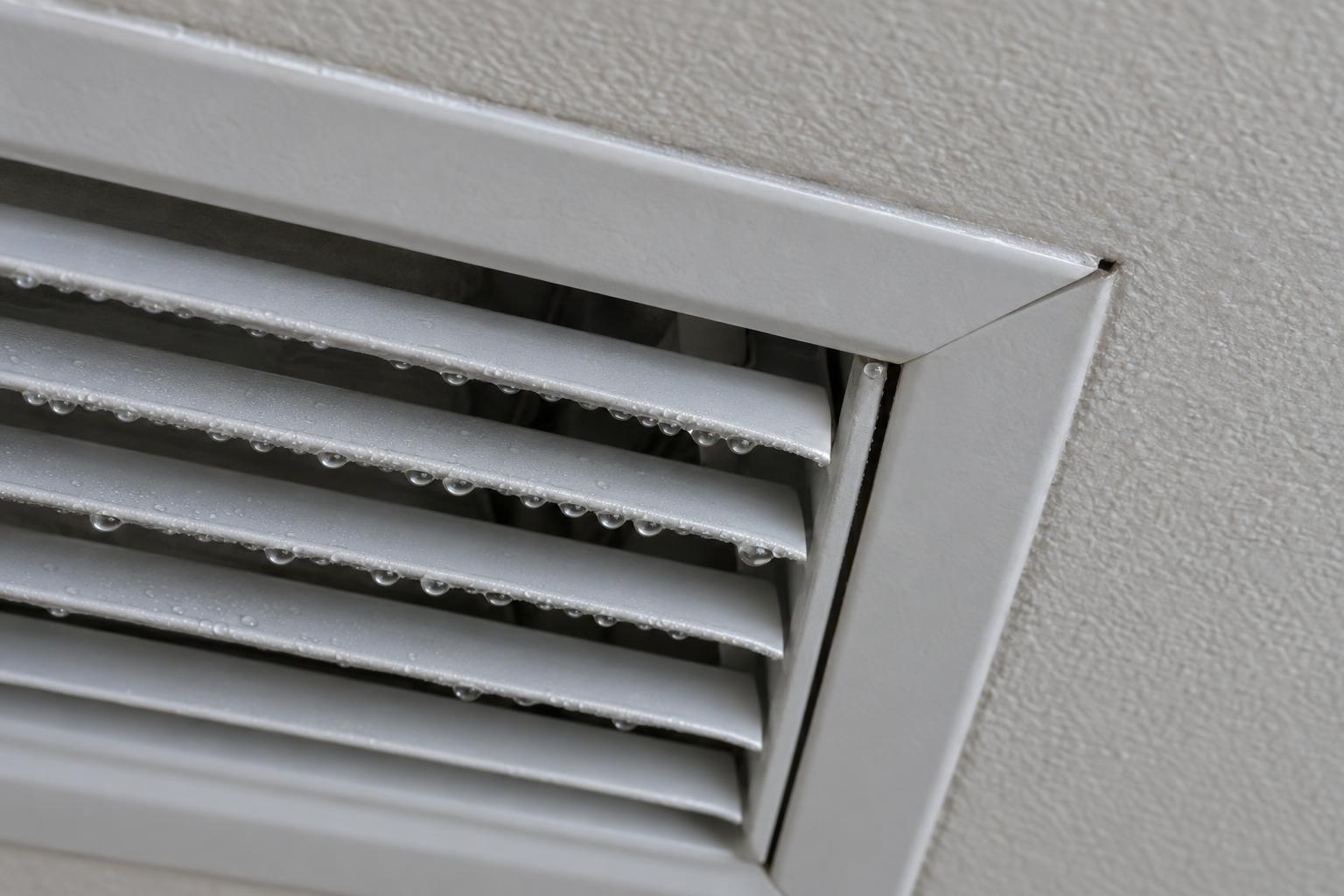
Noticing air vents sweating on ceiling drywall or hallway supply grilles is a frustrating sight in coastal Florida homes—especially when rust-tinted droplets stain freshly painted ceilings or drip onto tile floors. Condensation forms on metal supply registers for the exact same physical reason water beads on the outside of an iced glass on a humid patio: the metal grille surface has cooled below the dew point of the air touching it. While condensation on an attic air handler cabinet happens around the central blower housing itself, water beading on ceiling or high-wall supply registers inside living spaces points to a localized clash between cold conditioned supply air and warm, moisture-laden air right at the room ceiling boot.
Why Ceiling Supply Registers Drop Below the Dew Point
During humid Brevard County afternoons—and even during sticky November sea-breeze swings—outdoor dew points regularly hover in the upper 60s and 70s. Meanwhile, a healthy residential air conditioner delivers supply air to room registers around 52 to 58 degrees Fahrenheit. Normally, dry conditioned air inside your living room keeps indoor relative humidity near 45 to 55 percent, putting the indoor dew point safely below the temperature of your metal vent louvers.
When unconditioned attic air sneaks around the drywall cutout or indoor humidity climbs above 60 percent, moisture-heavy air contacts that 55-degree metal register face and condenses into liquid water. Guidance from the U.S. Environmental Protection Agency on indoor moisture control emphasizes stopping cold-surface condensation at its source so damp drywall paper around ceiling cutouts never becomes a foothold for microbial growth.
Five Root Causes of Sweating Supply Grilles in Florida Homes
Need help with AC & heating?
Inlet Mechanical’s licensed techs serve Brevard & Indian River with fast, dependable service. Estimates on new system installs and replacements are free.
Because ceiling registers sit right at the boundary between your 74-degree living space and a 110-degree humid Florida attic, technicians inspect five distinct trouble spots when diagnosing wet vents:
- 1. Unsealed gap between the metal duct boot and ceiling drywall: This is the single most common culprit in slab-on-grade Florida houses with attic ductwork. If a quarter-inch gap remains between the sheet-metal boot lip and the drywall ceiling cutout, hot, muggy attic air gets pulled straight down onto the back and edges of the cold metal register.
- 2. Missing or compressed insulation around the attic supply boot: Even if the drywall edge is caulked, bare galvanized sheet metal sitting exposed above ceiling batts chills rapidly during long cooling cycles, sweating on the outside of the boot and wicking moisture down onto the grille frame.
- 3. Slow supply airflow from clogged filters, closed dampers, or dirty coils: When airflow drops across the indoor evaporator coil, the smaller volume of air leaving the ducts becomes abnormally icy—sometimes below 48 degrees—chilling metal vent louvers well below normal room dew point.
- 4. High indoor relative humidity from open doors, bath fans, or fan “ON” mode: Leaving the thermostat fan switch set to continuous “ON” instead of “Auto” blows moisture off the wet evaporator coil right back into the house between cooling cycles, pushing indoor humidity high enough to condense on registers when the compressor restarts.
- 5. Leaky return ducts pulling humid attic or garage air into the system: According to ENERGY STAR duct-sealing recommendations, unsealed duct joints and return leaks degrade comfort and force cooling equipment to battle constant infiltrating moisture.
Safe Checks Homeowners Can Do From Inside the House
Before climbing into a hot attic or replacing grilles unnecessarily, check four straightforward items from floor level:
- Confirm your thermostat fan setting is on “Auto”: Switching the blower from “ON” back to “Auto” allows coil moisture to drain outdoors through the PVC condensate line at the end of every cooling cycle instead of re-evaporating into your rooms.
- Inspect the return air filter and open closed room louvers: Replace a matted pleated filter and make sure supply louvers across the house are fully open. Closing vents in spare bedrooms raises duct static pressure and drops air temperature at the remaining open registers.
- Check whether only one vent sweats or the whole house sweats: A single dripping ceiling grille in a kitchen, bathroom, or sunroom usually points to an unsealed boot gap or local steam source, whereas moisture across five or six rooms points to system-wide airflow or indoor humidity control issues.
- Remove the two grille screws (with the system off) to check the drywall edge: If you can see fuzzy attic insulation or feel warm attic air around the perimeter between the metal boot collar and the drywall opening, attic air infiltration is chilling that moisture right onto the grille.
How Professional Duct Sealing and Insulation Stop Vent Condensation
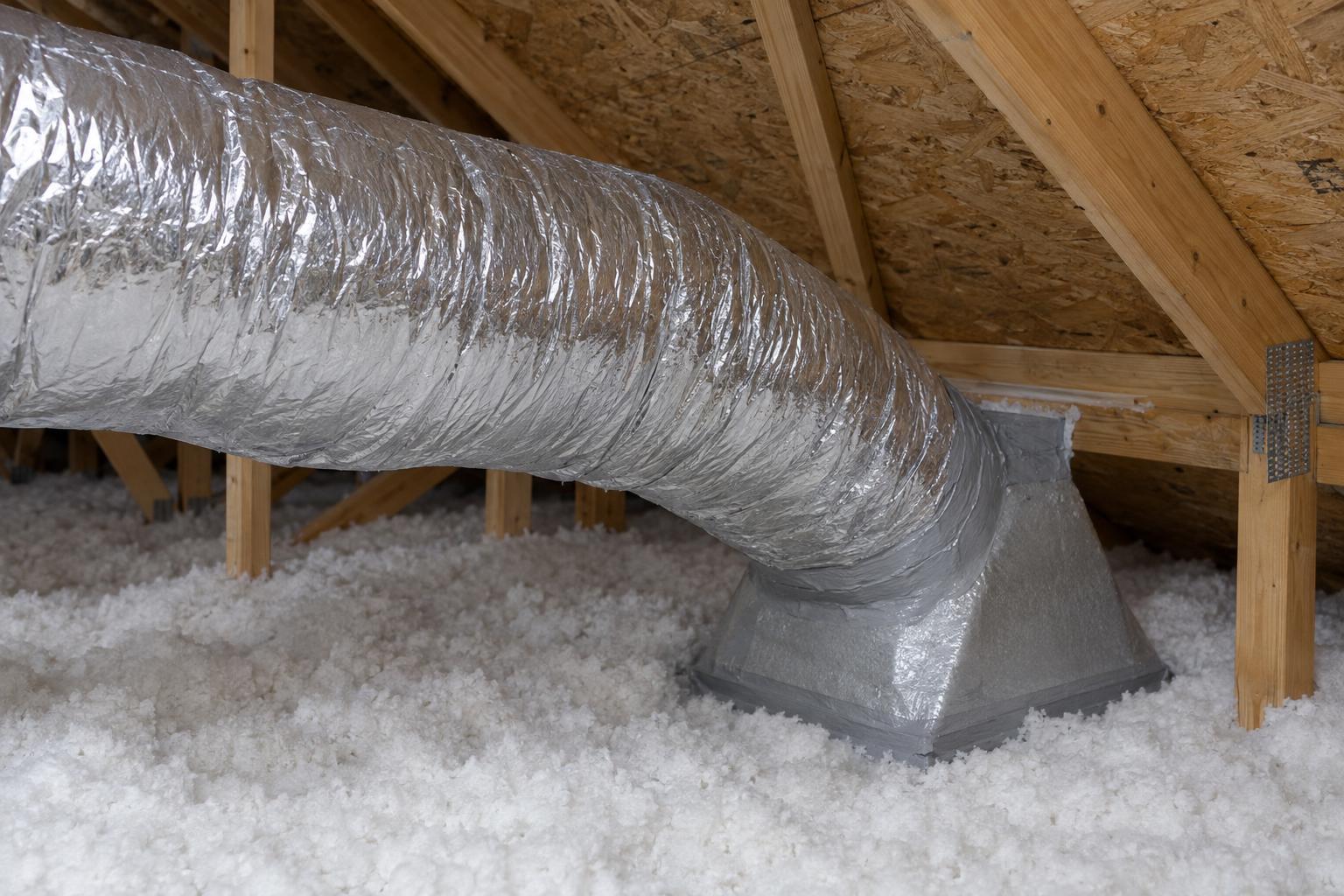
Lasting repair seals the thermal and air barrier from both sides of the ceiling plane. During residential duct sealing in Palm Bay, technicians seal the perimeter joint between every sheet-metal supply boot and the ceiling drywall using HVAC-grade mastic or closed-cell foam sealant so humid attic air can no longer reach the register flange. Above the ceiling, crews wrap exposed metal boots fully in vapor-jacketed duct insulation, tape all vapor-barrier seams with UL-181 foil tape and mastic, and restore displaced attic insulation neatly around the boot collar.
Where metal grilles sit directly near exterior patio sliders that open frequently to poolside traffic, swapping corroded steel registers for composite or resin supply grilles can provide extra resistance to brief humidity spikes—provided the underlying boot gap and airflow restriction have already been corrected. Technicians also measure static pressure, blower speed taps, and temperature split across the evaporator coil to ensure supply air stays cold enough to dehumidify without super-chilling metal ductwork.
When Whole-Home Dehumidification Helps During Shoulder Months
In mild November, March, and April weather along the Indian River Lagoon and barrier islands, outdoor temperatures may hover around 75 degrees while outdoor humidity sits above 80 percent. Because the house gains very little sensible heat on mild overcast days, your central air conditioner runs short cycles that satisfy the thermostat before pulling enough moisture out of indoor air. Pairing sealed ductwork with a dedicated whole-house dehumidifier keeps indoor relative humidity steady year-round without overcooling bedrooms just to dry the air.
Frequently Asked Questions About Sweating Air Vents
Why is only one ceiling air vent sweating while every other room stays dry?
Isolated condensation on a single register almost always traces back to an unsealed gap between that room’s metal duct boot and the drywall ceiling cutout, a loose vapor wrap on that branch boot in the attic, or nearby moisture from a shower or kitchen range.
Will switching metal ceiling registers to plastic vents solve the problem?
Composite or resin grilles conduct less cold than bare stamped steel and will not rust, so they help near exterior doors, but they do not replace sealing an open attic boot gap. Left unsealed, humid attic air will still condense inside the cold metal boot above the plastic grille and stain the surrounding drywall.
Can a dirty air filter really make supply vents sweat?
Yes. A clogged return filter starves the blower of airflow, causing air moving slowly across the cold evaporator coil to drop well below normal supply temperatures and chill metal registers below the room’s dew point.
Why do my vents sweat worse when the thermostat fan is set to ON?
When the compressor cycles off, the indoor coil is still covered in cold water droplets. Running the blower continuously in ON mode evaporates that water straight back into your ductwork and rooms, spiking indoor humidity right before the next cooling cycle chills the vents.
Stop Sweating Vents in Your Palm Bay or Melbourne Home
Tired of wiping ceiling registers or worrying about drywall stains from air vents sweating in your home? Call Inlet Mechanical at (321) 723-0858 or schedule residential HVAC and ductwork service from our shop at 2180 Franklin Dr NE, Palm Bay, FL 32905—serving homeowners across Palm Bay, Melbourne, Rockledge, Titusville, and Brevard County.
Talk to a Licensed Inlet Mechanical Pro
Whether it’s a repair, an upgrade, or a question, our team is ready to help homeowners and businesses across Brevard & Indian River County.
Licensed FL Mechanical (CMC1250858) · 85+ years combined experience · Free install & replacement estimates
Written & Reviewed By
Inlet Mechanical Team
The Inlet Mechanical team brings over 85 years of combined experience in HVAC, plumbing, and mechanical construction across Florida. Our licensed professionals hold Florida Mechanical HVAC License (CMC1250858) and Florida Plumbing License (CFC1433105), along with EPA Section 608 certifications. Based in Brevard County, we serve residential, commercial, and industrial clients with expert knowledge of Florida building codes, climate-specific HVAC solutions, and local plumbing requirements. Every article is reviewed by our licensed technicians to ensure accuracy and practical value for Melbourne-area homeowners and businesses.
Last Updated: November 28, 2026