
Reading the Sweat on Your Air Handler Cabinet
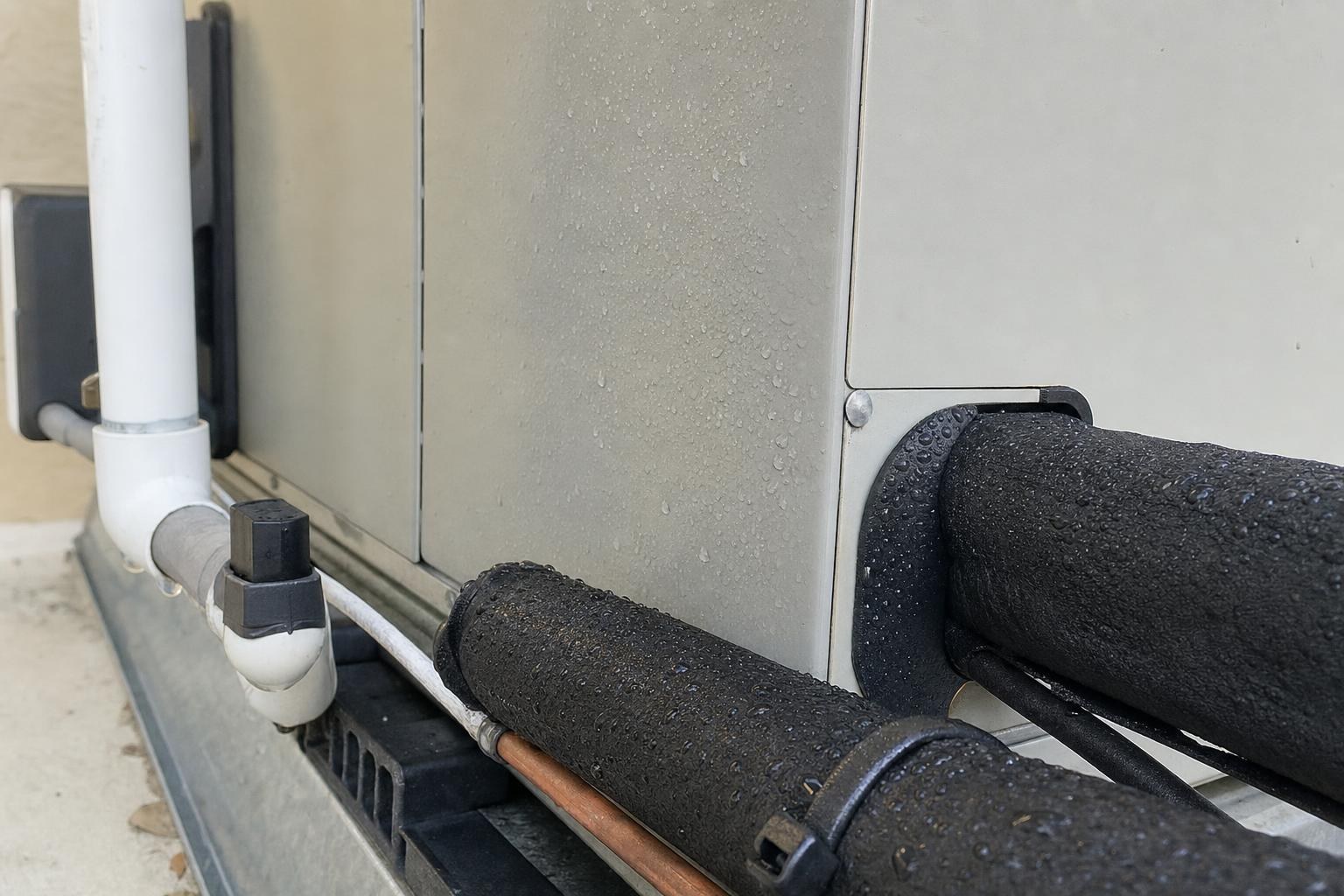
Air handler cabinet sweating is one of those symptoms that homeowners in Palm Bay and across Brevard County often dismiss as a minor annoyance, only to discover later that persistent moisture had been quietly soaking attic insulation or staining the air handler’s exterior panels for months. Unlike a dripping condensate line or a wet drain pan — which are problems that occur inside the unit — cabinet sweating is condensation forming on the outer metal shell itself. That distinction matters because the causes, the risks, and the corrective steps are meaningfully different. This article walks through why the cabinet surface becomes a condensation magnet in a Florida attic, what conditions have to line up for it to happen, and what a qualified technician would look for during a proper evaluation.
How Florida Attic Conditions Set the Stage for Air Handler Cabinet Sweating
Need help with AC & heating?
Inlet Mechanical’s licensed techs serve Brevard & Indian River with fast, dependable service and free estimates.
Florida’s long cooling season means your air handler runs for far more hours per year than a unit in a northern climate would. That extended runtime keeps the cabinet surface consistently cold — often well below the dew point of the surrounding air. In a Brevard County attic during summer, outdoor humidity regularly pushes relative humidity into ranges where even a briefly cold surface will attract visible condensation.
Attics compound the problem in a specific way. Unlike a conditioned mechanical room, an unconditioned attic is essentially a large outdoor-like space with a roof. Solar gain through the roof deck drives attic air temperatures very high during the day, and that hot air holds an enormous amount of moisture. When the air handler runs and cools its cabinet exterior, moist attic air contacts that cold surface, drops below its dew point, and deposits liquid water. The effect is very similar to what happens on a cold glass of water left on a table in July — the physics are identical, just playing out on sheet metal in a tight attic space.
Salt air from the Atlantic coast adds a secondary layer of concern for homes in coastal Palm Bay and Melbourne Beach. Salt-laden moisture is slightly more corrosive than fresh-water condensation, and if cabinet sweating is left unaddressed, it can accelerate surface rust and eventually compromise cabinet seals that are designed to maintain unit airflow integrity.
Four Specific Conditions That Allow Cabinet Condensation to Form
Understanding the distinct conditions that contribute to cabinet sweating helps clarify why one home develops the problem and an otherwise similar home does not.
Inadequate cabinet insulation. Air handlers are shipped from manufacturers with a layer of internal lining designed to keep the cabinet wall from dropping too far below ambient temperature. Over time, that lining can compress, separate, or absorb enough moisture to lose effectiveness. When the thermal barrier between the cold supply air and the cabinet shell degrades, the outside surface gets cold enough to attract condensation even on moderately humid days.
Undersized or restricted return airflow. When a system cannot pull enough return air across the evaporator coil, the coil operates at a lower-than-designed temperature. That abnormally cold coil chills the surrounding cabinet components more aggressively than the system was engineered to do. A clogged filter is the single most common contributor to this scenario, but undersized return grilles, closed interior doors, or collapsed return ductwork can all produce the same effect.
Refrigerant charge issues. A system that is undercharged with refrigerant often runs the evaporator coil at a suction pressure lower than the design specification. This drops coil and cabinet temperatures further than intended. Refrigerant management requires proper certification and equipment, so diagnosis and correction are tasks for a licensed HVAC technician, but it is worth noting as a mechanical condition that directly influences how cold the cabinet surface becomes.
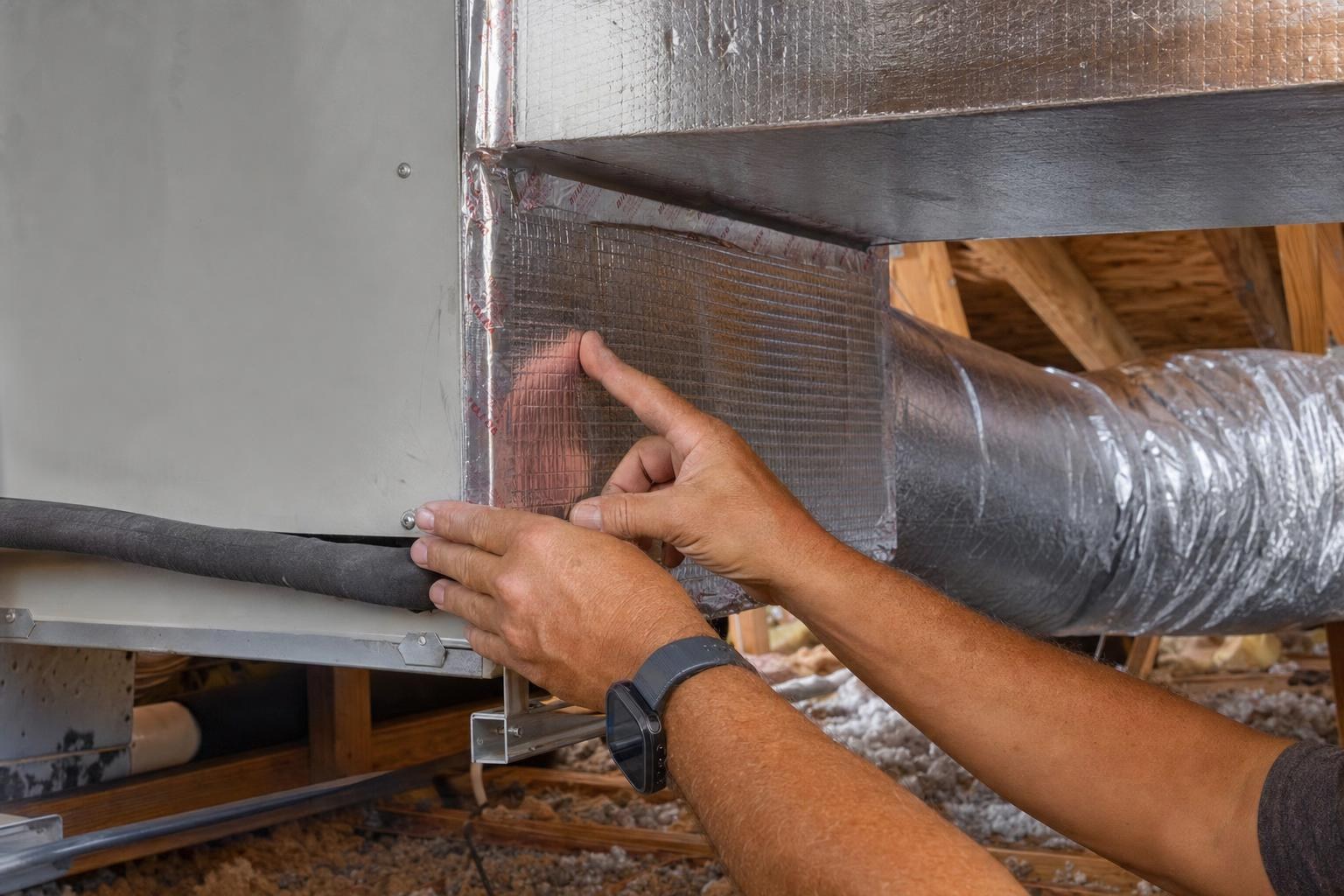
Gaps in attic air sealing around the unit. If the attic bypass air — the extremely humid air near the roof peak — can flow freely around the air handler, it consistently bathes the cold cabinet in moisture-laden air. Duct boots that are not sealed to ceiling penetrations, unsealed chases, or simply poor placement of the air handler near a ridge vent can all funnel the worst of the attic’s humidity directly toward the unit.
Distinguishing Cabinet Sweating from Other Moisture Sources Near the Air Handler
Homeowners sometimes discover moisture near the air handler and assume the drain pan is overflowing or that a condensate line has clogged. Those are genuinely common problems, and they deserve attention. But there is a practical way to tell them apart before calling for service, which can help you describe the situation accurately to a technician.
Drain-pan overflow typically produces water that accumulates at the base of the unit or that you can see pooling inside the cabinet when you open the access panel. Condensate line clogs often cause standing water visible at the primary or secondary drain outlets. Cabinet sweating, by contrast, appears as moisture or rust staining on the outside surface of the cabinet panels — the parts you see without opening anything. The water beads or runs down the exterior face of the unit itself rather than dripping from a drain connection.
Refrigerant line sweating is another nearby phenomenon that is sometimes confused with cabinet sweating. The insulated suction line running from your air handler to the condenser can sweat if its foam insulation has cracked or separated, particularly where it transitions near the cabinet. This is a separate issue from the cabinet itself, though both can appear simultaneously if the underlying causes — high attic humidity and poor insulation — are at work in the same installation.
Proper diagnosis typically requires a technician to measure attic humidity, check return static pressure, inspect cabinet insulation, and evaluate refrigerant operating pressures in combination rather than in isolation. The ENERGY STAR guidance on duct systems notes that air distribution and system sizing directly influence how efficiently and safely equipment operates — factors that are tightly connected to why cabinet surfaces behave the way they do in real installations.
Steps a Technician Would Take During a Cabinet Sweating Evaluation
If you contact a qualified HVAC technician about cabinet sweating, here is a reasonable outline of what a thorough evaluation covers, which can help you understand the process and ask informed questions.
The technician would typically begin with a visual inspection of the cabinet exterior — noting where moisture appears, whether there is rust or staining, and whether the surrounding attic insulation shows signs of moisture absorption. Next, static pressure readings at the return side of the air handler help determine whether airflow is within the manufacturer’s specified range. A filter inspection and a check of all return grille locations often follow.
Cabinet insulation integrity is assessed by inspecting accessible internal lining and noting any separation, compression, or moisture saturation. Refrigerant operating pressures are read using manifold gauges and compared to manufacturer specifications for the existing outdoor conditions. If suction pressure is low relative to what the ambient temperature and indoor conditions would predict, that becomes part of the diagnosis.
Finally, attic air sealing around the unit — duct boot connections, the chase where refrigerant lines exit, and the area immediately around the cabinet — is examined for gaps that allow humid attic air unrestricted access to the cabinet surface. Remediation might involve resealing duct connections, replacing or supplementing cabinet insulation, clearing airflow restrictions, or addressing refrigerant charge, depending on what the evaluation reveals. Our HVAC maintenance services are designed to catch these interrelated conditions before they produce visible damage, and our indoor air quality services address the broader humidity control picture that often underlies persistent cabinet condensation.
Frequently Asked Questions About Air Handler Cabinet Sweating
Is it safe to keep running my air handler if the cabinet is sweating?
Continuing to operate a sweating air handler while you wait for evaluation is generally reasonable for a short period, but extended operation without addressing the underlying cause carries real risks. Moisture on the cabinet exterior can migrate into attic insulation directly beneath the unit, promoting mold growth in a space that is difficult to inspect and remediate. Over time, persistent condensation can also cause surface rust that compromises cabinet seam integrity, allowing attic air to bypass the filter and enter the air stream. If the unit is sweating heavily — meaning you can see active water dripping rather than just surface beading — reducing runtime and scheduling service sooner is prudent.
Could a newer air handler still develop cabinet sweating in a Florida attic?
Yes. Age of the equipment is less determinative than installation quality and attic conditions. A recently installed air handler placed in an attic with poor air sealing, an undersized return system, or inadequate attic ventilation can sweat within its first cooling season. Conversely, a well-maintained older unit with sealed ductwork and adequate return airflow may never develop visible cabinet condensation. The equipment’s internal insulation quality does vary by manufacturer and model, which is one reason proper equipment selection for Florida attic installations is worth discussing with your technician before a replacement is made.
Does adding attic insulation above the air handler help reduce cabinet sweating?
Attic insulation improves the overall thermal performance of the building envelope and can modestly reduce the peak temperature swings the attic experiences, which in turn slightly lowers the peak humidity the air handler cabinet must contend with. However, attic insulation alone does not resolve cabinet sweating when the primary cause is inadequate cabinet insulation, restricted airflow, or refrigerant charge issues. It is a complementary improvement rather than a direct fix. Air sealing the attic floor — particularly around penetrations near the air handler — typically has a more direct effect on cabinet sweating than adding bulk insulation to the roof deck.
How does cabinet sweating differ from the normal condensate the air handler is supposed to produce?
The condensate your air handler is designed to produce forms on the evaporator coil inside the unit as warm indoor air passes over it and moisture is removed from that air. That moisture is intentional and beneficial — it is how your system dehumidifies your home. It drains through the condensate pan and drain line and exits the building. Cabinet sweating is an unintended process happening on the outside of the unit, driven by the temperature difference between the cold cabinet wall and warm, humid attic air. The system was not designed to manage this moisture, and there is no drain path for it. That is why it accumulates on the cabinet surface and can eventually reach surrounding materials.
If you have noticed moisture on your air handler cabinet or want a thorough attic HVAC inspection before another Florida summer arrives, the team at Inlet Mechanical is ready to help. Visit our contact page to schedule a visit, or call us directly at (321) 723-0858 to speak with someone about what you are seeing and arrange an evaluation at a time that works for your schedule.
Talk to a Licensed Inlet Mechanical Pro
Whether it’s a repair, an upgrade, or a question, our team is ready to help homeowners and businesses across Brevard & Indian River County.
Licensed FL Mechanical (CMC1250858) · 85+ years combined experience · Free, no-obligation estimates
Written & Reviewed By
Inlet Mechanical Team
The Inlet Mechanical team brings over 85 years of combined experience in HVAC, plumbing, and mechanical construction across Florida. Our licensed professionals hold Florida Mechanical HVAC License (CMC1250858) and Florida Plumbing License (CFC1433105), along with EPA Section 608 certifications. Based in Brevard County, we serve residential, commercial, and industrial clients with expert knowledge of Florida building codes, climate-specific HVAC solutions, and local plumbing requirements. Every article is reviewed by our licensed technicians to ensure accuracy and practical value for Melbourne-area homeowners and businesses.
Last Updated: October 29, 2026