
A water softener isn’t a set-it-and-forget-it fixture, even though it can feel that way once it’s installed and working. Like anything else in a Florida home’s plumbing system, it needs periodic attention to keep doing its job, especially given how hard the groundwater is across much of Brevard County. Here’s what actually goes into keeping a softener running well, and the signs that tell you it’s due for a closer look.
Checking Salt Levels: More Than Just Topping Off the Tank
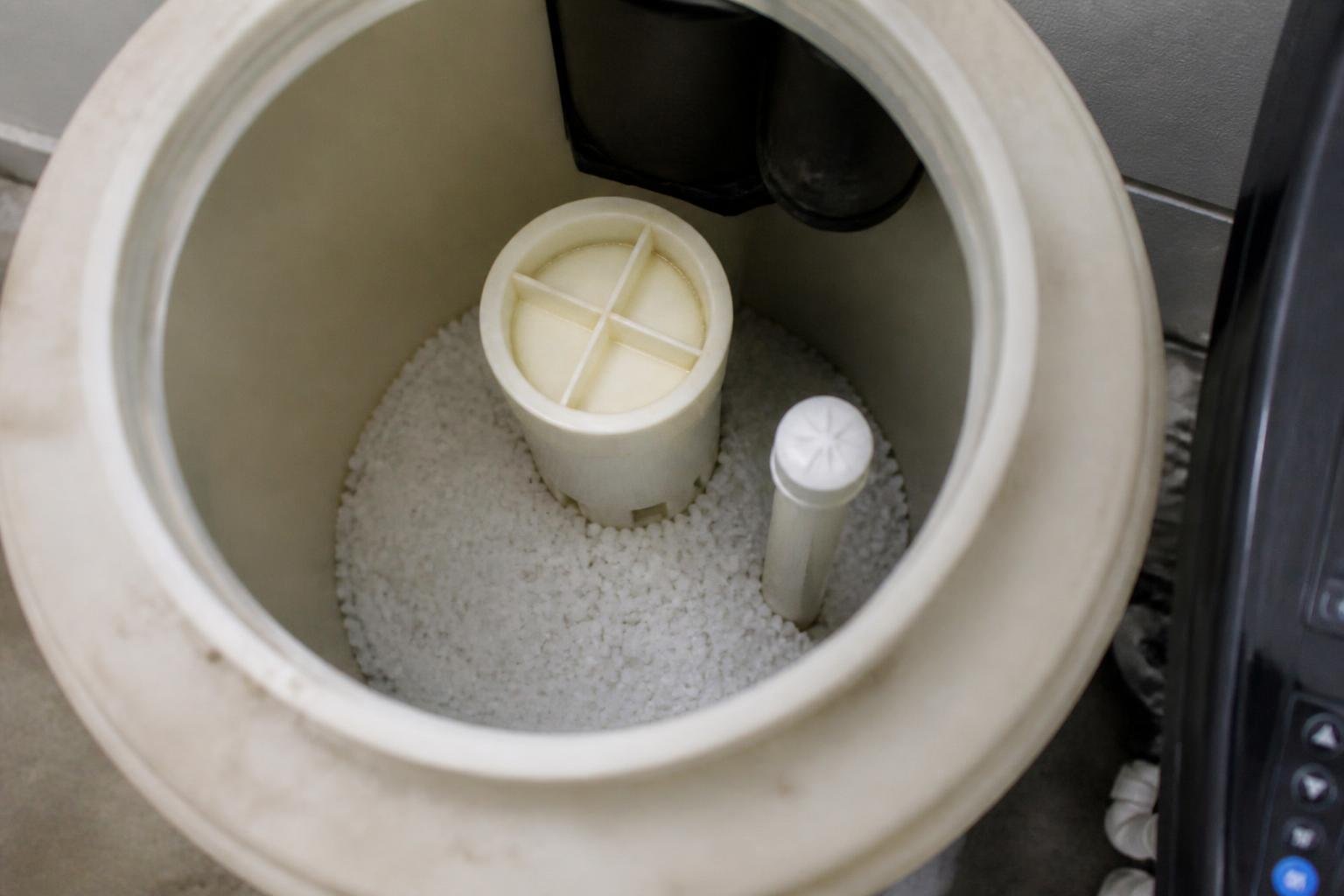
Most homeowners know a softener’s brine tank needs salt, but how you check and refill it matters more than people assume. The salt level should generally stay above the water line inside the tank, and letting it run too low can allow the resin bed to stop regenerating properly, which means hard water starts passing through untreated. On the other hand, overfilling can lead to salt bridging, where a hardened crust forms above the water and prevents the salt below from dissolving. A quick visual check every month or so is usually enough to catch either problem before it affects your water.
- Salt bridging: Look for a hard crust near the top of the tank that doesn’t move when you press on it. Breaking it up gently restores normal function.
- Salt mushing: A thick sludge at the bottom of the tank can clog the system. This is more common with certain salt types and softer pellet forms in humid climates.
- Salt type: Pellet or cube salt tends to hold up better than rock salt in Florida’s humidity, since it dissolves more evenly and leaves less residue.
How the Resin Bed Affects Performance Over Time
Need help with plumbing?
Inlet Mechanical’s licensed techs serve Brevard & Indian River with fast, dependable service and free estimates.
The resin bed is where the actual softening happens, exchanging hardness minerals for sodium or potassium ions as water passes through. Resin beads do wear out eventually, and certain conditions speed that up, including high iron content in well water or chlorine levels that aren’t filtered out before reaching the softener. If your water starts feeling harder even though the salt tank is full, a worn or fouled resin bed is one of the more common explanations. A resin cleaner added periodically can extend its life, though it’s not a substitute for eventual resin replacement once the bed has genuinely worn down.
Signs Your Softener Needs Attention
A few symptoms tend to show up before a softener fully stops working:
- Soap not lathering the way it used to. This is often the first sign hardness minerals are getting through again.
- Spotting on dishes and glassware. Mineral deposits reappearing after they’d been under control usually point to reduced softening capacity.
- Scale buildup returning on fixtures. If faucets and showerheads start showing crust again, the softener likely isn’t keeping up.
- Unusual noises during regeneration. A softener that used to cycle quietly and now sounds different is worth having checked.
None of these mean the unit needs to be replaced outright, it depends on the cause. Sometimes it’s as simple as a salt bridge or a settings adjustment; other times it points to a resin bed or valve component that’s reached the end of its useful life.
A Simple Seasonal Rhythm

Rather than trying to remember maintenance at random, it helps to tie softener checks to a seasonal routine, since Florida’s wet and dry seasons can affect both well water quality and household water usage. A monthly salt check, a periodic resin tank inspection, and an annual look at the valve and settings cover most of what a softener needs. If your home is on a well, it’s worth pairing softener maintenance with a look at overall water quality, since iron and sediment levels can shift over time.
When Well Water Changes the Picture
Homes on well water tend to put more demand on a softener than homes connected to municipal supply, since well water quality can shift with rainfall, seasonal water table changes, and nearby land use. Iron and sulfur content, in particular, can foul a resin bed faster than hardness minerals alone, and a softener that isn’t rated or configured for iron removal may struggle even when salt levels and regeneration cycles look normal. If your water starts developing a metallic taste, staining fixtures, or smelling different than usual, it’s worth having the well water itself retested rather than assuming the softener is simply due for a routine check. The softener can only treat what it’s designed to handle, and iron-heavy well water sometimes needs an additional filtration step ahead of the softener to keep it working properly over the long run.
Municipal water customers generally see more predictable conditions, though seasonal changes in how the utility treats the water supply, particularly chlorine levels, can still affect resin life over time.
Checking the Control Valve and Settings
Beyond salt and resin, the softener’s control valve and regeneration settings deserve a periodic look, since a valve set to regenerate more often than your household’s actual water usage requires wastes both salt and water, while one set to regenerate too infrequently leaves the resin bed working past its effective capacity. Most modern softeners use a demand-based system that adjusts based on actual usage, but it’s still worth confirming the settings match your household size, especially after any change in the number of people living in the home or a change in daily water habits. A control valve that’s cycling erratically or failing to regenerate on schedule is often a sign of a mechanical issue rather than something that improves with more salt.
How Hard Is Your Water, and Why It Matters
Water hardness is measured by how much dissolved calcium and magnesium it contains, and the difference between “hard” and “very hard” water changes how much work your softener is doing on a daily basis. The U.S. Geological Survey classifies water hardness into four general ranges, soft, moderately hard, hard, and very hard, based on the concentration of dissolved minerals measured as calcium carbonate. Much of Brevard County’s groundwater falls into the hard-to-very-hard range, which is part of why softeners are so common here in the first place.
Knowing roughly where your water falls on that scale is useful context for maintenance, since harder water means the resin bed is exchanging more mineral content with every regeneration cycle, which can mean more frequent salt use and a shorter effective interval between resin checks. If you’ve never had your water tested and you’re noticing more frequent maintenance needs than you’d expect, a hardness test is a reasonable place to start narrowing down whether the softener is undersized for what it’s actually treating.
Frequently Asked Questions
How often should I add salt to my water softener?
It depends on your household’s water usage and the size of your brine tank, but checking monthly and refilling before the level drops too low is a reasonable habit for most Florida homes, especially during the drier months when water usage patterns can shift.
Can hard water damage a softener that isn’t maintained?
The softener itself is designed to handle hard water, but a neglected resin bed or a clogged valve can reduce its effectiveness over time, which then lets hardness minerals reach the rest of your plumbing, fixtures, and water-using appliances.
Is it normal for a softener to need resin replacement eventually?
Yes, resin beads wear out with use, and how long that takes depends on your water quality and how much water your household runs through the system. It’s a normal part of the unit’s lifespan rather than a sign something went wrong with the installation.
If your softener isn’t performing the way it used to, our water treatment team can take a look, including our water softener installation and repair service. Contact Inlet Mechanical to get your system back to doing its job.
Talk to a Licensed Inlet Mechanical Pro
Whether it’s a repair, an upgrade, or a question, our team is ready to help homeowners and businesses across Brevard & Indian River County.
Licensed FL Mechanical (CMC1250858) · 85+ years combined experience · Free, no-obligation estimates
Written & Reviewed By
Inlet Mechanical Team
The Inlet Mechanical team brings over 85 years of combined experience in HVAC, plumbing, and mechanical construction across Florida. Our licensed professionals hold Florida Mechanical HVAC License (CMC1250858) and Florida Plumbing License (CFC1433105), along with EPA Section 608 certifications. Based in Brevard County, we serve residential, commercial, and industrial clients with expert knowledge of Florida building codes, climate-specific HVAC solutions, and local plumbing requirements. Every article is reviewed by our licensed technicians to ensure accuracy and practical value for Melbourne-area homeowners and businesses.
Last Updated: September 24, 2026