
Some water heater problems announce themselves with a puddle. This one just quietly ruins your showers. The water starts hot, fades to lukewarm in a few minutes, and never really recovers, even though the heater is the right size, the thermostat has not moved, and nothing is leaking. Homeowners assume the elements are dying or the tank is finished. Often the real culprit is a part most people have never heard of: a plastic tube inside the tank called the dip tube, and when it breaks, an otherwise healthy water heater starts serving cold water with a hot label on it.
What the Dip Tube Actually Does
Look at the top of a tank water heater and you will see two water connections: cold in, hot out. Here is the detail that matters. Hot water is drawn from the top of the tank, because heat rises and the hottest water stratifies at the top. If cold replacement water simply entered at the top too, it would pour straight into that hot layer, mix with it, and chill exactly the water you are about to use.
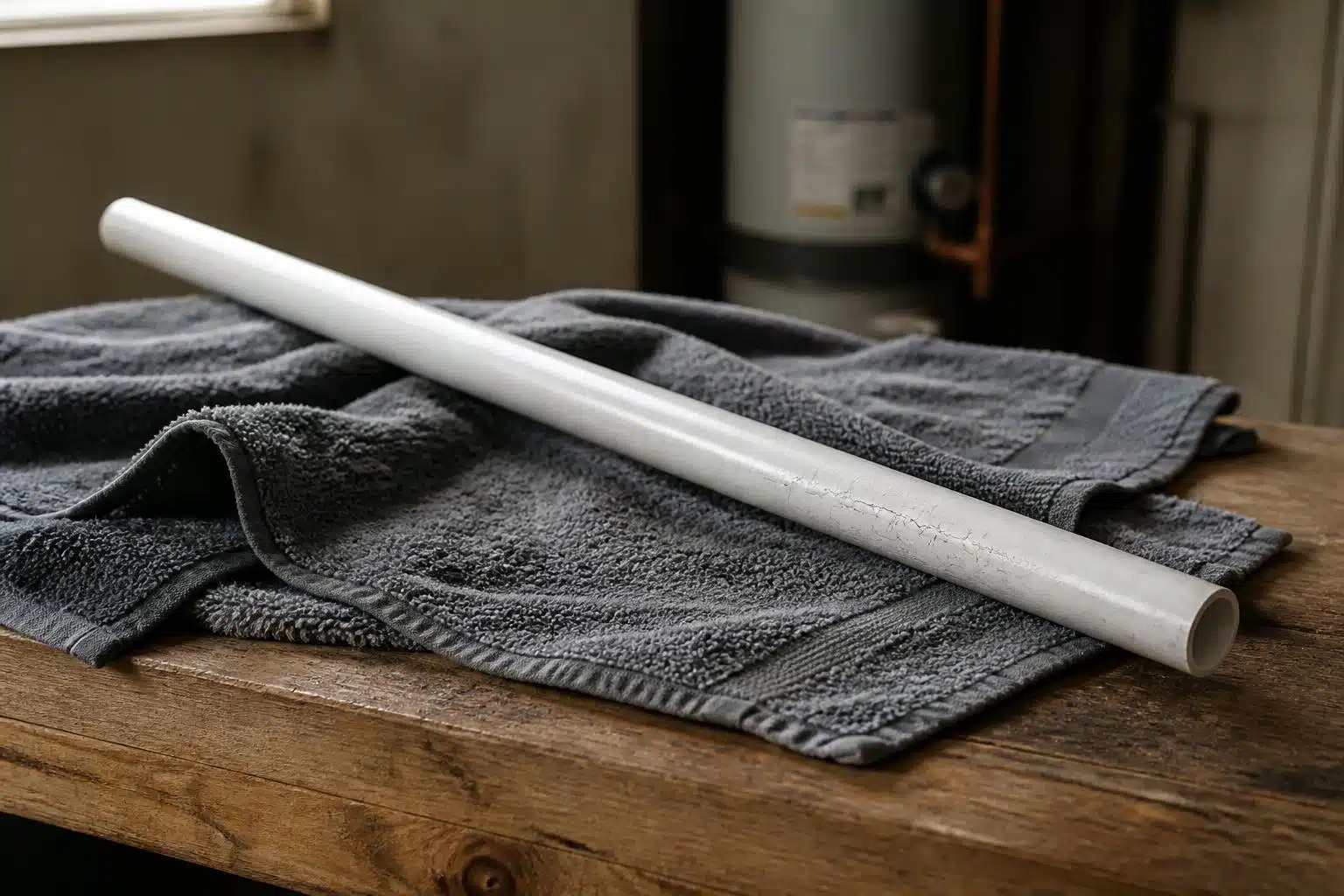
The dip tube prevents that. It is a plastic pipe, usually around three-quarters of an inch in diameter, connected to the cold inlet and running down inside the tank to within a few inches of the bottom. Incoming cold water is delivered quietly to the bottom of the tank, where the burner or the lower element gets to work on it, while the finished hot water at the top leaves undisturbed. The whole design of a tank heater leans on this one piece of plastic maintaining the separation between the cold basement of the tank and the hot penthouse.
How the Tube Fails and What Changes
Need help with plumbing?
Inlet Mechanical’s licensed techs serve Brevard & Indian River with fast, dependable service and free estimates.
Dip tubes fail by breaking, cracking, or slowly dissolving. Decades of sitting in hot, mineral-bearing water makes the polymer brittle, and eventually a section snaps off, a crack opens near the top, or the tube crumbles progressively from the bottom up. There was also a notorious stretch in the 1990s when millions of heaters shipped with defective tubes that disintegrated years ahead of schedule; most of those tanks are gone now, but the failure mode they made famous continues in ordinary aged heaters today.
Once the tube is compromised, the geometry of the tank breaks down. Cold inlet water enters at or near the top instead of the bottom, mixing directly into the hot layer that feeds your taps. The result is a signature symptom: hot water that arrives properly hot, then slides to lukewarm far sooner than the tank size should allow. A 50 gallon heater might behave like a 15 gallon one. The heater itself keeps cycling normally, and because nothing leaks and nothing trips, the problem can persist for months while the household adapts around shorter, sadder showers.
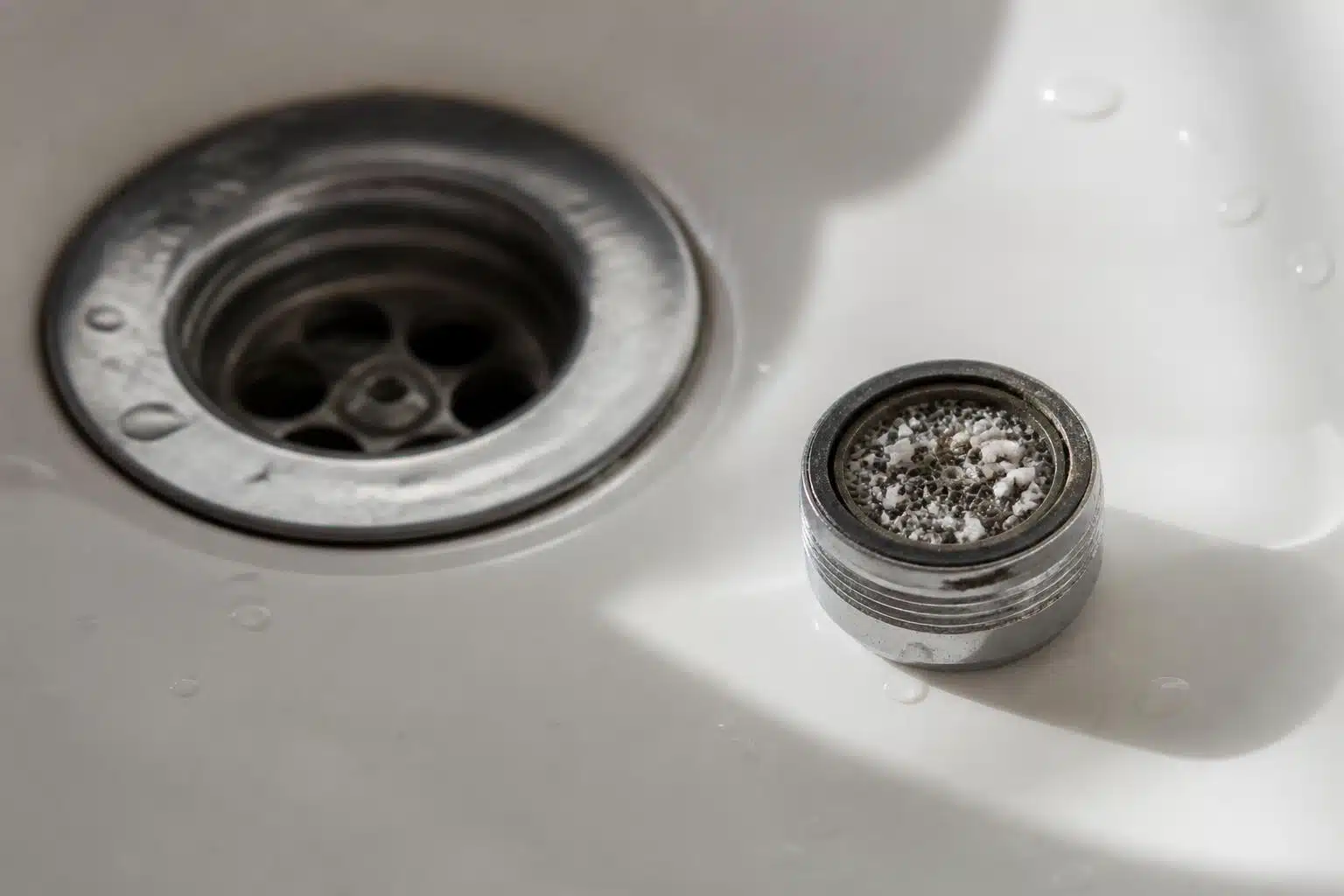
The second signature is stranger: small white or gray plastic flecks showing up where water exits. As the tube crumbles, fragments ride the plumbing and collect in faucet aerators, showerhead screens, and the inlet filters of washing machines and dishwashers. Homeowners find gritty specks that float, unlike mineral scale, and can be squeezed or dented with a fingernail. Finding that debris in an aerator is close to a confirmed diagnosis on its own.
Ruling Out the Impostors
A few other failures produce lukewarm water, and it is worth knowing how they differ. In an electric heater, a dead lower element leaves only the top of the tank heated, which also shortens hot showers, but the recovery pattern differs: with a bad element, the water tends to run out abruptly and take a long time to come back, while a bad dip tube mixes continuously, so the water goes lukewarm quickly but rarely goes fully cold. A failed thermostat usually shifts the overall temperature rather than the duration. Heavy sediment buildup, common in Brevard County’s mineral-rich water, insulates the burner or lower element from the water and mimics a capacity loss too, though it usually comes with rumbling or popping sounds during heating.
There is also the crossover problem: a failed mixing valve or a single-handle faucet cartridge can let cold water bleed into the hot line, cooling every tap in the house. A plumber separates these possibilities quickly with temperature readings and a couple of isolation tests, which is a much better path than replacing parts on a hunch. Our water heater services calls start with exactly that sequence.
The Repair Decision
Replacing a dip tube is a legitimate repair, and on the right tank it is well worth doing. The cold supply is shut off and disconnected, the inlet nipple comes out of the tank top, the remains of the old tube are withdrawn, and a new tube, typically cross-linked polyethylene rated for tank temperatures, drops into its place. Done by someone who has done it before, it is an hour or two of work. The complication is what the old tube leaves behind: the crumbled fragments already loose in the tank and pipes do not remove themselves, so a thorough job includes flushing the tank and cleaning debris from aerators and appliance screens afterward.
Whether the repair is smart depends almost entirely on the tank’s age. A heater under eight years old with a failed tube is a good candidate; fix it and move on. A heater in the ten-to-fifteen-year range failing this way is usually announcing the general brittleness of its plastic and the state of its interior, and the same service call often reveals a tired anode and a bed of sediment. At that age, money spent on a dip tube is often better applied toward replacement, especially since a tank failure in a Florida house rarely picks a convenient moment. If replacement is where the math lands, it is also the natural moment to compare a conventional tank against the high-efficiency options ENERGY STAR profiles at energystar.gov. An honest assessment weighs the tank’s age, condition, and location in the home rather than defaulting to either answer.
Frequently Asked Questions
How can I confirm a dip tube problem without opening the tank?
Two observations get you most of the way there. First, the pattern: water that starts hot and fades to lukewarm within a few minutes, on a tank that used to deliver much longer showers, with no change in thermostat setting. Second, the debris: unscrew a bathroom faucet aerator and look for soft white or gray flecks that float and dent under a fingernail. Mineral scale is hard and crystalline; dip tube plastic is not. The combination of both signs is about as conclusive as home diagnosis gets.
Is dip tube plastic in my water dangerous?
The polymers used are not considered a health hazard, and the fragments are inert, but they are certainly a nuisance. They clog aerators, showerheads, washing machine inlet screens, and dishwasher valves, and enough debris can reduce flow noticeably at fixtures. Once the tube is replaced, plan on flushing the tank and cleaning every screen in the house a time or two as stragglers work through.
Do tankless water heaters have dip tubes?
No. A tankless unit heats water as it passes through, so there is no stored volume to stratify and no tube to manage it. This particular failure belongs entirely to tank-style heaters. That said, tankless units have their own maintenance needs in our mineral-heavy water, particularly periodic descaling, so neither style is maintenance-free.
Could my shrinking hot water supply just be sediment instead?
It could, and in this county it often is at least partly sediment. A thick layer on the tank bottom displaces capacity and buries the heat source, which also shortens showers. Sediment usually brings sound effects, rumbling or popping as steam pockets collapse under the deposit layer during heating. The practical answer is the same either way: have the tank inspected and flushed, and let the evidence say whether the tube, the sediment, or both are to blame.
Lukewarm showers from a tank that used to run hot are a solvable problem, and solving it starts with finding out which of three or four suspects is guilty. Inlet Mechanical diagnoses and repairs water heaters across Melbourne, Palm Bay, and Brevard County, and we will tell you straight whether your tank deserves a new dip tube or a retirement party. Call us at (321) 723-0858.
Talk to a Licensed Inlet Mechanical Pro
Whether it’s a repair, an upgrade, or a question, our team is ready to help homeowners and businesses across Brevard & Indian River County.
Licensed FL Mechanical (CMC1250858) · 85+ years combined experience · Free, no-obligation estimates
Written & Reviewed By
Inlet Mechanical Team
The Inlet Mechanical team brings over 85 years of combined experience in HVAC, plumbing, and mechanical construction across Florida. Our licensed professionals hold Florida Mechanical HVAC License (CMC1250858) and Florida Plumbing License (CFC1433105), along with EPA Section 608 certifications. Based in Brevard County, we serve residential, commercial, and industrial clients with expert knowledge of Florida building codes, climate-specific HVAC solutions, and local plumbing requirements. Every article is reviewed by our licensed technicians to ensure accuracy and practical value for Melbourne-area homeowners and businesses.
Last Updated: September 21, 2026