
Why Return Air Leaks in Florida Homes Deserve Attention
When homeowners hear about duct leaks, they almost always picture the supply side, the ducts that push cooled air into the rooms. But the other half of the loop matters just as much, and return air leaks in Florida homes are a common reason a system works harder than it should. The return side is the path that pulls air back to the equipment, and when it has gaps, it pulls in whatever air happens to be nearby. In many Brevard County houses, that means hot, dusty attic air or stale air from a closet or garage.
This post is about that return side only: where the leaks tend to hide, what they feel like from inside the house, what you can safely look at yourself, and what is best left to a technician. If you are curious about supply-side problems, we cover those in other articles.
How the Return Side Works
Need help with AC & heating?
Inlet Mechanical’s licensed techs serve Brevard & Indian River with fast, dependable service. Estimates on new system installs and replacements are free.
Your air conditioner is a loop. Air leaves the equipment through the supply ducts, travels through the rooms, and returns through one or more grilles to the air handler. There it passes through the filter, across the cooling coil, and out again. Because the blower is pulling on the return side, that part of the system runs under suction. Any crack, loose joint, or open seam does not leak air outward the way a supply leak would. It sucks air inward from wherever the gap opens.
That is the key difference. A supply leak wastes cooled air into the attic. A return leak invites attic air into the system, and then your equipment has to cool and dry that air all over again. It is the same equipment doing more work for a weaker result.
Where Return Leaks Usually Hide
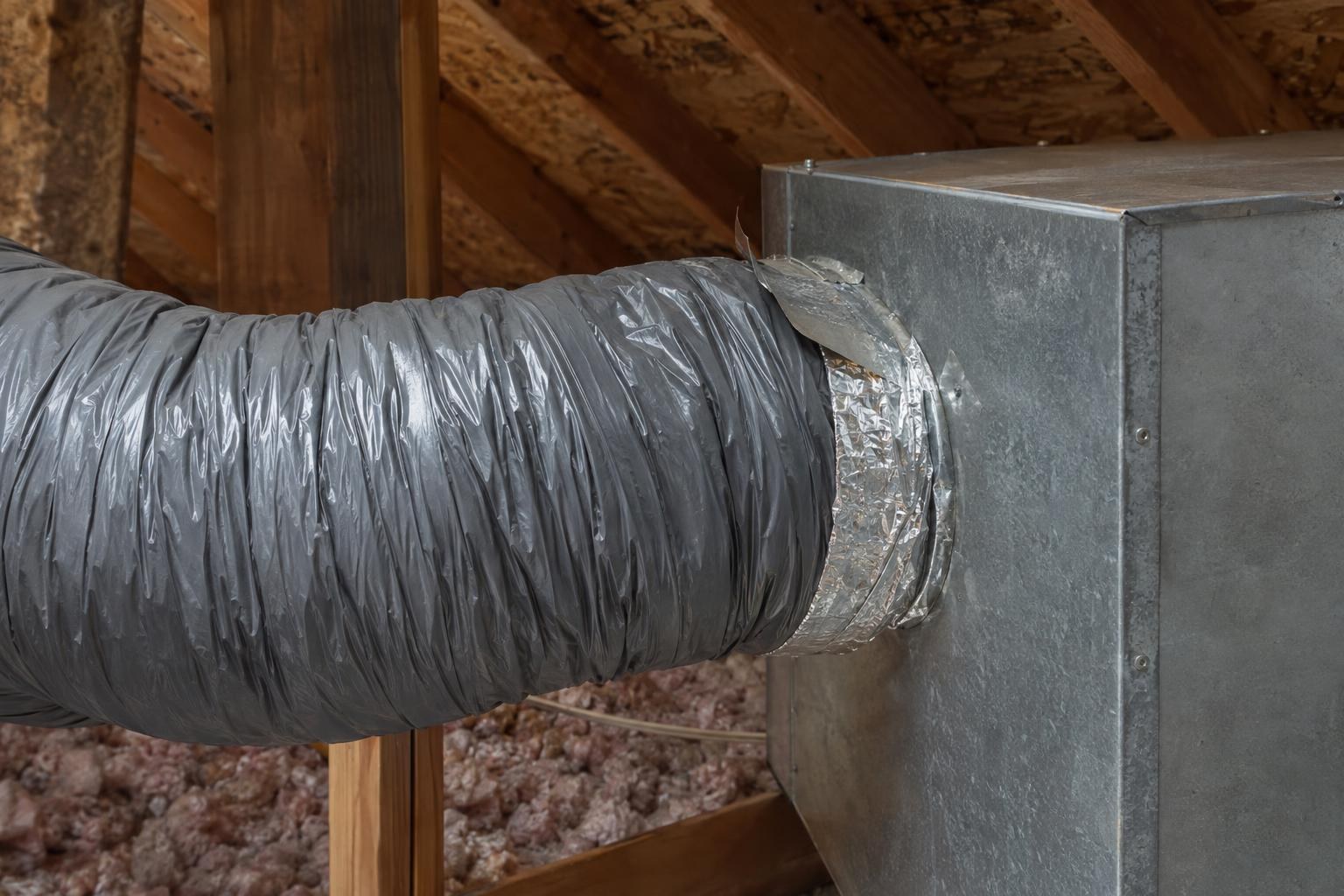
The return side has more connection points than most people expect. The common trouble spots include the return plenum or return box that collects the air above or beside the air handler, the return drops that run down through a wall or chase, the seams of the air handler cabinet itself, and the filter slot where a door or cover may not seat tightly. Flexible duct collars and old tape are frequent culprits as well, especially after years of attic heat have dried out the original sealing materials.
Closet-style air handlers are a special case. When a return grille opens straight into a utility closet that shares space with the equipment, the closet itself can act as part of the return path. If that closet has gaps to the garage or the attic, the system may draw from those spaces without anyone realizing it.
Signs You Can Notice From Inside the House
Most homeowners never see the attic connections, so the clues show up indoors. Here are the ones we hear about most often:
- Dust collecting quickly on registers, shelves, and furniture, even with the filter changed on schedule.
- A warm, musty, or hot-attic smell when the system starts up.
- Air conditioning that runs for long stretches without the house feeling truly comfortable.
- A muggy, sticky feel in the rooms, because humid outside air is being pulled through the leak and the coil has to remove that moisture.
- Rooms that feel stuffy or uneven from one end of the house to the other.
- A whistling or rushing sound at the filter slot or return grille.
No single sign proves a return leak. Several of these also show up with a dirty filter, a weak blower, or a refrigerant problem. But if you notice more than one together, especially dust and an attic smell, the return side is worth a closer look.
Why Attic Air Is the Wrong Thing to Breathe and Cool
Attic air in Brevard County is hot for much of the year, and it carries insulation fibers, construction dust, and humidity. When a return leak pulls that air through the system, some of it ends up on the coil and some is delivered to your rooms. That can make the house feel warmer and damper than the thermostat suggests, and it can leave a film of dust that seems to return no matter how often you clean.
The U.S. Environmental Protection Agency explains that indoor air quality is shaped by what enters the home and how it moves, and the agency offers general guidance on the subject on its indoor air quality resource page. A tight, well-sealed return path is one way the air handling system supports cleaner indoor air, since it draws from the rooms you actually live in.
What a Homeowner Can Safely Check
There are a few simple, low-risk checks you can do from the floor. Keep them to the living space, and stay out of the attic.
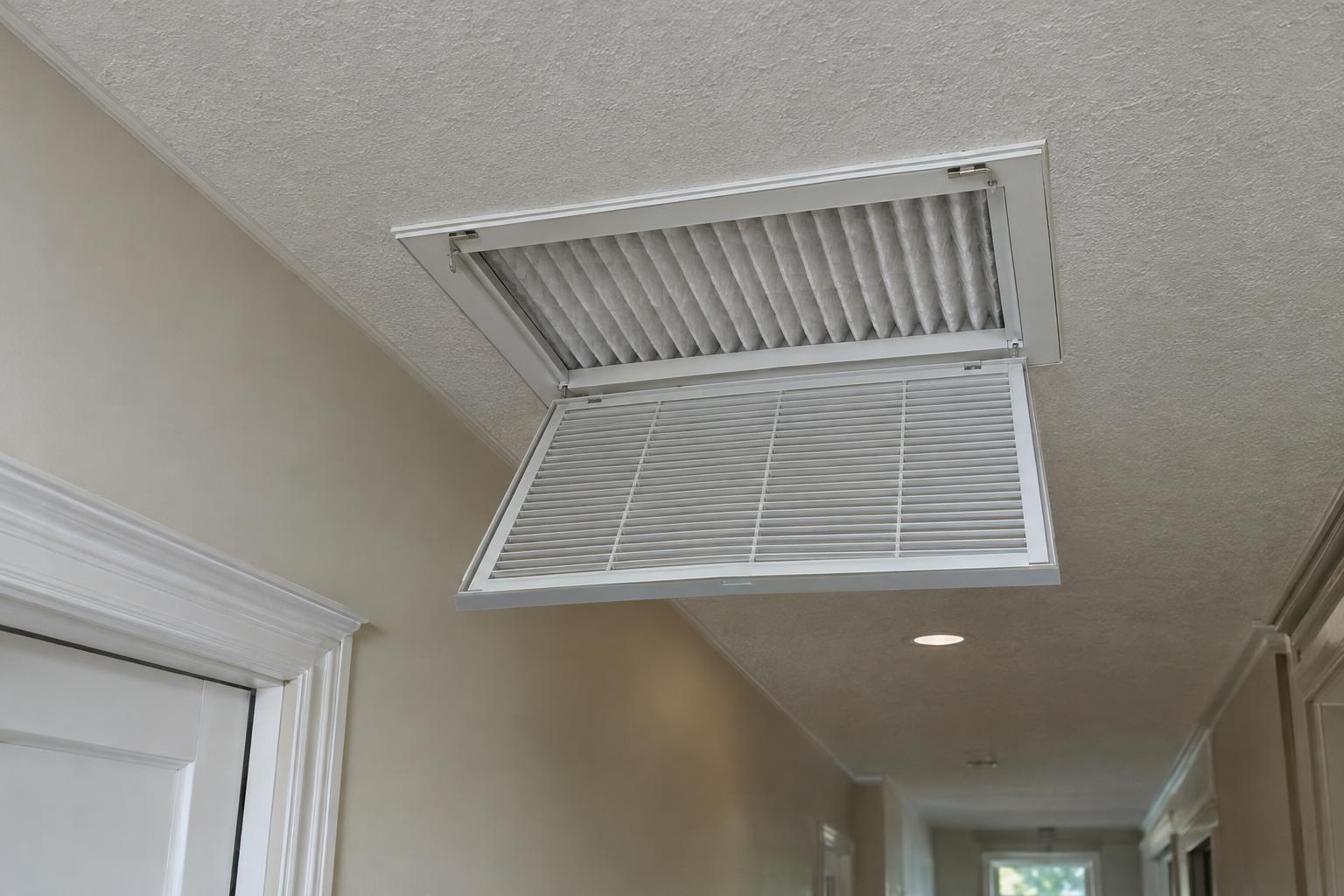
- Look at your filter. If it is loaded with dust unusually fast, air may be bypassing it through gaps around the slot.
- Make sure the filter is the correct size and that the filter door or cover closes fully, with no visible gap.
- Listen at the return grille while the system runs. A steady whistle can point to a restriction or an air path that should be sealed.
- Check that furniture, rugs, or stored items are not blocking the grille.
- Notice whether the smell or dust changes when the system cycles on.
That is where do-it-yourself work should stop. Attic work in summer heat is uncomfortable and can be unsafe, and the air handler cabinet contains electrical parts, refrigerant lines, and sometimes gas connections. Please leave anything inside the equipment, and anything in the attic, to a professional.
Sealing Choices Matter More Than You Might Think
Not every patch lasts. Cloth-backed duct tape, the familiar gray kind, tends to dry out and peel in a hot attic, which is exactly how many leaks start. Longer-lasting approaches use materials made for the job, such as mastic sealant on seams and approved foil-faced tape on joints, with proper mechanical fastening at collars so the connection does not rely on tape alone.
The method should also fit the part. A rigid sheet metal plenum, a flexible duct collar, and an air handler cabinet seam each call for a different approach. A technician will look at where the air is actually moving, seal what is leaking, and avoid blocking air that the system needs. Our ductwork services page describes how we approach this kind of work, and our page on duct sealing in Brevard County goes into the sealing side in more detail.
What a Technician Looks For
When our team evaluates a suspected return leak, the goal is to find where air is entering and why. That usually means inspecting the return plenum, the connections at the air handler, the return drops, and the filter slot, and checking how the return is arranged relative to the equipment. We also look at whether the return path is large enough for the airflow the system needs, because an undersized return can raise suction and make existing gaps pull harder.
Once the leak sources are clear, we can recommend sealing, repair, or adjustments that suit your home. You come away with a plain explanation of what was found and what each option would change, so you can decide what makes sense.
Frequently Asked Questions
Can a return air leak make my AC run longer?
Yes. When hot, humid attic air enters the return side, the system has to cool and dry that extra air before it can cool the house. That often shows up as longer run times and a home that never feels quite comfortable.
Is a return leak the same as a leaky supply duct?
No. A supply leak lets cooled air escape before it reaches the rooms. A return leak does the opposite and pulls unwanted air into the system. They can happen together, but the signs and the repairs are different.
Can I fix return leaks myself with tape?
We recommend against it. Common household tape often fails in attic heat, and the work involves attic access and the air handler, which contains electrical and refrigerant components. A professional can seal the right spots with materials built to last.
Will changing my filter more often stop dust at the registers?
A clean, properly fitted filter helps, and it is always a good habit. But if dust keeps returning quickly, air may be entering through a leak and bypassing the filter, which is a good reason to have the return side inspected.
If your home has some of these warning signs, our team at Inlet Mechanical is glad to take a careful look at the return side and explain what we find in plain terms. Visit our contact page to reach us, or call us directly at (321) 723-0858.
Talk to a Licensed Inlet Mechanical Pro
Whether it’s a repair, an upgrade, or a question, our team is ready to help homeowners and businesses across Brevard & Indian River County.
Licensed FL Mechanical (CMC1250858) · 85+ years combined experience · Free install & replacement estimates
Written & Reviewed By
Inlet Mechanical Team
The Inlet Mechanical team brings over 85 years of combined experience in HVAC, plumbing, and mechanical construction across Florida. Our licensed professionals hold Florida Mechanical HVAC License (CMC1250858) and Florida Plumbing License (CFC1433105), along with EPA Section 608 certifications. Based in Brevard County, we serve residential, commercial, and industrial clients with expert knowledge of Florida building codes, climate-specific HVAC solutions, and local plumbing requirements. Every article is reviewed by our licensed technicians to ensure accuracy and practical value for Melbourne-area homeowners and businesses.
Last Updated: November 16, 2026