
A central air conditioner is not one machine. It is two main components that have to work as a team: a coil and blower inside the home, and a compressor and condenser coil outside. When those halves were designed to operate together, the system moves heat out of your house smoothly. When they were not, you end up with mismatched AC indoor outdoor units, and the result is often a system that runs but never quite performs the way it should. This article explains what matching really means, how a mismatch usually happens, what it can look like in a Brevard County home, and what to ask before you agree to any replacement work.
What “Matched” Actually Means
A matched system is one where the outdoor unit, the indoor coil, and the air handler or furnace blower are intended to work as a set. Manufacturers design these pieces around each other. The compressor is built to move a certain amount of refrigerant, the indoor coil is built to absorb heat at a certain rate, and the blower is built to push the right volume of air across that coil. All three need to agree with one another.
Matching goes beyond the name on the cabinet. It includes the type of refrigerant the system is designed for, the capacity of each component, the kind of metering device that feeds refrigerant into the indoor coil, and the airflow the blower can deliver. Two components can look like they belong together, fit the same line connections, and still be a poor pairing because one of those details does not line up.
What the Indoor Unit Does in the Pairing
Need help with AC & heating?
Inlet Mechanical’s licensed techs serve Brevard & Indian River with fast, dependable service. Estimates on new system installs and replacements are free.
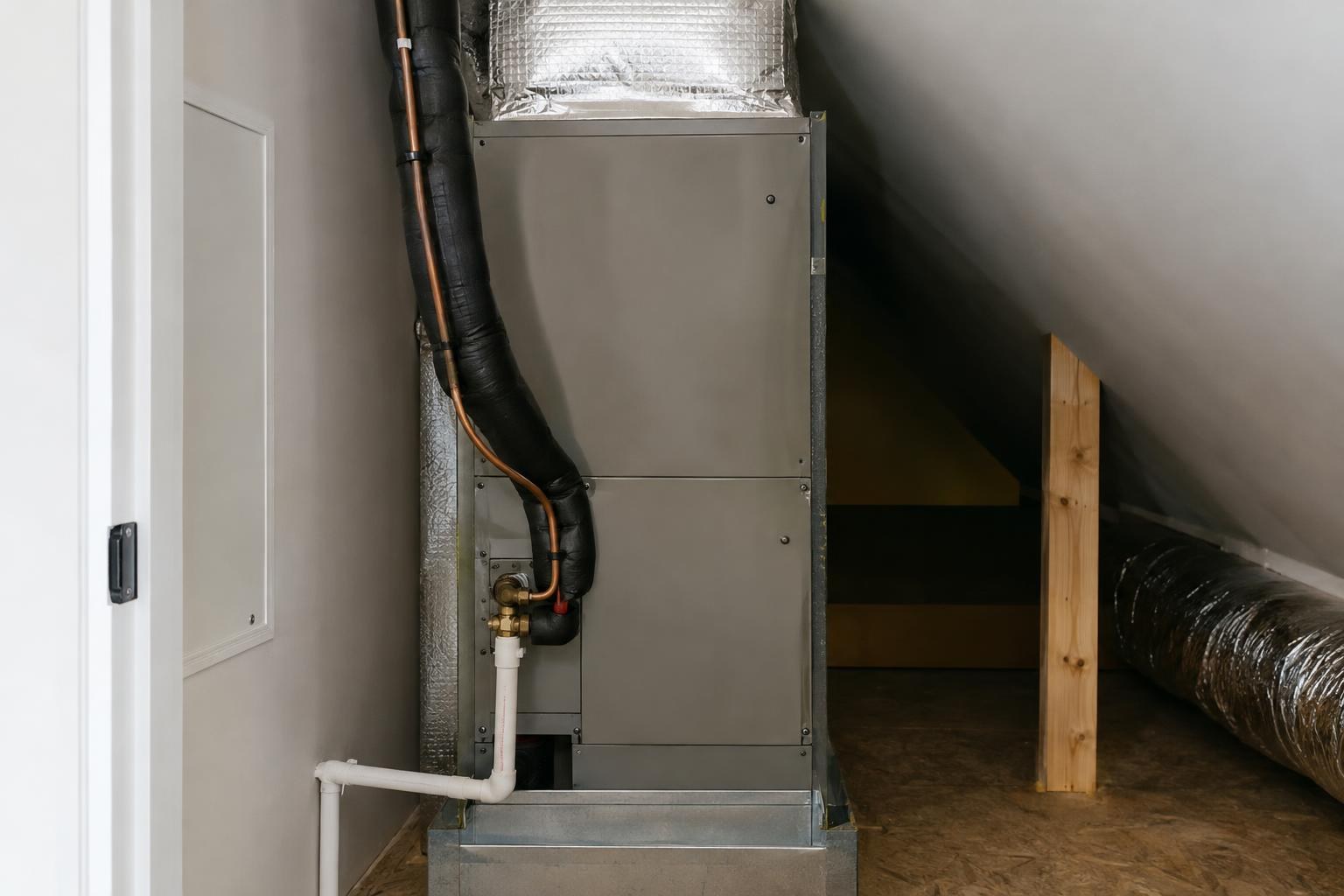
The indoor side is where the cooling and the dehumidifying actually happen. Warm, humid air from your home is pulled across a cold evaporator coil. The coil absorbs heat from that air, and moisture condenses on the coil and drains away through the condensate line.
Because the coil sits at the center of this process, it has to be compatible with what the outdoor unit sends it. A coil that is too small or designed for a different refrigerant flow cannot absorb heat the way the compressor expects. A blower that moves too little air leaves the coil running too cold, while one that moves too much air gives the coil less time to pull moisture out of the air. Either way, the comfort you feel in the living room depends on the indoor half and the outdoor half agreeing with each other.
How the Two Units Are Connected
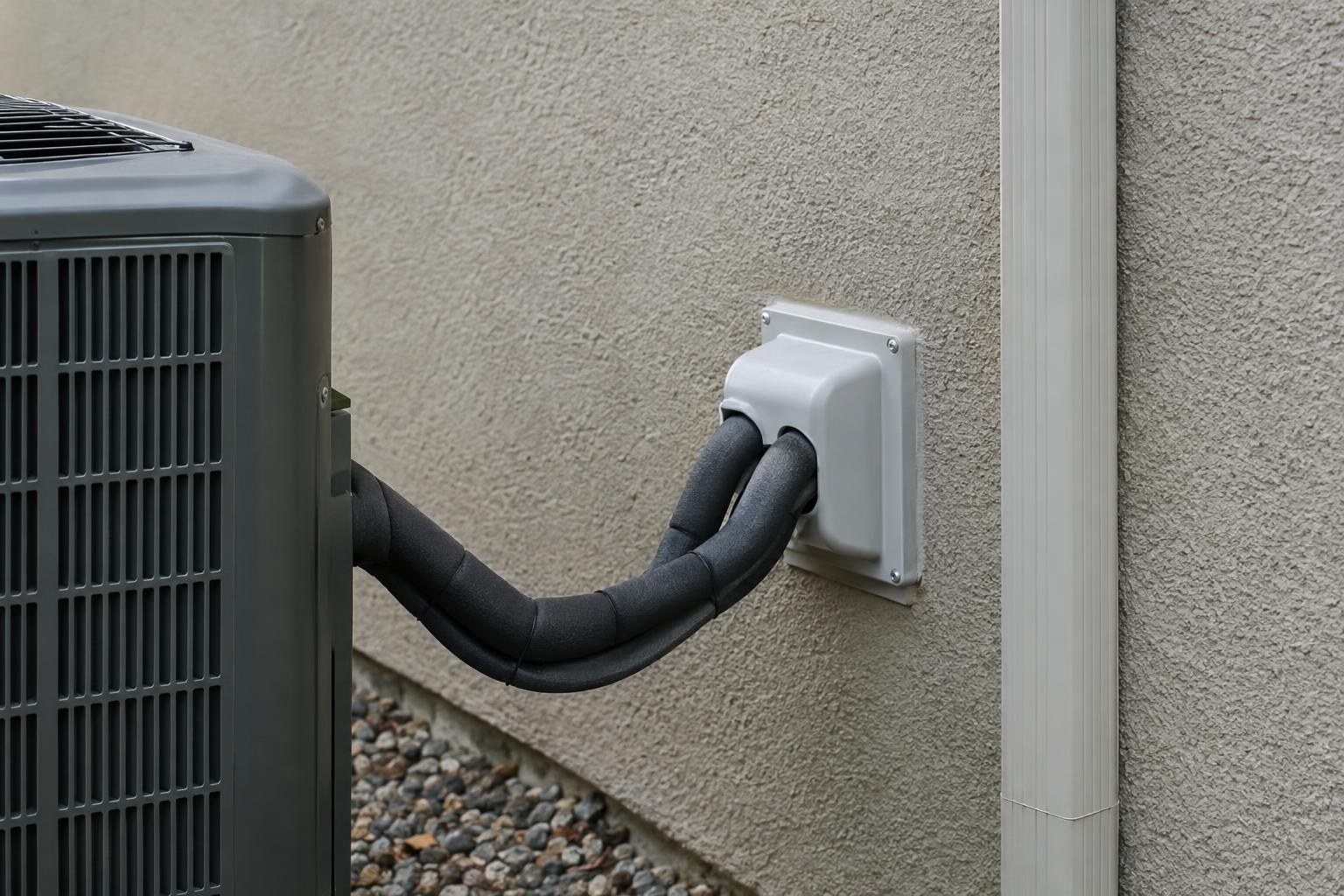
The outdoor condenser and the indoor coil are linked by a pair of copper refrigerant lines, commonly called the line set. One line carries refrigerant toward the indoor coil, and the other carries it back to the compressor outdoors.
Because both halves share that single loop, they also share its operating pressures and refrigerant flow. The compressor decides how much refrigerant moves through the loop, and the indoor coil and its metering device decide how that refrigerant behaves once it arrives. If the two sides are built around different assumptions, the loop never settles into the balanced operation both were designed for. Adjusting that sealed refrigerant circuit is work for a qualified technician with the proper equipment, not a task for a homeowner.
The ENERGY STAR guidance on quality installation points to this kind of detail, noting that a properly installed system has the correct amount of refrigerant, airflow that meets manufacturer specifications, and equipment that is properly designed for the home.
How Mismatches Happen
Most mismatches are not deliberate. The most common route is a partial replacement. An outdoor unit fails, and the quickest repair path is to swap only that half while keeping the indoor coil and air handler that are already in the attic or closet. If the older indoor equipment was designed for different refrigerant, a different capacity, or a different type of metering device, the new pairing may be a compromise from day one.
Another route is a history nobody remembers. A previous owner may have replaced one half of the system years ago, and the paperwork that would show whether the pair was ever rated to work together is long gone. Finally, some mismatches come from choosing parts that are available that day without confirming they are rated to work together. A careful installer will tell you when components should be replaced as a set.
Signs a System May Be Mismatched
No single symptom proves a mismatch, because many ordinary problems look similar. Still, certain patterns are worth noticing. The system may run for very long stretches without ever making the house comfortable. Some rooms may feel clammy even though the thermostat reads the target temperature. You might notice ice forming on the indoor coil or refrigerant lines, or water showing up around the air handler more often than before.
The outdoor unit may also cycle on and off frequently or seem to work hard on days that are only moderately warm.
Because these symptoms overlap with so many other issues, a technician should evaluate the whole system and compare the model information on each half.
Why Humidity Makes Matching Matter in Brevard County
Here on the Space Coast, an air conditioner does two jobs at once. It lowers the temperature, and it pulls a large amount of moisture out of the air. On a typical summer day in Palm Bay or Melbourne, with heat, afternoon storms, and humidity that lingers well into the evening, the dehumidifying job is just as important as the cooling job.
A mismatched system can struggle with that second job in particular. If airflow across the coil is too high, the air passes through before much moisture can condense out of it, and the house can feel cool but damp. If the airflow is too low, the coil can get too cold, which may lead to frost on the coil and then a sudden rush of meltwater into the drain pan when the system cycles off.
What to Ask Before Replacing Any Part of Your System
If a technician recommends replacing only the outdoor unit or only the indoor coil, ask whether the new component is rated to work with the equipment staying in place. Ask what refrigerant the existing system uses and whether the new part is designed for the same one.
It is also fair to ask whether replacing both halves together would make more sense for your situation, and to ask for the reasoning in plain language. A good answer references the actual equipment in your home rather than a general rule. ENERGY STAR also encourages homeowners to ask contractors to evaluate ducts, confirm proper airflow, and size equipment using the real characteristics of the home instead of a rule of thumb.
Once a system is in place, regular HVAC maintenance helps keep it running as designed, since a technician can check airflow, drainage, and operating conditions on a schedule. If you already suspect a pairing issue, a visit to evaluate your cooling system can show how the indoor and outdoor halves are working together. For more on what to ask, see the ENERGY STAR page on HVAC quality installation.
Frequently Asked Questions
Can I replace just my outdoor AC unit?
Sometimes, but only when the new outdoor unit is rated to work with the indoor coil and air handler you are keeping. A technician needs to confirm refrigerant type, capacity, and metering device compatibility before recommending a partial replacement. In many cases, replacing both halves together is the cleaner way to get a matched system.
Will a mismatched system stop working right away?
Not necessarily. Many mismatched systems run for months or years, which is why the problem often goes unnoticed. They may simply cool less effectively or remove less moisture.
How can I tell if my indoor and outdoor units match?
The model and serial information is printed on a data label on each unit, and a technician can compare those labels against manufacturer specifications. You can photograph both labels to share with your technician.
Is a mismatch something I can fix myself?
No. Correcting a mismatch involves the sealed refrigerant circuit and often the electrical controls, which require a qualified technician and specialized tools. What you can do safely is keep your air filter clean, keep the area around the outdoor unit clear, and write down any symptoms you notice so a technician can evaluate them.
If your system has had a partial replacement in the past, or if you simply want to know whether your indoor and outdoor units are working as a pair, our team at Inlet Mechanical can take a look at your Palm Bay or Brevard County home. Visit our contact page to schedule a visit, or call us directly at (321) 723-0858.
Talk to a Licensed Inlet Mechanical Pro
Whether it’s a repair, an upgrade, or a question, our team is ready to help homeowners and businesses across Brevard & Indian River County.
Licensed FL Mechanical (CMC1250858) · 85+ years combined experience · Free install & replacement estimates
Written & Reviewed By
Inlet Mechanical Team
The Inlet Mechanical team brings over 85 years of combined experience in HVAC, plumbing, and mechanical construction across Florida. Our licensed professionals hold Florida Mechanical HVAC License (CMC1250858) and Florida Plumbing License (CFC1433105), along with EPA Section 608 certifications. Based in Brevard County, we serve residential, commercial, and industrial clients with expert knowledge of Florida building codes, climate-specific HVAC solutions, and local plumbing requirements. Every article is reviewed by our licensed technicians to ensure accuracy and practical value for Melbourne-area homeowners and businesses.
Last Updated: October 22, 2026