
Florida homeowners often notice the same thing: the air feels fine one minute and sticky the next. That is why whether to set the HVAC fan to Auto or On in Florida is such a common question. The fan setting affects how air moves through your home, how evenly rooms feel, and how long moisture stays near the coil. In a humid place like Palm Bay, Melbourne, and the rest of the Space Coast, that tradeoff can be felt in everyday life. A living room may feel cooler with the fan running, while a bedroom can feel damp if the system is not managing moisture well.
The best setting is not the same for every home, and it is not only about comfort. It also depends on how your system is built, how your thermostat is programmed, and whether your ducts and indoor air quality needs support the way you want to use the fan. Below, we break down what each setting does so you can make a better choice for your home.
HVAC Fan Auto vs. On: What Each Setting Does
The fan setting changes when the blower inside your air handler runs. In Auto, the fan starts when the system calls for cooling or heating and stops when the call ends. In On, the fan keeps moving air whenever the thermostat allows it, even when the compressor is not cooling.
What Auto does in a typical Florida home
Auto keeps the fan tied to the cooling cycle. That means air movement is concentrated around active cooling, which helps the system remove heat and moisture from the indoor air. For many Florida homes, that is the setting that feels most balanced because it supports dehumidification when the AC is running.
What On changes
On keeps air circulating through the home more of the day. That can help some rooms feel less stagnant and can improve filtration because air passes through the filter more often. But it also means air can move across the indoor coil after cooling stops, which can change how much moisture stays in the system and how the home feels between cycles.
In practical terms, Auto is often the default for good reason. On can still make sense in certain homes, but it works best when the system, thermostat, and ductwork are in good shape and when the homeowner understands the tradeoffs.
How fan settings affect comfort, humidity, and airflow
Need help with AC & heating?
Inlet Mechanical’s licensed techs serve Brevard & Indian River with fast, dependable service and free estimates.
In Florida, comfort is not only about temperature. Humidity plays a big role in whether a room feels pleasant or muggy. That is where fan behavior becomes important.
Comfort across different rooms
When the fan runs, it mixes the air in the home. That can reduce hot and cold spots and make upstairs spaces or far bedrooms feel a little more even. If your home has one room that always feels stuffy, On may seem helpful. But if the system is already struggling to control moisture, more air movement can sometimes make the home feel less crisp, even when the thermostat reading looks fine.
Humidity control during cooling cycles
Your air conditioner removes moisture most effectively when the system runs in a steady cycle and the coil has time to pull water out of the air. Auto supports that process because the fan shuts off when cooling stops. With On, the blower keeps moving air across the coil after the cooling call ends. That can re-evaporate some moisture left on the coil and send it back into the home. In a humid climate, that can make a clammy home feel worse.
Air mixing and stale spots
On can be useful in homes that trap stale air, especially when doors stay closed or rooms have poor return-air flow. It can also help keep temperature differences from growing too large between occupied spaces. Still, if the ducts are leaky, undersized, or poorly balanced, running the fan longer may simply move the problem around rather than solve it.
If indoor comfort is inconsistent, it may help to review your indoor air quality options for Florida homes. The fan setting is one part of the picture, but filtration, duct design, and moisture control all work together.
Energy use, filtration, and wear on the system
Many homeowners choose between Auto and On based on comfort, but the setting can also affect how the system is used day to day. That does not mean one setting is always better. It means you should think about the whole system.
Energy use and runtime
When the fan is set to On, the blower may run more often. That can increase electrical use because the fan is operating even when the compressor is not cooling. Auto usually keeps runtime lower because it limits fan operation to the times the system needs it. If your thermostat has a circulation setting or a fan schedule, that may offer a middle ground for some households.
Filter load and airflow through the system
A fan that runs longer pushes more air through the filter, which can be helpful if your goal is to catch more dust and debris. But a dirty filter will still limit airflow. If the filter clogs, the fan has to work harder and the system may not move air the way it should. In either setting, filter maintenance matters more than fan preference alone.
Wear on moving parts
More blower runtime can mean more wear over time, especially if the system is older or already noisy. That does not mean the fan should never run on On. It means the decision should be based on how the equipment behaves, not just on a habit or a thermostat screen. If you hear rattling, squealing, or airflow changes, the fan setting may be exposing a larger issue that deserves inspection.
For broader service support, including ductwork, air conditioning, and heat pump work, you can review Inlet Mechanical residential services. A fan setting can help or hurt comfort, but it cannot fix a system that needs maintenance or repair.
When Auto or On makes more sense in a Florida home
There is no single setting that wins in every situation. The better choice depends on what your home is doing right now.
Situations where Auto usually fits better
Auto is often the better default when your main concern is humidity control, lower blower runtime, and keeping the home from feeling damp after cooling ends. It also works well for many families who want the thermostat to manage the system without extra fan circulation.
Auto can be a good fit if your home already cools evenly, your ducts are in decent shape, and your indoor air does not feel stale. In those cases, there is less reason to keep the fan moving between calls for cooling.
Situations where On can be useful
On may help if one part of the home feels stagnant, if you want more consistent air mixing, or if you use high-quality filtration and want air to pass through the filter more often. It can also be useful when a home’s layout traps warm pockets or when people are home most of the day and prefer steady circulation.
Thermostat features that can split the difference
Some thermostats offer fan circulation schedules or short runtime settings. Those features can provide intermittent airflow without leaving the fan on all day. If your system has those options, they may be worth discussing during a service visit, especially if your home swings between stuffy and damp.
If you live in the area and want local context for HVAC service, see Brevard County HVAC service information. Homes along the Space Coast often face the same humidity and airflow challenges, but each house still needs its own evaluation.
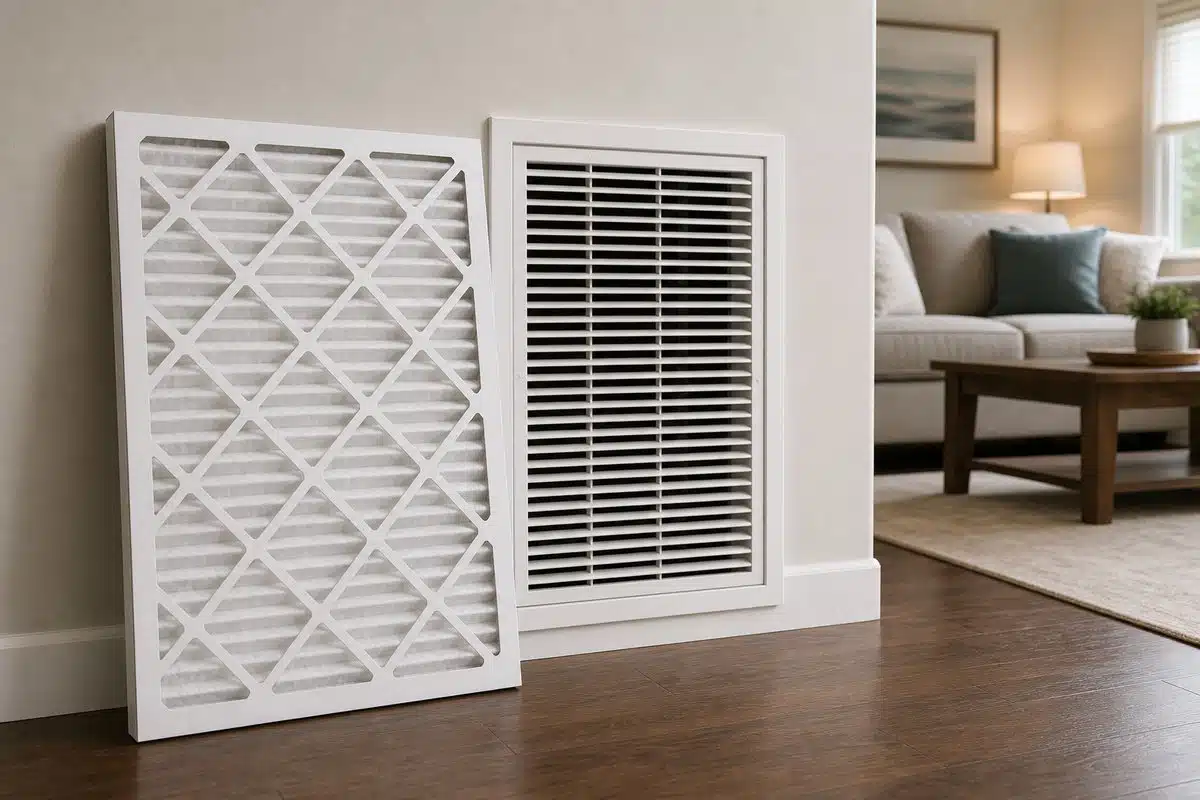
Practical ways to test your setting without guessing
If you are deciding between Auto and On, a simple home test can tell you a lot. You do not need to open equipment or adjust internal components. Just pay attention to how the home feels over a few days.
Track how the home feels at different times
Use one setting for a few days, then switch to the other. Notice whether the air feels stickier in the morning, whether bedrooms feel more balanced, and whether the AC seems to cycle in a way that matches your comfort. A setting that sounds good in theory may not feel good in a real Florida home.
Watch for clues in the filter and vents
If vents feel weak in some rooms, or if the filter gets dirty very quickly, the issue may be more than fan mode. Duct layout, return placement, and system sizing can all influence airflow. A fan setting can change how noticeable those problems are, but it will not repair them.
Pay attention to condensation and damp spots
Moisture on vents, musty odors, or a home that feels damp even when cool can be a clue that too much fan runtime is interfering with moisture control, or that the system needs service. If you see repeated moisture issues, a professional inspection can help sort out whether the cause is drainage, airflow, filtration, or something else in the system.
For thermostat-related concerns, fan settings, and overall system health, the basic guidance from ENERGY STAR’s heating and cooling guidance is a useful reference point. It reinforces the idea that thermostat habits, maintenance, and efficient operation all work together. If you want a local checkup, contact Inlet Mechanical to talk through what your home is doing.
Frequently Asked Questions
Should I leave my HVAC fan on all the time in Florida?
Not always. Leaving the fan on can improve air mixing and filtration, but it may also reduce the time your system spends removing moisture after a cooling cycle. In many Florida homes, Auto is the safer default for humidity control. If you want more circulation, a thermostat fan schedule may offer a middle ground without running the blower nonstop.
Does the fan setting change indoor humidity?
It can. In Auto, the fan stops with the cooling call, which usually helps the system remove moisture more effectively. In On, air can keep moving across the indoor coil after cooling ends, which may change how dry or damp the home feels. If your home already feels sticky, fan mode can make that feeling more noticeable.
Can running the fan help with allergies or dust?
It can help air pass through the filter more often, which may reduce some airborne dust and debris. But fan operation is only one part of indoor air quality. A good filter, sealed ducts, and proper maintenance matter too. If allergy concerns are a priority, it is smart to look at the whole system rather than the fan setting alone.
Why does my home feel warmer with the fan on?
Sometimes the fan moves air without enough cooling time to remove heat and moisture. That can make rooms feel less comfortable, especially in humid weather. If the system is short cycling, has airflow problems, or has a dirty filter, the effect can be even more noticeable. A service check can help identify whether the issue is the setting or the equipment.
If you want help choosing the best fan setting for your home, Inlet Mechanical can review your HVAC system, ductwork, and indoor comfort concerns in one visit. Reach out through the Inlet Mechanical contact page or call (321) 723-0858 to discuss practical options for your Palm Bay or Melbourne home.
Talk to a Licensed Inlet Mechanical Pro
Whether it’s a repair, an upgrade, or a question, our team is ready to help homeowners and businesses across Brevard & Indian River County.
Licensed FL Mechanical (CMC1250858) · 85+ years combined experience · Free, no-obligation estimates
Written & Reviewed By
Inlet Mechanical Team
The Inlet Mechanical team brings over 85 years of combined experience in HVAC, plumbing, and mechanical construction across Florida. Our licensed professionals hold Florida Mechanical HVAC License (CMC1250858) and Florida Plumbing License (CFC1433105), along with EPA Section 608 certifications. Based in Brevard County, we serve residential, commercial, and industrial clients with expert knowledge of Florida building codes, climate-specific HVAC solutions, and local plumbing requirements. Every article is reviewed by our licensed technicians to ensure accuracy and practical value for Melbourne-area homeowners and businesses.
Last Updated: July 12, 2026