
Hurricane season drives a lot of the calls we get about gas lines, specifically from homeowners who’ve decided a whole-home standby generator is worth the investment after losing power for days during a storm. A generator that runs on natural gas or propane needs its own properly sized gas line, and that’s a step that’s easy to underestimate when you’re focused on picking out the generator itself. Here’s what actually goes into that part of the project.
Why the Generator Needs Its Own Sized Gas Line
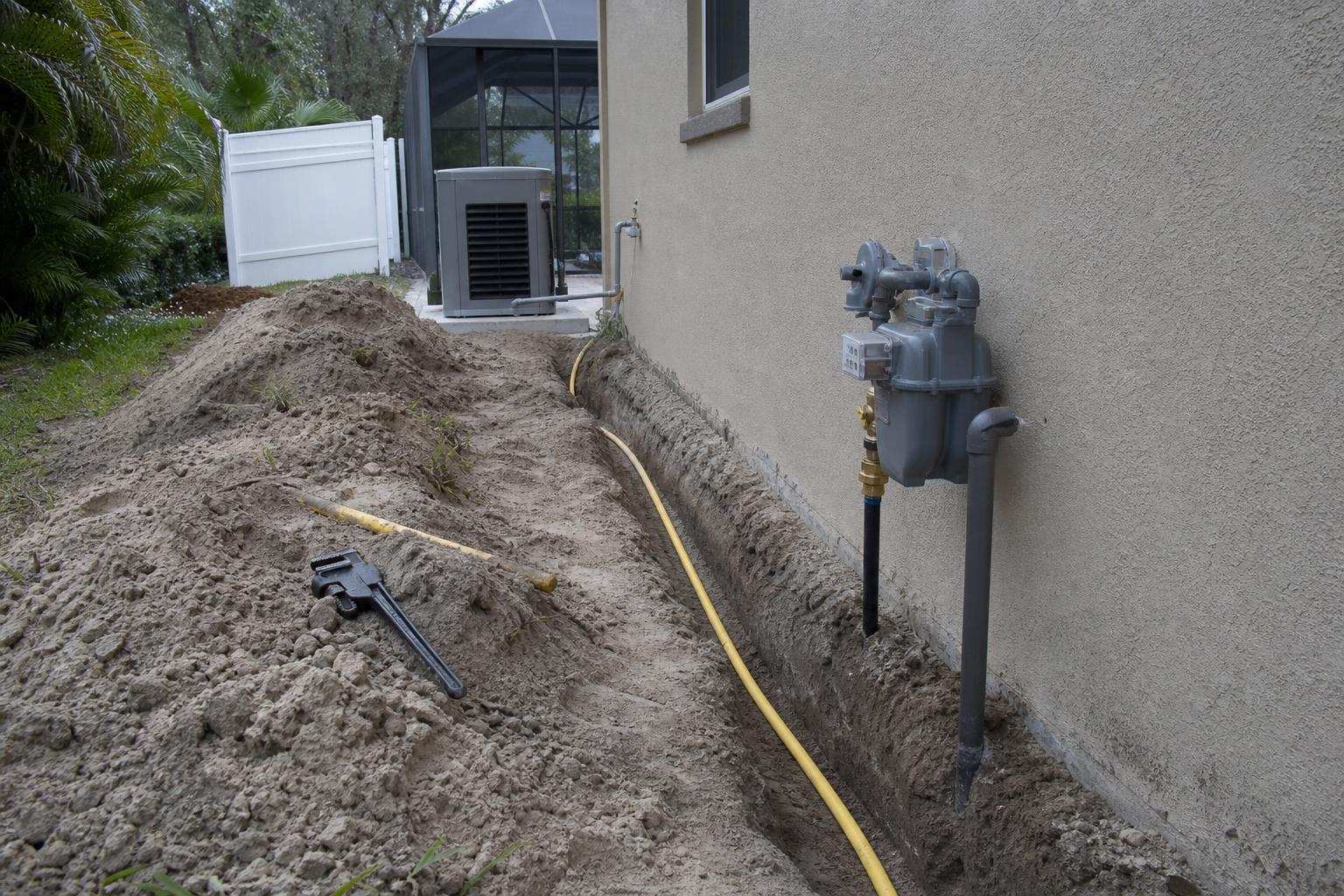
A standby generator draws a specific volume of fuel to run at its rated output, and that demand has to be calculated against what your existing gas line and meter can supply, especially if the generator will be running alongside other gas appliances like a water heater, range, or dryer. Undersizing the line can mean the generator underperforms or shuts down under load, which defeats the purpose of having it in the first place. This is why a generator gas line installation starts with a sizing calculation rather than just running a pipe to the unit’s location.
Natural Gas vs. Propane: What Changes
Need help with plumbing?
Inlet Mechanical’s licensed techs serve Brevard & Indian River with fast, dependable service and free estimates.
Homes connected to municipal natural gas typically tie the generator into the existing supply, provided the meter and line can handle the added demand. Homes relying on propane need a properly sized tank in addition to the line itself, and tank sizing depends on how long you want the generator able to run during an extended outage. Either fuel type works well for a standby generator, it depends on what’s already available at your property and how much run time you’re planning for.
What the Installation Process Involves
A generator gas line project generally includes a few connected steps:
- Load and sizing calculation. Confirming the generator’s fuel demand against the existing line, meter, and any other appliances sharing that supply.
- Running the new line. This can mean trenching underground pipe from the meter or tank to the generator’s pad location, sized and routed to meet code.
- Shutoff valve placement. A dedicated shutoff near the generator gives you a way to isolate that connection without affecting gas to the rest of the house.
- Pressure testing. Before the line is buried or closed up, it’s tested to confirm there are no leaks at any joint or connection.
- Coordination with the electrician. The generator’s electrical transfer switch work typically happens alongside the gas line project, since both need to be in place before the unit can be commissioned.
Because this work involves permitting and inspection in most Brevard County jurisdictions, it’s worth building that timeline into your planning rather than assuming the generator can be up and running the same week it arrives.
Placement Matters as Much as Sizing
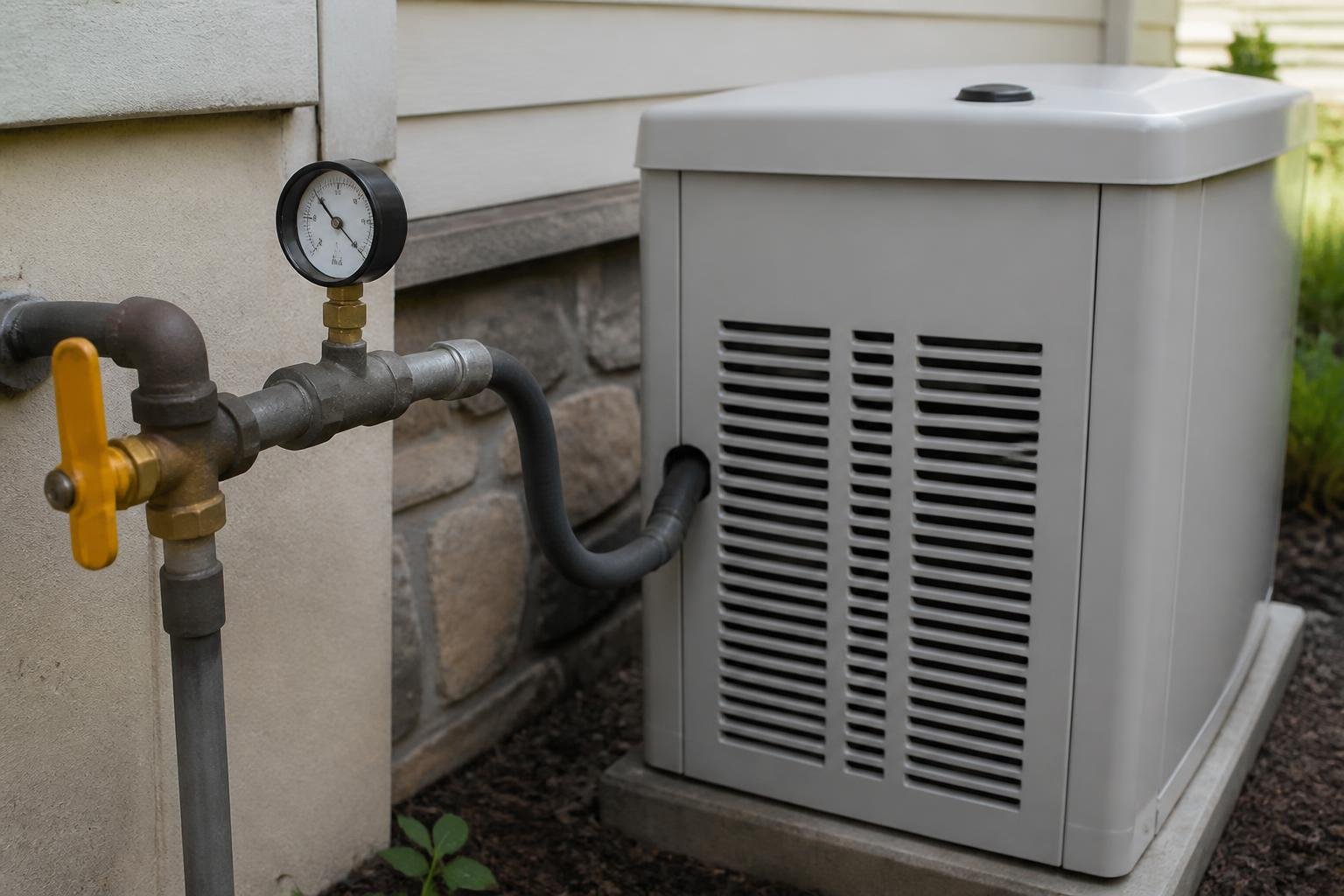
Where the generator sits affects how the gas line gets routed, and Florida’s building and fire codes set requirements for clearance from windows, doors, and property lines. A generator placed too close to the house’s gas meter or too far from a practical trenching path can add complexity and cost to the project. Walking the property with someone who’s sizing the gas line before finalizing the generator’s pad location tends to prevent surprises later.
Planning Timeline Around Hurricane Season
The busiest stretch for generator installations tends to fall right before hurricane season ramps up, which also means permitting offices, electricians, and gas line installers all get busier at the same time. If you’re planning to have a standby generator in place before storm season, starting the gas line sizing and permitting process earlier in the year gives you more room if scheduling gets tight closer to summer. It’s also worth thinking about propane tank delivery lead times if you’re going that route instead of natural gas, since tank sizing and initial fill scheduling can add its own timeline on top of the installation itself.
None of this means the project has to happen months in advance, but treating it as a spring task rather than a June scramble tends to make the whole process smoother, especially if trenching or permitting reveals something that needs to be addressed before the line goes in.
Working Around Existing Landscaping and Utilities
Trenching from the meter or propane tank to the generator’s pad often has to navigate around irrigation lines, existing landscaping, and other buried utilities, which is part of why a site visit matters before finalizing a route. Florida’s call-before-you-dig requirements mean utility locating happens before trenching starts, which protects both the crew doing the work and anything already buried on the property. Homeowners sometimes assume the shortest straight-line path is automatically the plan, but the actual route depends on what’s already underground and what the property’s layout allows without disrupting driveways, septic systems, or established landscaping unnecessarily. In some cases, running the line along a different side of the house adds a bit of distance but avoids more disruptive digging, which is often the better trade-off once the full picture of what’s underground becomes clear and the crew has confirmed exactly where everything else on the property actually runs before any digging starts.
Carbon Monoxide Safety: Placement Matters Beyond the Gas Line
Sizing and running the gas line correctly is only part of a safe generator setup. Where the generator actually sits once it’s running matters just as much, since portable and standby units alike produce carbon monoxide that can build up dangerously fast in the wrong location. CDC guidance on portable generators advises never running a generator inside a garage, basement, or other enclosed space, even with doors or windows open, and keeping it more than 20 feet away from the home, doors, and windows so exhaust can’t be drawn back inside.
A whole-home standby generator’s fixed pad location is typically chosen with this in mind from the start, which is one more reason placement deserves the same attention as gas line sizing rather than being an afterthought once the unit shows up. It’s worth confirming the planned pad location keeps that clearance from every window, door, and vent nearby, not just the closest one, since Florida homes often have openings on more than one wall near a typical generator location. Pairing the installation with a battery-backup carbon monoxide detector inside the home is a reasonable added precaution, especially for a generator that runs during extended outages when the household may not think to check on it as often.
Frequently Asked Questions
Can my existing gas line handle a new generator without upgrades?
It depends on the generator’s size and what else is already running off that line. A load calculation is the only reliable way to know whether the existing supply is adequate or whether the line needs to be upsized to handle the added demand.
Do I need a permit for a generator gas line installation?
In most Brevard County jurisdictions, yes. Gas line work typically requires a permit and inspection, which is worth factoring into your project timeline well before you expect the generator to be operational.
How long does a generator gas line installation usually take?
It varies based on the distance from the meter or tank to the generator’s location and whether trenching is straightforward or complicated by landscaping, driveways, or existing utilities. We can give you a clearer timeline after seeing the property and confirming the route.
If you’re planning a standby generator for your Brevard County home, our gas and water line team can size and install the connection, including our gas line installation and repair service. Contact Inlet Mechanical before you finalize your generator order so the gas supply is part of the plan from the start.
Talk to a Licensed Inlet Mechanical Pro
Whether it’s a repair, an upgrade, or a question, our team is ready to help homeowners and businesses across Brevard & Indian River County.
Licensed FL Mechanical (CMC1250858) · 85+ years combined experience · Free, no-obligation estimates
Written & Reviewed By
Inlet Mechanical Team
The Inlet Mechanical team brings over 85 years of combined experience in HVAC, plumbing, and mechanical construction across Florida. Our licensed professionals hold Florida Mechanical HVAC License (CMC1250858) and Florida Plumbing License (CFC1433105), along with EPA Section 608 certifications. Based in Brevard County, we serve residential, commercial, and industrial clients with expert knowledge of Florida building codes, climate-specific HVAC solutions, and local plumbing requirements. Every article is reviewed by our licensed technicians to ensure accuracy and practical value for Melbourne-area homeowners and businesses.
Last Updated: September 24, 2026