
When homeowners ask us about erv vs hrv ventilation florida considerations, they are usually trying to solve the same problem: a tightly built modern home on the Space Coast that feels stuffy, holds onto humidity, and never quite freshens up. Across Brevard County, today’s houses are sealed far better than older ones, which is good for energy use but means little fresh air gets in on its own. The fix is a whole-home ventilation system, and the two main types are the energy recovery ventilator, or ERV, and the heat recovery ventilator, or HRV. They sound similar and work similarly, but in our hot, humid climate the difference between them matters a great deal. Here is how we help families in Palm Bay and Melbourne choose the right one.
Why Tight Florida Homes Need Mechanical Ventilation
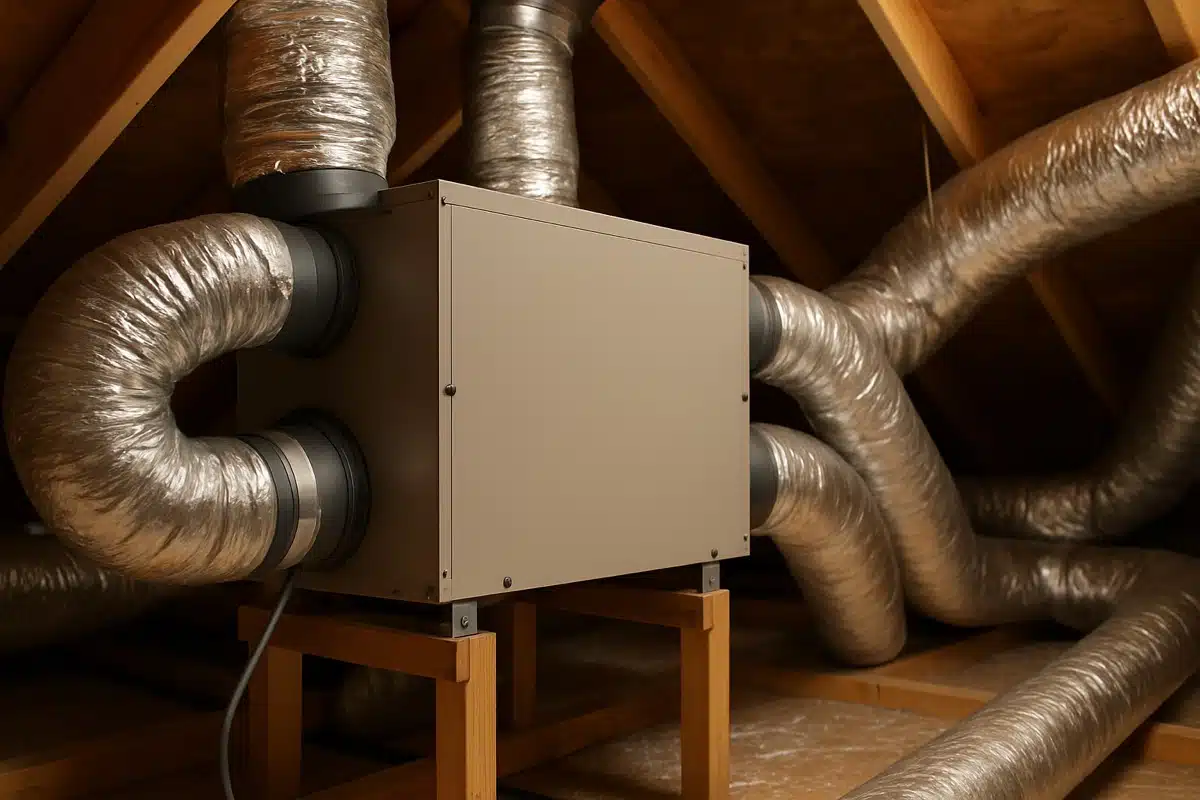
Older homes leaked air constantly through gaps, single-pane windows, and loose construction, so they exchanged indoor and outdoor air whether you wanted them to or not. Newer Brevard County homes are built and sealed to be efficient, which keeps conditioned air in and cuts energy waste, but it also traps everything else: cooking moisture, humidity from showers, carbon dioxide, cleaning fumes, and the off-gassing from furniture and finishes. Without a deliberate way to bring in fresh air, that stale, moist air just recirculates.
In Florida the humidity angle makes this especially important. When a tight home cannot shed indoor moisture, you get the conditions that lead to musty odors, condensation, and mold, all of which thrive in our 70-percent-and-higher humidity. Simply cracking windows is not a real solution here, because the outdoor air you let in during the wet season is often more humid than the air inside, so you trade stale air for swampy air and load down your air conditioner in the process. Mechanical ventilation solves this by bringing in a controlled, continuous stream of outdoor air and exhausting an equal amount of stale indoor air, all while recovering energy from the air it removes. The Environmental Protection Agency has good background on indoor air quality and the role of ventilation at epa.gov. The question is which recovery technology fits our climate, and that is where ERV and HRV diverge.
How HRV and ERV Recover Energy Differently
Need help with AC & heating?
Inlet Mechanical’s licensed techs serve Brevard & Indian River with fast, dependable service and free estimates.
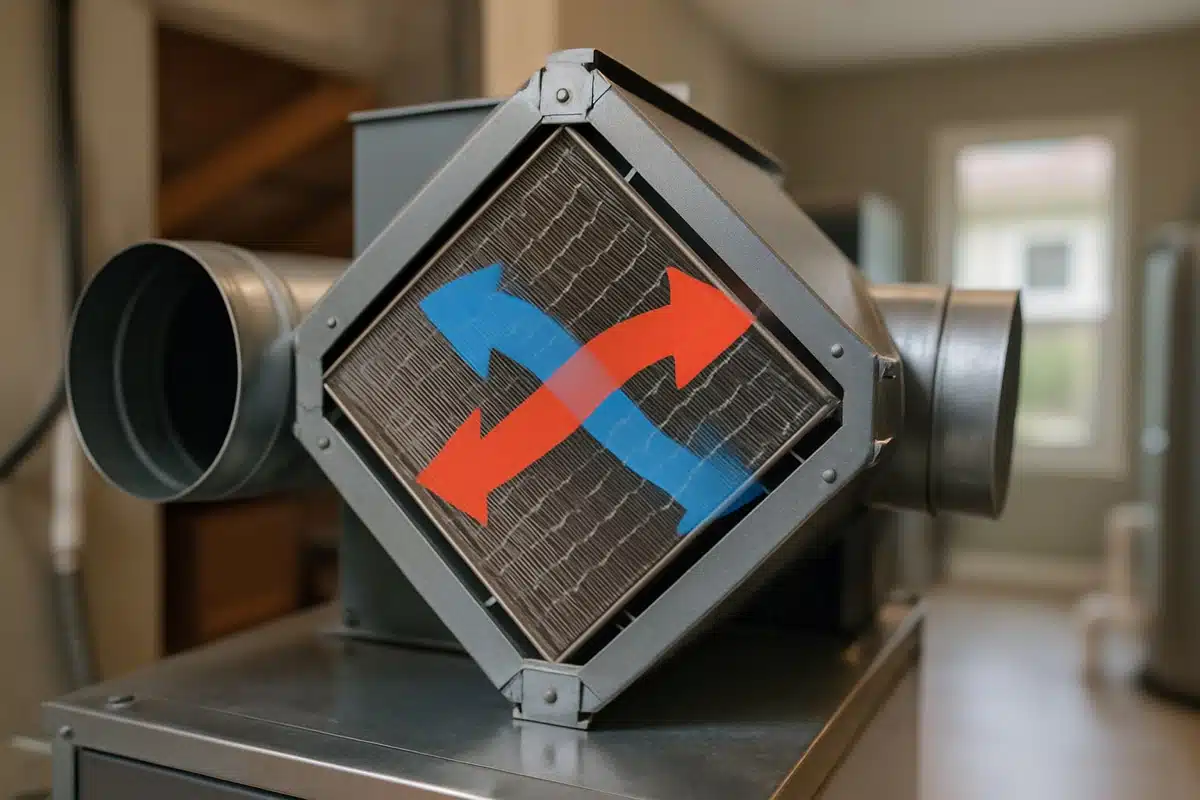
Both systems run two airstreams past each other through a core: fresh outdoor air coming in, and stale indoor air going out. They never mix; instead, the core transfers energy between them so you are not throwing away the comfort you already paid to create. The difference is what each one transfers. An HRV transfers heat only. In winter it warms the incoming cold air using the outgoing warm air, and in summer it does the reverse, but it does nothing about moisture. The humidity in the incoming air passes straight through.
An ERV transfers both heat and moisture. Its core is built to move water vapor as well as temperature, which means in our climate it can shed much of the humidity from incoming outdoor air before that air ever reaches your living space. During a humid Space Coast summer, an ERV passes a large share of the moisture in the fresh outdoor air back to the outgoing stream, so your air conditioner is handed drier air to begin with. That is the heart of the decision: an HRV is designed for cold, dry climates where the priority is keeping heat in and where adding a little indoor humidity in winter is welcome. An ERV is designed for climates like ours, where managing moisture is the whole point. We almost always steer Brevard County homeowners toward an ERV for exactly this reason, and we size and integrate it as part of a complete approach to residential HVAC services.
Why ERVs Fit the Space Coast Climate
Florida’s challenge is moisture, not cold, and that single fact decides the matchup for most homes here. An HRV brings in fresh air but lets the full humidity of a muggy August afternoon ride along with it, which means your air conditioner has to remove all of that extra moisture. In a region where outdoor humidity sits above 70 percent for months and afternoon storms keep the air saturated, that is a meaningful added load. An ERV cuts that load by transferring much of the incoming moisture back out, so you get the fresh-air benefit without handing your cooling system a fresh humidity problem.
The practical payoff is a home that feels fresher and drier at the same time. You dilute indoor pollutants and carbon dioxide, clear out cooking and shower moisture, and keep stale air from lingering, all while your air conditioner works less hard than it would with raw outdoor air pouring in. That is especially valuable through hurricane season, June 1 through November 30, when the air outside is at its heaviest. For homes that struggle with humidity even with a healthy AC, pairing an ERV with the right cooling and, in some cases, dedicated dehumidification gives us several levers to keep indoor air comfortable. We see this combination work well in the tighter newer construction going up around Viera and West Melbourne. If your home also relies on ductless zones, an ERV can complement those, and our ductless mini-split team can help map out how the pieces work together.
Sizing, Installing, and Maintaining a Ventilation System
Choosing an ERV is the first step; sizing and installing it correctly is what makes it work. We base ventilation rate on the home’s size, the number of occupants, and how tightly it is built, following established standards from organizations like ASHRAE, whose guidance you can read about at ashrae.org. Too little ventilation leaves the home stuffy; too much wastes energy and can pull in more moisture than needed. We also plan how the unit ties into your existing ductwork and air handler, or whether a partially independent duct layout serves the home better, and we place the intake away from sources of contamination like the dryer vent or driveway.
Installation details shape long-term performance. The outdoor intake and exhaust hoods need to be located and sealed to keep rain and pests out, which matters during our storm season, and the condensate the unit may produce needs a reliable drain path. Balancing the incoming and outgoing airflow is essential so the home stays at a neutral pressure rather than being pushed positive or negative, either of which can draw moisture into walls. Once it is running, an ERV needs modest upkeep: its filters and core require periodic cleaning so the moisture transfer and airflow stay strong, and the drain and hoods should be checked. We handle that maintenance alongside your seasonal HVAC service so the whole system, cooling and ventilation together, keeps your Brevard County home fresh and dry. Done right, an ERV runs quietly in the background and you mostly notice that the air simply feels better.
Signs Your Home Could Use Better Ventilation
Plenty of homes quietly need ventilation without the owner connecting the dots. If your house feels stuffy soon after you close it up, if bathroom and kitchen humidity lingers long after you have run the exhaust fan, or if windows and registers fog or sweat, those are signs that stale, moist air is not leaving fast enough. Persistent musty odors, especially in closets and back bedrooms, often point the same direction, and so does condensation appearing on interior surfaces during humid stretches.
Health and comfort cues matter too. Family members who feel groggy or stuffy indoors but better outside, lingering cooking or cleaning smells, and air that simply feels heavy can all trace back to inadequate fresh-air exchange in a tightly sealed home. These complaints tend to intensify during the wettest part of the year, when outdoor humidity is highest and you keep the house closed up to run the air conditioner. We can measure how your home is exchanging air and whether your indoor humidity is staying where it should across the Space Coast seasons. If a ventilation gap turns out to be the cause, an ERV is usually the cleanest fix, and we will tell you plainly whether your home would benefit before recommending anything. Catching this early keeps small air-quality annoyances from turning into moisture damage down the road.
Frequently Asked Questions
Should I choose an ERV or an HRV in Florida?
For nearly every Brevard County home, an ERV is the better fit. An HRV transfers heat only and lets the full humidity of incoming outdoor air into the house, which adds load to your air conditioner in our climate. An ERV transfers both heat and moisture, shedding much of the incoming humidity before fresh air reaches your living space. Since moisture, not cold, is Florida’s challenge, the ERV is the sensible default here.
Will an ERV lower the humidity in my home?
An ERV reduces the humidity that ventilation adds by transferring moisture from incoming fresh air back to the outgoing stream, so your cooling system receives drier air. It is not a dehumidifier on its own, though. It works best paired with a properly sized air conditioner, and in homes with persistent humidity we sometimes add dedicated dehumidification. Together these keep indoor moisture in a comfortable range through the wet season.
Does a tightly sealed new home really need ventilation?
Yes. Modern Florida homes are sealed to be energy efficient, which traps cooking moisture, shower humidity, carbon dioxide, and off-gassing from materials, leaving the air stale and damp. Older leaky homes exchanged air on their own; tight homes do not. A whole-home ventilator brings in controlled fresh air and exhausts stale air, and in our climate an ERV does this without adding the heavy outdoor humidity that open windows would.
How much maintenance does an ERV require?
An ERV needs modest, regular upkeep. Its filters and the recovery core require periodic cleaning so airflow and moisture transfer stay strong, and the outdoor hoods and any condensate drain should be checked, especially after storm season. We typically handle this alongside your seasonal HVAC maintenance so the cooling and ventilation systems are serviced together, which keeps the whole setup running efficiently in your Space Coast home.
If your Brevard County home feels stuffy or holds onto humidity, the team at Inlet Mechanical can assess whether an ERV is the right fit and size it to your house. Call us at (321) 723-0858 to talk it through, or learn more about our full range of residential HVAC services and how we keep Space Coast homes fresh and comfortable.
Talk to a Licensed Inlet Mechanical Pro
Whether it’s a repair, an upgrade, or a question, our team is ready to help homeowners and businesses across Brevard & Indian River County.
Licensed FL Mechanical (CMC1250858) · 85+ years combined experience · Free, no-obligation estimates
Written & Reviewed By
Inlet Mechanical Team
The Inlet Mechanical team brings over 85 years of combined experience in HVAC, plumbing, and mechanical construction across Florida. Our licensed professionals hold Florida Mechanical HVAC License (CMC1250858) and Florida Plumbing License (CFC1433105), along with EPA Section 608 certifications. Based in Brevard County, we serve residential, commercial, and industrial clients with expert knowledge of Florida building codes, climate-specific HVAC solutions, and local plumbing requirements. Every article is reviewed by our licensed technicians to ensure accuracy and practical value for Melbourne-area homeowners and businesses.
Last Updated: June 20, 2026