
Choosing the Right Sealant for Florida Duct Joints
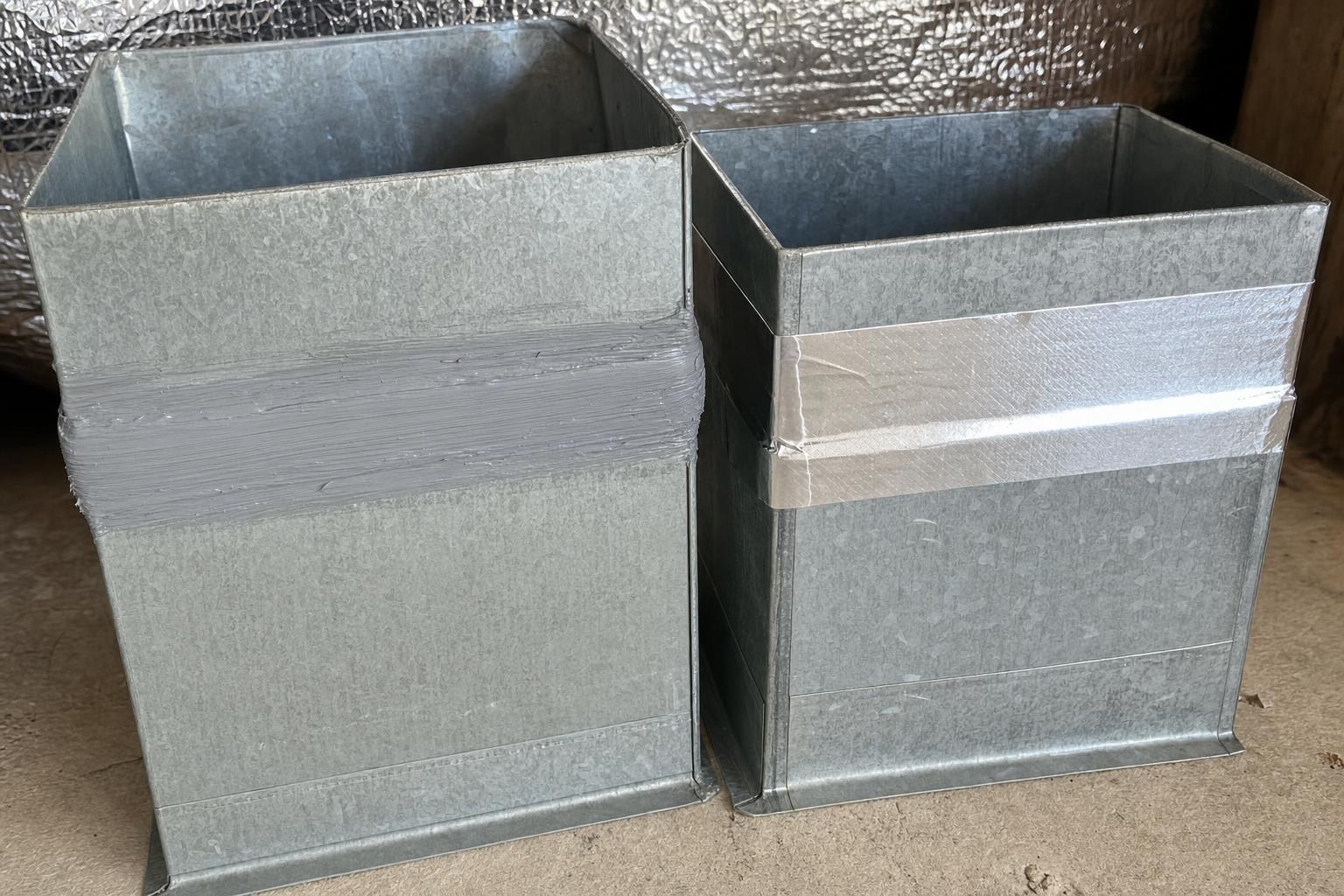
The question of duct mastic vs foil tape comes up regularly when homeowners in Brevard County discover their air ducts are leaking conditioned air into a sweltering attic. Both products exist to seal joints between duct sections, both are found at hardware stores, and both can look convincing on a freshly installed duct run. Yet the materials behave very differently once they encounter Florida’s combination of high attic temperatures, humidity swings, and the salt-laden air that drifts in from the coast. Understanding what each product is designed to do — and where it tends to fall short — can help you have a more informed conversation with an HVAC technician before any sealing work begins.
What Duct Mastic Actually Is
Need help with AC & heating?
Inlet Mechanical’s licensed techs serve Brevard & Indian River with fast, dependable service and free estimates.
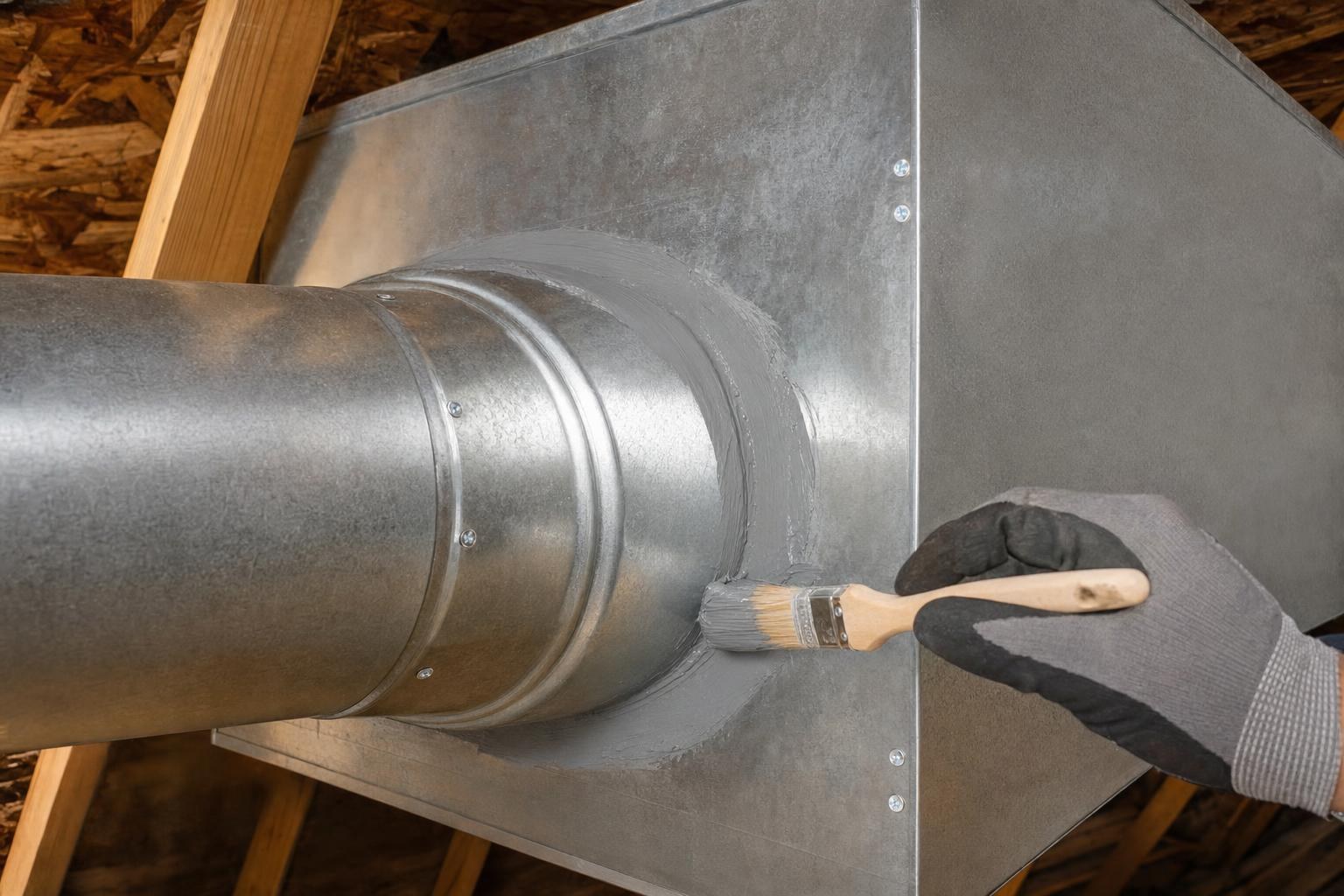
Duct mastic is a thick, paste-like compound made primarily from water-based polymers, adhesives, and sometimes fiberglass reinforcing strands. It is applied by brush, gloved hand, or putty knife directly onto clean duct surfaces and dries to a rubbery, semi-rigid finish. Because it conforms to irregular surfaces and bridges small gaps without cracking, it has long been the preferred sealing material in many HVAC standards documents.
The material’s strength comes from its flexibility after curing. Florida attics can reach temperatures well above 130 degrees Fahrenheit during summer afternoons, then cool significantly overnight or during a prolonged rainy stretch. Duct joints expand and contract through that thermal cycling. A sealant that becomes brittle or loses adhesion under repeated movement will eventually allow air leakage to return. Mastic, when applied correctly to a clean, primed surface, tends to remain bonded through years of that thermal stress.
Mastic does have practical limitations. It is messy to work with, requires adequate cure time before the system is run at full capacity, and is not appropriate for spanning gaps wider than roughly a quarter inch without a mesh reinforcing tape embedded into a first coat. Very large gaps or separations should be corrected mechanically before any sealant is applied.
Understanding Foil Tape and Why the Label Details Matter
When most people picture duct tape, they imagine the silver-gray cloth-backed product sold for general repairs. That material is not appropriate for HVAC duct joints, and it is not the foil tape being discussed here. Approved duct sealing foil tape is a pressure-sensitive aluminum-backed tape that carries a UL 181 rating, and that distinction is critical.
UL 181-rated foil tapes are tested specifically for use on rigid fiberglass duct board and flexible duct assemblies. The backing is a thin aluminum foil laminated to a carrier layer and coated with an acrylic or rubber-based adhesive designed to hold at elevated temperatures. When the correct product is applied to a clean, dry surface with firm hand pressure — typically using a seam roller or a similar tool — it creates a well-sealed joint that is easy to inspect visually and relatively quick to apply.
The problem is that surface preparation matters enormously with foil tape. Dust, moisture, and residual oils all compromise adhesion. Florida attics collect dust quickly, and condensation can form on duct surfaces near supply boots where cold air meets warm humid air. A tape joint that appears solid during installation may begin peeling within a single cooling season if the surface was not thoroughly wiped clean before application. Once the tape edge begins to lift, outside air and attic humidity can work beneath the adhesive line and accelerate the failure.
How Florida’s Environment Affects Each Material Over Time
Coastal Brevard County presents a specific set of challenges that affect duct sealants differently than drier inland climates. Salt air carries fine particulate that settles on duct surfaces and can interfere with tape adhesion if ducts are not cleaned before tape is applied. High ambient humidity means that bare duct surfaces in unconditioned attic spaces are rarely truly dry, especially after the afternoon thunderstorms that dominate Florida’s summer months from roughly June through September.
Duct mastic tends to tolerate this environment more forgivingly because it penetrates minor surface irregularities and does not rely on a thin adhesive film maintaining contact across a flat surface. Once cured, mastic is also largely indifferent to incidental moisture contact on its exterior, though it should not be applied to a wet surface.
Foil tape performs reasonably well in controlled conditions, and experienced technicians who work carefully with surface preparation and approved products do achieve durable results with it. The concern arises more often with do-it-yourself repairs or with unapproved products that are simply too common at retail stores. If a homeowner purchases a roll of silver cloth tape or an uncertified metallic tape and applies it in a hot, dusty attic, the sealing benefit may be short-lived. The U.S. Department of Energy’s guidance on duct sealing and insulation reinforces that proper materials and technique together determine long-term performance. You can review that guidance at ENERGY STAR guidance.
For most Florida attic applications, particularly where flex duct connections to plenum boxes, air handler cabinets, and boot collars are involved, mastic or a combination of mastic with mesh tape is the approach many experienced HVAC contractors reach for first. Foil tape is often used as a secondary layer over a mastic-sealed joint on rigid duct board, or in locations where the geometry makes brush application impractical.
Matching the Material to the Specific Joint Type
Not every duct joint is the same, and the choice between mastic and foil tape often comes down to what type of duct is involved and where in the system the joint sits.
Flexible duct connections to metal collars and plenums benefit from mastic because the transition between dissimilar materials creates an area prone to movement and because the inner liner of flex duct has a surface that does not bond as cleanly with pressure-sensitive tape. A well-applied mastic collar, sometimes reinforced with draw bands at the duct sleeve, creates a durable connection at these transitions.
Rigid sheet metal duct runs with longitudinal seams and drive cleats can be sealed effectively with either material, though mastic remains more forgiving if the metal surface has any oil residue from fabrication. Rigid fiberglass duct board is the application where UL 181B:FX rated foil tape was specifically developed, and many technicians prefer tape at the board joints because the smooth factory-faced surface provides ideal bonding conditions when preparation is done correctly.
Internal duct liner connections near the air handler, where moisture from coil condensation is more of a factor, are areas where material selection and workmanship both deserve particular attention. Leaks in this region of the system can introduce attic air directly into the conditioned airstream, with implications for both comfort and indoor air quality.
If you are noticing uneven room temperatures, higher-than-expected utility bills, or rooms that never seem to reach the thermostat setpoint, duct leakage is one reasonable thing to have a technician evaluate. Our ductwork services page describes how Inlet Mechanical approaches duct inspection and sealing work in Brevard County homes.
Frequently Asked Questions
Can I use regular duct tape from a hardware store to seal my air ducts?
The cloth-backed silver tape commonly called duct tape is not recommended for HVAC duct joints. It was originally developed for general-purpose sealing and bundling and is not rated for the sustained temperatures inside attic duct systems. Its adhesive tends to dry out and release over time when exposed to heat, leaving a sticky residue on the duct surface and no actual seal. For duct joints, look for products specifically labeled as UL 181-rated foil tape, or ask your HVAC technician about using duct mastic, which is the paste compound applied by brush or hand.
How long does duct mastic take to cure before I can run my air conditioner?
Cure time for duct mastic varies by product, application thickness, and ambient conditions. Most manufacturers indicate that a standard coat will skin over within a few hours and reach functional cure within 24 hours under typical conditions. In Florida’s humid summer weather, cure times may extend somewhat, particularly in attic spaces with limited airflow. Your technician will be familiar with the specific product they use and can advise on when the system is ready to return to normal operation. Applying a second coat before the first has fully cured is one of the more common application errors that affects long-term performance.
Is it possible to have duct leakage even if the ducts look intact from the access hatch?
Yes, and this is a common finding during duct inspections in older Brevard County homes. Joints that have separated slightly, boot connections that were never fully sealed during original installation, and flex duct sections that have developed small tears near clamps may not be visible from a single access point. A blower door test combined with duct pressurization testing can quantify how much air is escaping the duct system and help identify problem zones. Visual inspection alone often underestimates the scope of leakage in an older system.
Does it make sense to seal ducts in an older home if I plan to replace the system in a few years?
This depends on the condition of the existing ductwork and the extent of the leakage. If the duct runs themselves are structurally sound and the leakage is concentrated at joints and connections, sealing can improve comfort and reduce operating costs during the remaining service life of the equipment. If the duct system has significant deterioration, collapsed flex sections, or connections that have fully separated, a more comprehensive evaluation of whether to repair or replace the duct layout may be appropriate. Discussing your timeline and budget with an HVAC technician can help you decide whether targeted sealing or a broader replacement makes more sense for your specific situation.
Duct sealing is one of those projects where the difference between a lasting result and a short-lived fix often comes down to material selection and surface preparation rather than effort alone. If you have questions about your home’s duct system or would like a professional assessment, Inlet Mechanical is available to help homeowners throughout Brevard County. You can learn more about our full range of residential HVAC services, reach us through our contact page, or call us directly at (321) 723-0858 to speak with a member of our team.
Talk to a Licensed Inlet Mechanical Pro
Whether it’s a repair, an upgrade, or a question, our team is ready to help homeowners and businesses across Brevard & Indian River County.
Licensed FL Mechanical (CMC1250858) · 85+ years combined experience · Free, no-obligation estimates
Written & Reviewed By
Inlet Mechanical Team
The Inlet Mechanical team brings over 85 years of combined experience in HVAC, plumbing, and mechanical construction across Florida. Our licensed professionals hold Florida Mechanical HVAC License (CMC1250858) and Florida Plumbing License (CFC1433105), along with EPA Section 608 certifications. Based in Brevard County, we serve residential, commercial, and industrial clients with expert knowledge of Florida building codes, climate-specific HVAC solutions, and local plumbing requirements. Every article is reviewed by our licensed technicians to ensure accuracy and practical value for Melbourne-area homeowners and businesses.
Last Updated: October 22, 2026