
If you’ve searched for a fix to a hot upstairs bedroom or a stuffy back room, you’ve probably come across duct booster fans, small inline fans that install inside a duct run to push more air toward a specific vent. They’re an easy product to buy and install, which makes them tempting. Whether they actually solve the problem depends on why that room is running hot in the first place, and that’s worth understanding before spending money on one.
How a Duct Booster Fan Works
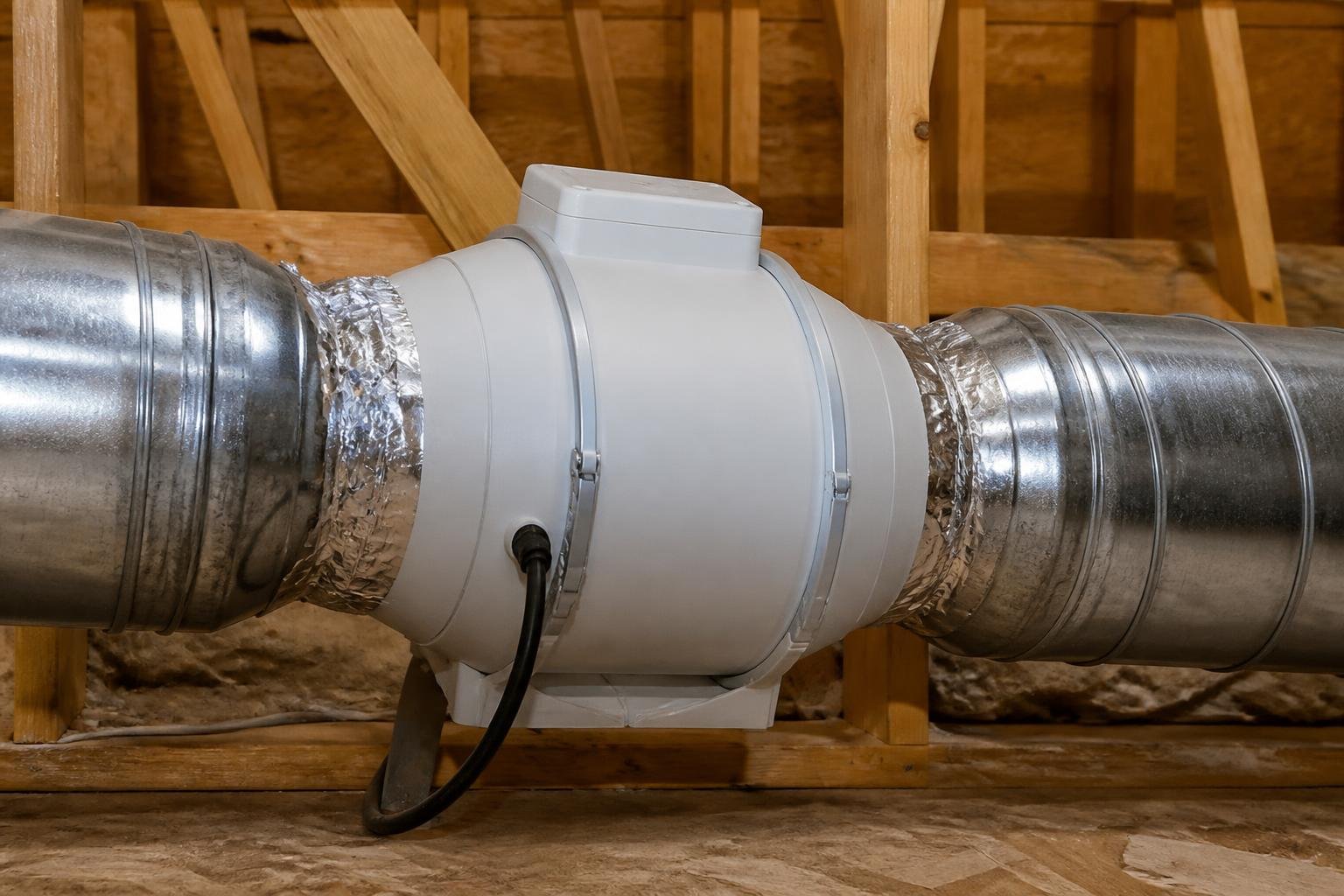
A booster fan installs inline within the ductwork, typically close to the register serving the problem room, and turns on either continuously, on a timer, or triggered by a temperature sensor to push additional airflow to that specific vent. The idea is straightforward: if one room isn’t getting enough conditioned air compared to the rest of the house, adding a fan to that branch increases the volume reaching it. In the right situation, that’s a reasonable fix.
When a Booster Fan Actually Helps
Need help with AC & heating?
Inlet Mechanical’s licensed techs serve Brevard & Indian River with fast, dependable service and free estimates.
Booster fans tend to work well when the underlying system has enough total capacity, but the distribution to one particular room is limited by duct length, too many turns in the run, or a duct that’s undersized relative to the room it serves. In these cases, the system as a whole is capable of cooling the house, the air just isn’t reaching that one room efficiently. A booster fan compensates by giving that specific branch a push it wasn’t getting on its own.
When a Booster Fan Won’t Fix the Real Problem
The trouble is that a hot room has more than one possible cause, and a booster fan only addresses one of them. If the real issue is a leaky duct losing cooled air into the attic before it ever reaches the vent, adding a fan pushes more air through the same leaky duct, which doesn’t solve much. If the system itself is undersized for the home or already struggling to keep up on the hottest days, a booster fan redistributes a limited amount of cooling rather than adding more of it. And if the room in question has poor insulation or significant solar heat gain from windows, no amount of additional airflow fully offsets that.
- Leaky or disconnected ductwork: Sealing the duct addresses the actual air loss; a booster fan doesn’t.
- Undersized HVAC system: A booster fan just moves the same limited cooling around differently, it doesn’t create more capacity.
- Poor room insulation or heat gain: Airflow alone doesn’t compensate for a room absorbing more heat than others.
- Closed or blocked vents elsewhere: Sometimes the fix is as simple as checking that other rooms aren’t over-restricting airflow, which changes the balance throughout the system.
Getting a Real Diagnosis Before You Buy One
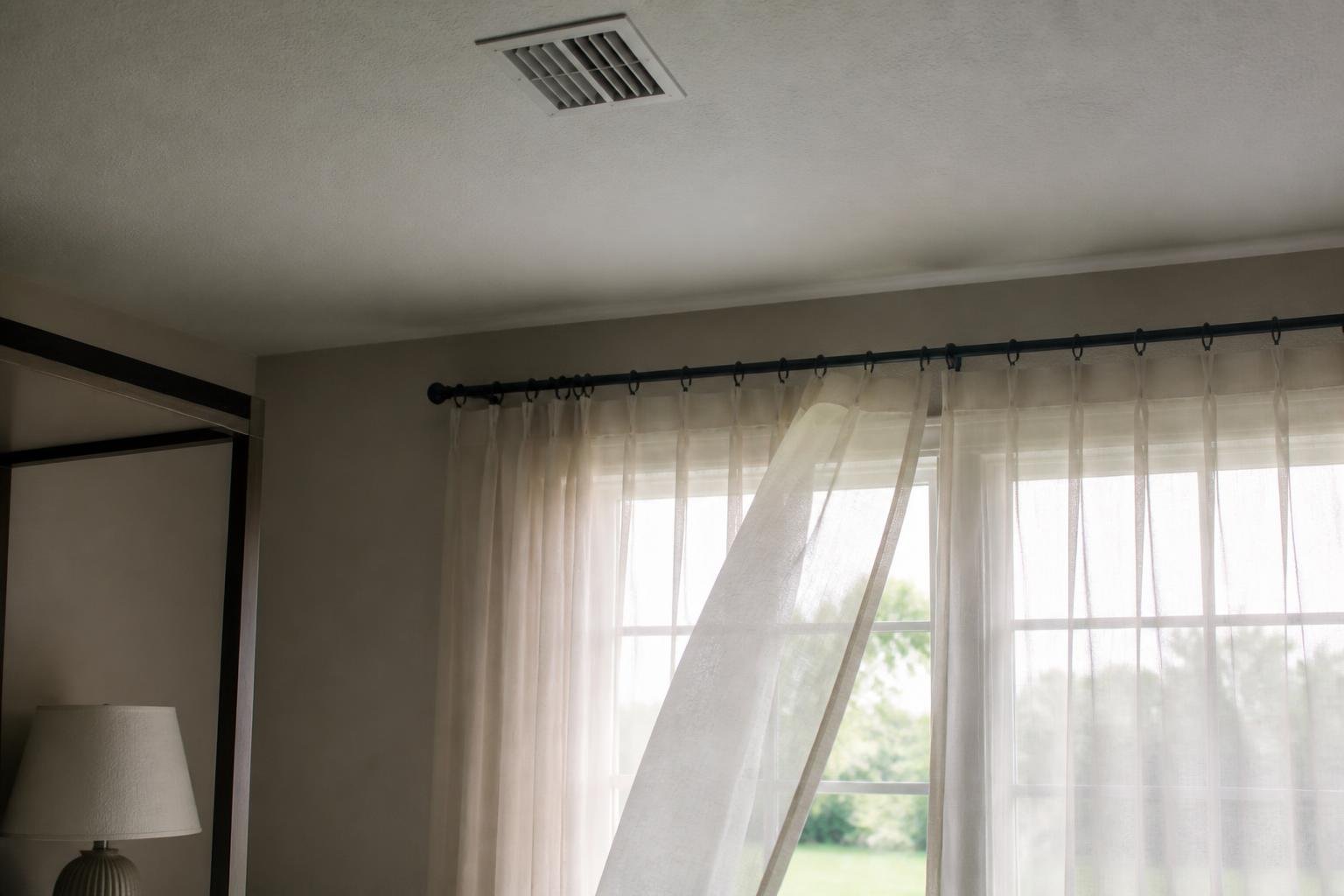
Because a booster fan treats a symptom rather than necessarily the cause, it’s worth having the actual airflow and duct condition checked before installing one. That usually means a look at duct routing, a check for leaks or disconnections, and confirming the system’s total capacity is appropriate for the home’s size. If the diagnosis points to a duct sealing or sizing issue, fixing that directly tends to be a more lasting solution than adding a fan that compensates for it. If the diagnosis points to a simple distribution issue on an otherwise healthy system, a booster fan can be a reasonable, targeted fix.
A Simple Way to Think Through It Before You Buy
A useful gut check before ordering a booster fan is to compare how the problem room behaves at different times of day and under different conditions. A room that’s only uncomfortable during the hottest part of the afternoon, especially one with west-facing windows, points more toward heat gain than a distribution problem. A room that’s consistently weak on airflow no matter the time of day or outdoor temperature points more toward a duct issue. If the vent itself barely pushes any air even with the system running, that’s a stronger signal something upstream, like a disconnected or crushed duct, is limiting airflow before it ever reaches the booster fan’s location.
None of this replaces an actual inspection, but it can help you describe the problem more precisely, which makes it easier to get an accurate diagnosis instead of guessing at a fix.
Other Fixes Worth Considering First
Before adding any equipment to a duct run, it’s worth ruling out the simpler explanations. A vent that’s been partially closed, furniture blocking a return or supply register, or a thermostat located in a spot that doesn’t represent the rest of the home’s temperature can all create the impression of uneven cooling that has nothing to do with duct capacity at all. Checking these basics first costs nothing and sometimes resolves the complaint without any equipment changes. If the problem persists after ruling those out, that’s when a more thorough look at duct condition, sizing, and system capacity becomes worthwhile rather than reaching for an add-on fan first, since the fan can’t fix a leak or a poorly matched system.
What Duct Sealing Fixes That a Booster Fan Can’t
If a diagnosis points to a leaky duct rather than a distribution problem, sealing is the fix that actually addresses it, and a booster fan isn’t a substitute. ENERGY STAR notes that sealing and insulating ducts directly helps with common comfort complaints, including rooms that run too hot in summer or too cold in winter, which is precisely the symptom a booster fan is often bought to solve. The difference is that sealing stops the air from escaping in the first place, while a fan just pushes more air through the same leak.
That distinction matters for cost as much as comfort. A booster fan is a relatively small, self-contained purchase, but it adds an ongoing small electrical draw and doesn’t reduce the underlying loss driving up cooling costs elsewhere in the system. Sealing addresses the loss directly and tends to be the more durable fix when a leak is the actual cause, even though it typically involves more labor than mounting a fan. Knowing which situation you’re in before spending money on either one is really the point of getting an actual diagnosis first.
Frequently Asked Questions
Can I just install a duct booster fan myself?
You can, but without knowing whether the actual cause is a distribution issue, a leak, or a sizing problem, there’s a real chance it won’t fix the room the way you’re hoping. It’s worth understanding the cause first so you’re not spending money on a fix that doesn’t address it.
Will a booster fan increase my energy costs?
It adds a small amount of electrical draw for the fan itself, and it doesn’t address any underlying inefficiency like duct leaks, which can continue wasting cooled air regardless of whether the fan is installed.
How do I know if my hot room is a duct problem or an insulation problem?
A duct and airflow inspection can usually distinguish between the two, since a duct issue tends to correlate with weak airflow at the vent itself, while an insulation or heat gain issue often shows adequate airflow but the room still runs warm regardless.
If a room in your Brevard County home stays warmer than the rest no matter what you try, our ductwork team can find out why, including our duct repair and replacement service. Contact Inlet Mechanical before spending money on a fix that might not address the real cause.
Talk to a Licensed Inlet Mechanical Pro
Whether it’s a repair, an upgrade, or a question, our team is ready to help homeowners and businesses across Brevard & Indian River County.
Licensed FL Mechanical (CMC1250858) · 85+ years combined experience · Free, no-obligation estimates
Written & Reviewed By
Inlet Mechanical Team
The Inlet Mechanical team brings over 85 years of combined experience in HVAC, plumbing, and mechanical construction across Florida. Our licensed professionals hold Florida Mechanical HVAC License (CMC1250858) and Florida Plumbing License (CFC1433105), along with EPA Section 608 certifications. Based in Brevard County, we serve residential, commercial, and industrial clients with expert knowledge of Florida building codes, climate-specific HVAC solutions, and local plumbing requirements. Every article is reviewed by our licensed technicians to ensure accuracy and practical value for Melbourne-area homeowners and businesses.
Last Updated: September 24, 2026