
If you are a commercial property owner, building manager, or tenant preparing to renovate a leased space in Brevard County, understanding commercial tenant improvement plumbing in Florida is essential for keeping your project on budget and on schedule. Tenant improvement (TI) projects often involve significant plumbing work, from adding restrooms and break room sinks to relocating grease traps and installing specialty fixtures. Inlet Mechanical provides licensed commercial plumbing services throughout Melbourne, Palm Bay, and Brevard County for tenant buildouts of all sizes.
Commercial Tenant Improvement Plumbing Florida: What Is Tenant Improvement Plumbing?
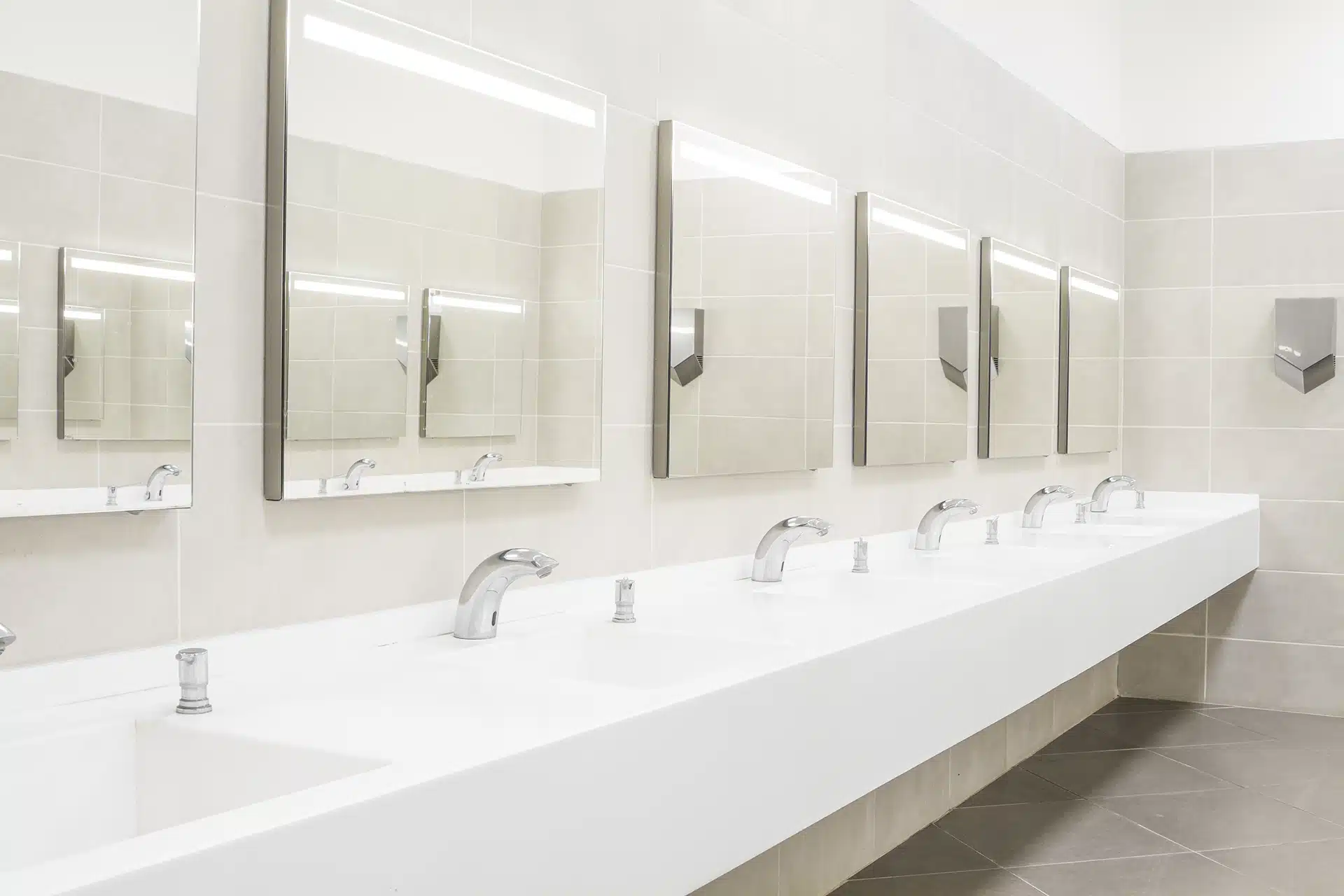
Tenant improvement plumbing refers to any plumbing modifications made to a commercial space to accommodate a new tenant’s specific needs. When a business moves into an existing commercial building, the space rarely has plumbing configured exactly the way the new tenant needs it. A restaurant needs different plumbing than a dental office, which needs different plumbing than a hair salon.
Common tenant improvement plumbing projects include:
- Adding or relocating restrooms to meet occupancy requirements
- Installing ADA-compliant fixtures to bring the space into code compliance
- Adding break room or kitchen plumbing for employee use
- Installing grease traps and grease interceptors for food service businesses
- Relocating floor drains to accommodate new equipment layouts
- Upgrading water supply lines for increased demand
- Installing backflow prevention devices as required by Brevard County water utilities
- Adding emergency eyewash stations and safety showers for medical or industrial tenants
Inlet Mechanical’s commercial plumbing services cover the full scope of tenant improvement work, from initial design consultation through final inspection and occupancy approval.
Florida Building Code Requirements for TI Plumbing
Tenant improvement plumbing in Florida must comply with the Florida Building Code plumbing chapter, which adopts the International Plumbing Code with Florida-specific amendments. Key requirements that affect most TI projects include:
Fixture count requirements: The Florida Building Code specifies the minimum number of plumbing fixtures (toilets, sinks, drinking fountains) based on the occupancy type and the number of occupants. A change in occupancy type, such as converting retail space to a restaurant, almost always triggers additional fixture requirements.
ADA accessibility: At least one restroom in any commercial tenant space must meet ADA accessibility standards, including properly positioned fixtures, grab bars, and adequate clearances. If the existing restrooms do not meet current ADA requirements, the TI project must bring them into compliance.
Grease trap requirements: Any food service establishment in Brevard County must have an approved grease interceptor. The size of the interceptor depends on the number of fixtures connected and the expected flow rate. Grease trap installation or relocation is one of the most common and costly plumbing components of restaurant TI projects.
Backflow prevention: Florida law requires backflow prevention on all commercial water connections to protect the public water supply. The type of device depends on the degree of hazard. Medical offices, restaurants, and industrial tenants typically need more robust backflow prevention than general office spaces.
Water heater requirements: Commercial water heaters must meet specific capacity, efficiency, and safety standards under the Florida Energy Conservation Code. Tenant improvements that add sinks, showers, or other hot water fixtures may require upgrading or adding water heating capacity.
Planning Your Tenant Improvement Plumbing Project
Successful TI plumbing projects start with proper planning. Here are the critical steps:
1. Assess the existing plumbing infrastructure: Before signing a lease, have a licensed plumber evaluate the space’s current plumbing layout, pipe sizes, water pressure, sewer capacity, and the condition of existing fixtures. Discovering inadequate infrastructure after signing a lease leads to budget overruns and delays.
2. Determine occupancy type and fixture requirements: Work with your architect and plumber to calculate the required fixture count based on the new occupancy classification. A change from office (Business occupancy) to restaurant (Assembly occupancy) dramatically increases fixture requirements.
3. Coordinate with other trades: Plumbing rough-in needs to happen at the right time relative to framing, electrical, mechanical, and fire suppression work. Inlet Mechanical coordinates with general contractors and other trades to avoid conflicts and keep the schedule on track.
4. Obtain permits: All commercial plumbing work in Brevard County requires permits and inspections. The permitting process in Melbourne and Palm Bay typically takes 2 to 4 weeks for plan review, so submit early to avoid project delays. Your licensed plumber should handle the permit application and attend all required inspections.
5. Plan for slab work: Many commercial buildings in Florida are built on concrete slabs, and relocating drains or adding new fixtures often requires cutting and repairing the slab. This is one of the most time-consuming and expensive aspects of TI plumbing. Minimizing drain relocation by designing the new layout to align with existing underground plumbing saves both time and money.
Use our plumbing cost estimator to get a ballpark figure for common commercial plumbing improvements.
Cost Factors for Commercial TI Plumbing in Brevard County
The cost of tenant improvement plumbing varies widely based on the scope of work. Here are the primary cost drivers:
- Number of new fixtures: Each new toilet, sink, or specialty fixture requires supply lines, drain connections, venting, and the fixture itself. Budget $2,000 to $5,000 per fixture installed in a commercial setting.
- Slab cutting and repair: Adding underground drains in a slab-on-grade building requires saw-cutting concrete, excavating, running new pipe, backfilling, and repouring concrete. This can add $50 to $150 per linear foot of new drain line.
- Grease trap installation: A properly sized commercial grease interceptor costs $3,000 to $10,000 installed, depending on size and whether it is indoor or outdoor.
- Water supply upgrades: If the existing water service is undersized for the new tenant’s needs, upsizing the supply line from the meter can cost $2,000 to $8,000 depending on the distance and pipe size.
- Backflow preventer installation: A commercial reduced pressure backflow preventer (RPZ) typically costs $800 to $2,500 installed, plus annual testing fees.
For a typical office-to-restaurant conversion in Brevard County, expect $15,000 to $40,000 in plumbing costs alone. A standard office TI with minimal plumbing changes (adding a break room sink and bringing restrooms to ADA compliance) might range from $5,000 to $12,000.
Frequently Asked Questions
Who is responsible for tenant improvement plumbing costs, the landlord or the tenant?
This depends on the lease agreement. In most commercial leases, the landlord provides a tenant improvement allowance (TI allowance) that covers a set dollar amount per square foot for buildout costs, including plumbing. Any costs exceeding the TI allowance are the tenant’s responsibility. Some landlords pay for base building plumbing upgrades (like increasing water supply capacity) while tenants pay for interior plumbing specific to their use. Review your lease carefully and negotiate plumbing-heavy items before signing.
How long does commercial TI plumbing take to complete?
Timeline depends on the scope. A simple project adding one or two fixtures to an existing system can be completed in one to two weeks. A full restaurant buildout with grease trap installation, multiple restrooms, bar sinks, and slab work can take four to eight weeks for the plumbing phase alone. Plan review and permitting adds two to four weeks before work can begin. Starting the permit process as early as possible is critical to avoiding delays.
Do I need a separate plumbing permit for tenant improvement work in Brevard County?
Yes. Commercial plumbing work requires its own permit, separate from the general building permit. The plumbing contractor submits plans showing fixture locations, pipe sizes, drain layouts, and fixture schedules to the local building department for review. Inspections are required at rough-in (before walls and floors are closed up) and at final completion. Working with a licensed plumber (License CFC1433105) who regularly handles commercial permits in Brevard County streamlines this process.
Commercial tenant improvement plumbing in Florida requires careful planning, code compliance, and experienced professionals to deliver a successful buildout. Inlet Mechanical’s licensed commercial plumbers handle every aspect of TI plumbing, from pre-lease assessments to final occupancy inspections, throughout Melbourne, Palm Bay, and all of Brevard County. Call (321) 723-0858 or contact us online to discuss your commercial tenant improvement project with a licensed professional.
Related Reading
- ADA Bathroom Remodel Requirements for Florida Homes
- Commercial AC Maintenance Schedules for Florida Businesses
Also Read: Commercial Kitchen Plumbing Requirements in Florida
Whether you need help with commercial tenant improvement plumbing in Florida, the licensed plumbers at Inlet Mechanical serve Palm Bay, Melbourne, and all of Brevard County.
If commercial tenant improvement plumbing florida is affecting your facility, Inlet Mechanical can review the system, explain the commercial repair path, and help you prevent avoidable downtime.

Written & Reviewed By
Inlet Mechanical Team
The Inlet Mechanical team brings over 85 years of combined experience in HVAC, plumbing, and mechanical construction across Florida. Our licensed professionals hold Florida Mechanical HVAC License (CMC1250858) and Florida Plumbing License (CFC1433105), along with EPA Section 608 certifications. Based in Brevard County, we serve residential, commercial, and industrial clients with expert knowledge of Florida building codes, climate-specific HVAC solutions, and local plumbing requirements. Every article is reviewed by our licensed technicians to ensure accuracy and practical value for Melbourne-area homeowners and businesses.
Last Updated: March 22, 2026