
Spotting auxiliary heat on thermostat displays during the first crisp November or December cold front in Brevard County catches many homeowners off guard—especially if a faint dusty smell drifts from the supply registers for a few minutes. Because most Space Coast homes heat and cool with electric air-source heat pumps rather than gas furnaces, your system uses two different heating stages: efficient refrigerant heat transfer outside and backup electric resistance heat strips inside the air handler. Knowing when that indicator signals completely normal operation versus a stuck relay or outdoor sensor fault protects both comfort and winter electric bills.
Auxiliary Heat vs. Emergency Heat on a Florida Heat Pump
Although both modes energize the same electric heating elements inside your indoor air handler, they are triggered for very different reasons. In standard heating mode, a residential heat pump in Palm Bay extracts thermal energy from outdoor air and moves it indoors via refrigerant—even when morning temperatures dip into the 40s. Electric resistance strips act only as a temporary helper (“Auxiliary Heat”) when the heat pump needs extra capacity to catch up or complete a brief outdoor coil defrost cycle.
“Emergency Heat,” by contrast, is a manual override switch on the thermostat that locks out the outdoor heat pump compressor altogether and forces the indoor electric heat strips to carry 100 percent of the heating load. According to ENERGY STAR guidance on air-source heat pumps, properly operating heat pumps deliver far more heat energy per kilowatt-hour than electric resistance strips, meaning Emergency Heat should never be switched on unless the outdoor unit has mechanically failed and you are waiting for service.
Four Situations Where Auxiliary Heat Is Completely Normal
Need help with AC & heating?
Inlet Mechanical’s licensed techs serve Brevard & Indian River with fast, dependable service. Estimates on new system installs and replacements are free.
Seeing the Aux Heat indicator come on briefly on a chilly Florida morning does not automatically mean something is broken. Your thermostat and air handler are programmed to blend electric backup heat in four routine scenarios:
- Raising the setpoint by three degrees or more at once: Most digital thermostats engage Stage 2 auxiliary strips whenever room temperature sits more than two to three degrees below your target setting—for example, bumping the heat from 65 to 70 degrees right after waking up.
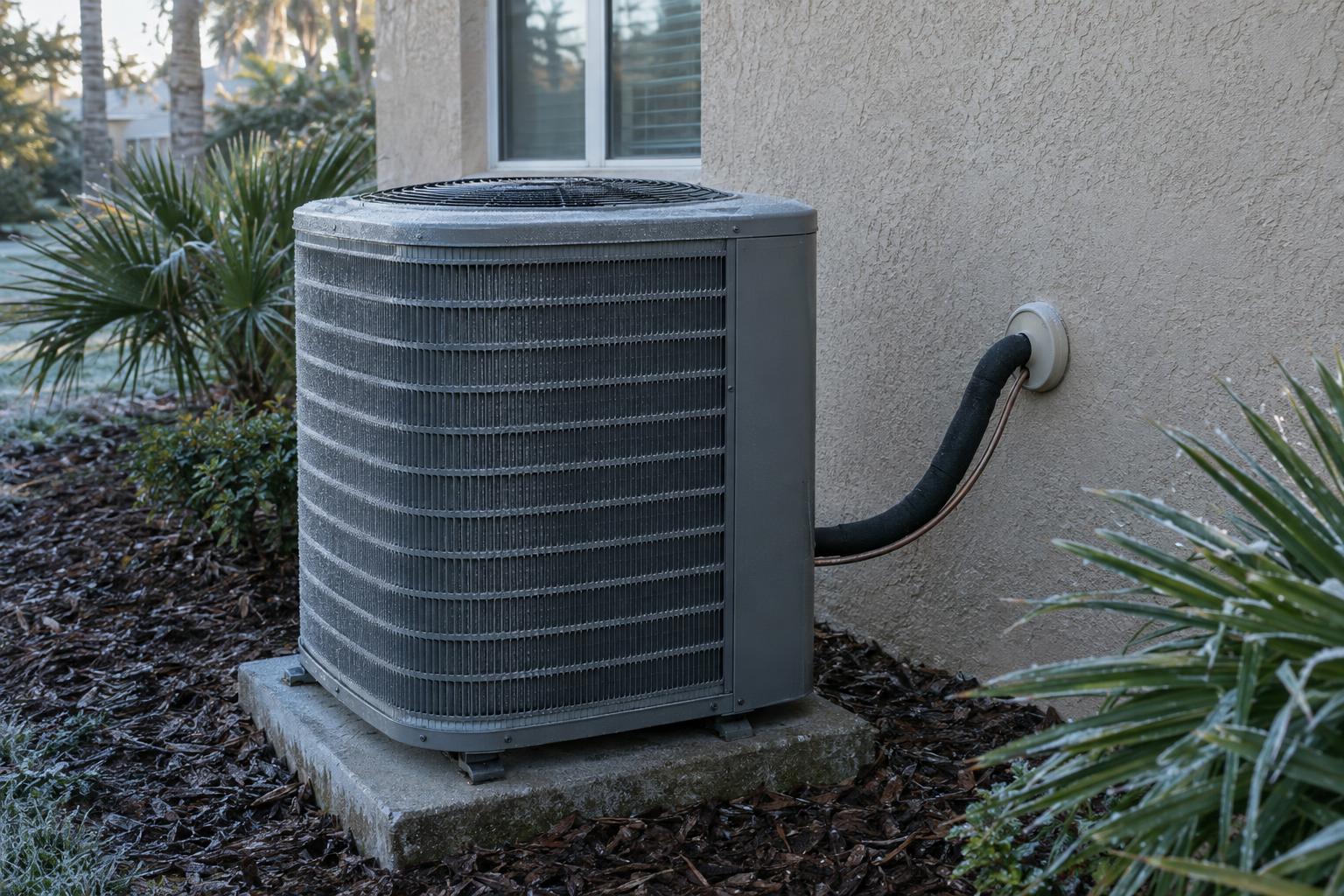
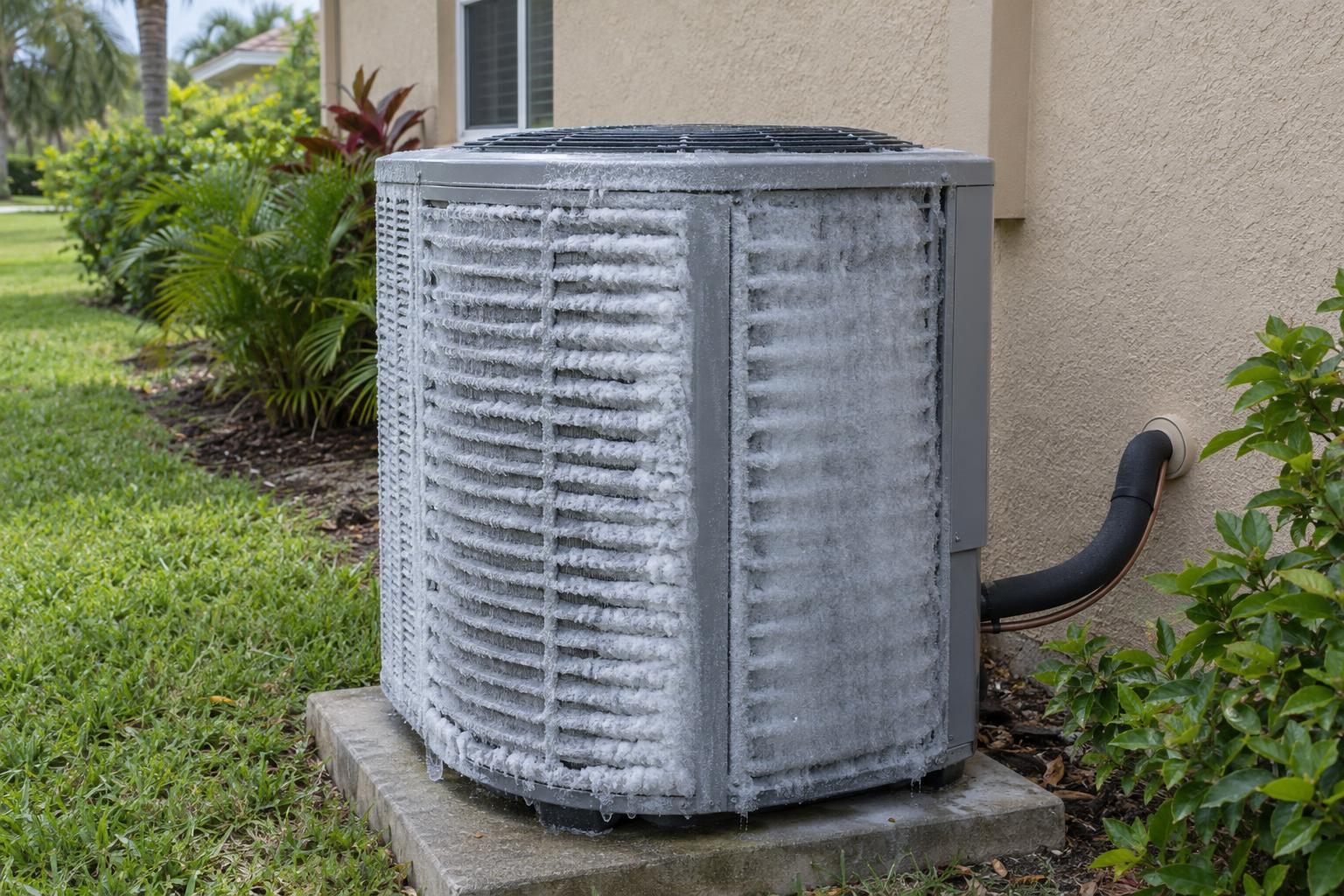
- Brief outdoor defrost cycles on damp 38–45°F mornings: Humid coastal air across Melbourne, Palm Bay, and Rockledge can form light frost on the cold outdoor condenser coil during chilly mornings. When the heat pump reverses refrigerant flow for a few minutes to melt that frost, it turns on indoor auxiliary heat strips simultaneously so cold air does not blow from your room vents.
- Unusually brisk pre-dawn cold snaps: On the handful of Space Coast mornings each winter when outdoor temperatures dip into the mid-30s, heat pump output drops slightly while home heat loss rises, prompting the control board to cycle electric strips intermittently to hold your setpoint.
- First-of-season burn-off odor: Because Florida heat strips sit unused from March through October, household dust settles on the nichrome heating elements. A brief, mild dusty smell during the first 10 to 15 minutes of seasonal operation is normal—though an acrid electrical smell, visible smoke, or weak airflow warrants shutting the system off immediately.
Warning Signs That Auxiliary Heat Is Running When It Should Not
Auxiliary heat strips commonly draw 5 to 10 kilowatts of electricity—roughly two to three times the wattage of normal heat-pump compressor operation. When a fault traps the system on electric resistance heat during mild 55- or 65-degree weather—or worse, simultaneously during cooling—homeowners notice clear warning signs:
- Aux Heat stays lit continuously in mild weather: If the outdoor temperature is in the 50s or 60s and you only nudged the thermostat up one degree, the compressor alone should carry the load without keeping auxiliary heat engaged for hours.
- Outdoor heat pump fan and compressor never start in Heat mode: Stand near the outdoor unit while someone calls for a one-degree heat increase indoors. If indoor vents blow hot air while the outdoor condenser sits completely silent, the compressor contactor, run capacitor, or low-pressure cutout may have taken the heat pump offline.
- Air from registers feels lukewarm during cooling or overly scorching on mild days: A welded heat-strip relay or sequencer inside the air handler can keep one bank of electric elements energized even when the thermostat stops calling for auxiliary heat, forcing your air conditioner to fight its own heater.
- Sudden spike in kilowatt-hour usage: Checking your daily utility portal graph after a cool weekend often reveals an unmistakable jump when backup heat strips run nonstop instead of cycling briefly.
Simple Thermostat Habits That Keep Backup Heat Strips From Overworking
If your equipment is mechanically healthy, small adjustments in how you operate the wall control prevent unnecessary Stage 2 strip activation during winter cold fronts across Brevard County:
- Step temperatures up one to two degrees at a time: Instead of making a five-degree jump all at once in the morning, raise the target by one or two degrees so the efficient heat pump compressor warms the house without triggering Stage 2 resistance strips.
- Use heat-pump-aware smart recovery schedules: Confirm your smart thermostat’s installer setup is configured for a single- or multi-stage heat pump rather than a conventional fossil-fuel furnace, and verify auxiliary lockout or droop settings match coastal Florida weather.
- Keep return filters clean before winter fronts arrive: Restricted airflow across electric heat strips causes internal high-limit switches to trip repeatedly, overheating sequencers and shortening heating-element life.
- Confirm Emergency Heat is switched OFF: After anyone in the household adjusts heating modes, double-check that the mode selector reads “Heat” rather than “Em Heat” or “Emergency.”
What an HVAC Technician Tests During a Heat Pump Heating Check
When auxiliary heat stays active unexpectedly, a residential HVAC technician checks refrigerant charge in heating mode, tests reversing-valve solenoid operation, verifies defrost board termination sensors, and measures amp draw across each electric heat-strip bank to confirm no sequencer or relay contact has welded shut. Catching a failed run capacitor or defrost sensor early restores quiet, efficient heat-pump heating before another cold front arrives.
Frequently Asked Questions About Auxiliary Heat on Florida Thermostats
Should I turn on Emergency Heat when temperatures drop into the 40s in Florida?
No. Leave your thermostat set to regular Heat mode. Florida air-source heat pumps operate efficiently in the 40s and automatically blend Auxiliary Heat on their own whenever brief extra capacity or coil defrosting is needed.
Why is white steam rising from my outdoor heat pump while Aux Heat shows indoors?
During a chilly, damp morning defrost cycle, the outdoor unit briefly warms its coil to melt frost. Moisture evaporating off the warm coil creates harmless white steam for several minutes while indoor auxiliary strips keep your room vents warm.
How long does the dusty smell last the first time auxiliary heat runs in fall?
Light dust burning off electric heating elements typically clears within 10 to 20 minutes on the first cool morning of the season. Open a window briefly for ventilation, and shut the system off right away if you ever smell melting plastic or sharp electrical odor.
Can a heat strip stay stuck on even after I switch back to cooling?
Yes. If a heat-strip sequencer or relay fuses closed inside the air handler, that heating element can stay energized whenever the blower runs—or continuously—making cooling weak and driving electric usage sharply higher until repaired.
Schedule Heat Pump Service in Palm Bay and Melbourne
Seeing auxiliary heat on thermostat screens nonstop during mild Space Coast weather, or noticing your outdoor heat pump staying silent when you call for warmth? Call Inlet Mechanical at (321) 723-0858 or schedule residential heat pump service from our office at 2180 Franklin Dr NE, Palm Bay, FL 32905—serving homeowners throughout Palm Bay, Melbourne, Rockledge, Titusville, and Brevard County.
Talk to a Licensed Inlet Mechanical Pro
Whether it’s a repair, an upgrade, or a question, our team is ready to help homeowners and businesses across Brevard & Indian River County.
Licensed FL Mechanical (CMC1250858) · 85+ years combined experience · Free install & replacement estimates
Written & Reviewed By
Inlet Mechanical Team
The Inlet Mechanical team brings over 85 years of combined experience in HVAC, plumbing, and mechanical construction across Florida. Our licensed professionals hold Florida Mechanical HVAC License (CMC1250858) and Florida Plumbing License (CFC1433105), along with EPA Section 608 certifications. Based in Brevard County, we serve residential, commercial, and industrial clients with expert knowledge of Florida building codes, climate-specific HVAC solutions, and local plumbing requirements. Every article is reviewed by our licensed technicians to ensure accuracy and practical value for Melbourne-area homeowners and businesses.
Last Updated: November 27, 2026