
An AC condensate trap Florida homeowners rarely think about is quietly doing one of the most important jobs in your air conditioning system. In Brevard County’s climate — where indoor coils pull out a staggering amount of moisture every day from summer humidity that regularly tops 70% — the condensate trap governs how well your drain line flows and whether negative pressure inside the air handler pulls air backward through the drain pan. When the trap is missing, dry, or clogged, the consequences can range from a flooded utility closet to reduced airflow and mold growth inside the air handler cabinet. Understanding how this small fitting actually works helps you have a better conversation with your HVAC technician and avoid a surprisingly common source of system problems on the Space Coast.
What a Condensate Trap Does Inside Your Air Handler
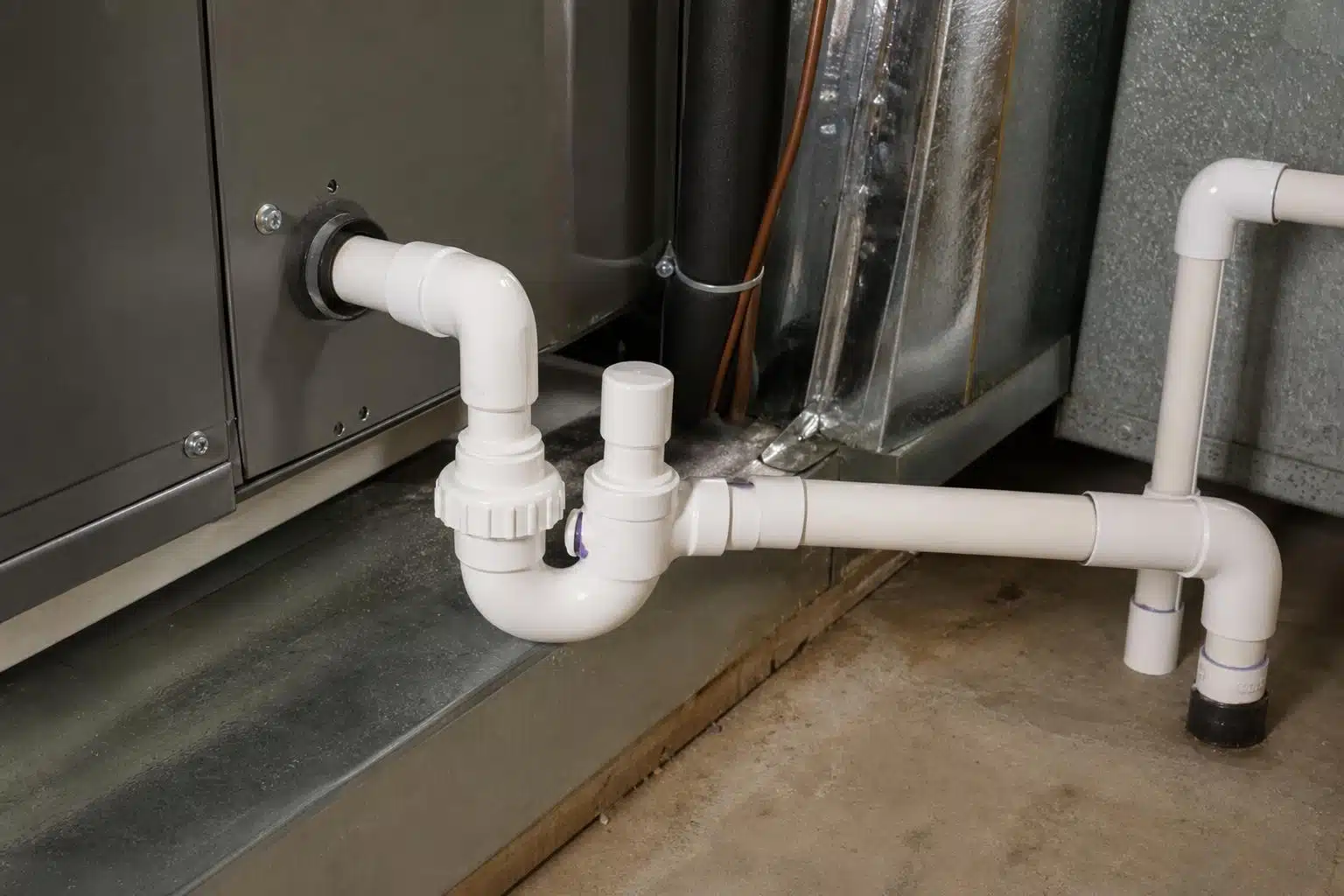
The condensate trap is a U-shaped or P-shaped section of PVC pipe installed on the drain outlet of your air handler’s drain pan. Its job is simple in concept but critical in practice: it holds a small plug of standing water that seals the drain line against airflow. Without that water seal, the negative pressure created by a blower fan pulling air across the evaporator coil — typically anywhere from 0.5 to 1.0 inches of water column on a residential system — can suck air back up through the open drain line instead of through your return ducts.
When air enters through the drain, two problems happen simultaneously. First, your system draws in warm, unconditioned outside air or hot attic air, forcing the blower and compressor to work harder to maintain the thermostat setpoint. Second, that same air carries dust, insulation fibers, and biological material into the drain pan, where they combine with the standing condensate water and create a paste-like sludge that clogs the line over time. What appears to be a simple plumbing fitting is actually protecting both the drainage path and the air quality inside your ductwork.
Florida’s building code and ACCA Manual D guidelines both address trap requirements for negative-pressure air handlers. A properly sized trap should have a vertical leg depth at least equal to the maximum static pressure the blower generates — so on most residential systems, the trap needs a water seal of at least 1 inch, and many installers build it deeper as a margin. Traps installed too shallow lose their seal under peak airflow, defeating their purpose entirely.
Why Brevard County Homes Produce So Much Condensate
Need help with AC & heating?
Inlet Mechanical’s licensed techs serve Brevard & Indian River with fast, dependable service and free estimates.
On a typical Brevard County summer day, outdoor dew points hover between 72°F and 76°F, which means your evaporator coil is working as a dehumidifier almost as hard as it is working as a cooler. A 3-ton residential air conditioning system operating in these conditions can pull 15 to 25 gallons of water per day out of the air — sometimes more during our daily afternoon storm cycles when outdoor humidity spikes suddenly. That volume has to flow continuously through the drain pan, trap, and primary drain line without backing up.
The volume matters because condensate isn’t pure water. It is slightly acidic — typically around pH 5.5 to 6.5 — and it carries airborne particulates, dust, and biological material that settled on the evaporator coil. Over a cooling season, these materials build up inside the trap and drain line as a biofilm. In warm conditions, algae and bacteria accelerate that buildup considerably. Many Brevard homeowners schedule a drain line flush each spring before peak season for exactly this reason, and that service is included in our residential preventative maintenance plans so it doesn’t get overlooked.
Salt air compounds the issue for homes within roughly five miles of the Atlantic coast or the Indian River Lagoon. Salt-laden moisture accelerates corrosion on the drain pan and on any metal fittings in the condensate system. Homeowners in Satellite Beach, Indialantic, and coastal Melbourne sometimes see drain pan corrosion within eight to ten years on systems that might last fifteen or more years in an inland location. Regular inspection of the pan liner and trap connection points is worth the time.
Signs the Condensate Trap Is Causing a Problem
Because the trap sits inside an air handler cabinet or within a chase in the garage or attic, many homeowners don’t see it until something has already gone wrong. There are several indicators worth knowing.
Water Overflow and Float Switch Trips
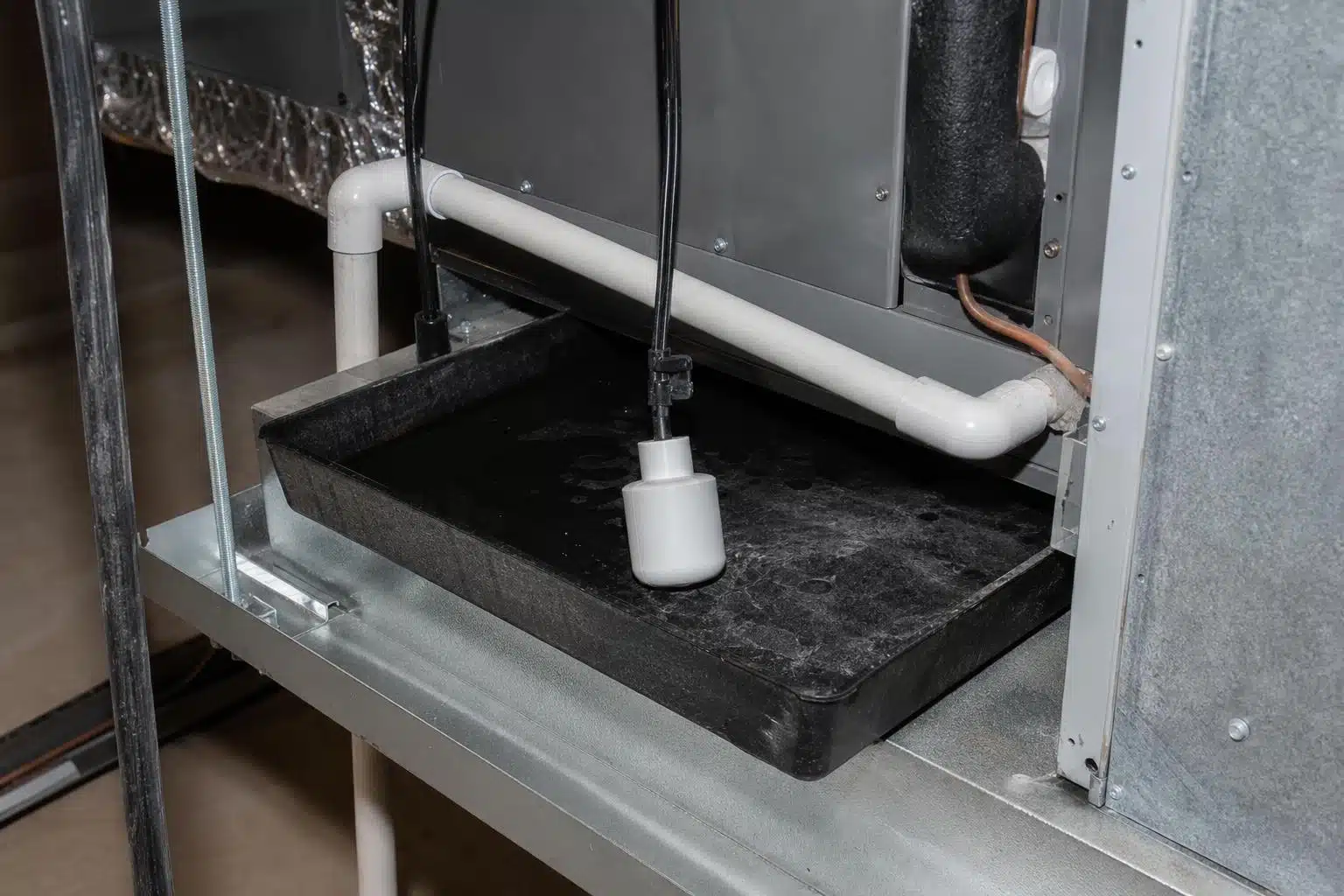
If your system shuts off unexpectedly and you find standing water in the secondary drain pan beneath the air handler, a clogged condensate trap or drain line is one of the first things to check. Modern air handlers are equipped with a float switch that cuts power when water rises above a set level — this is a safety feature, not a malfunction. Once the water clears and the float drops, the system will restart, but the underlying blockage has not gone away on its own.
Gurgling or Bubbling Sounds Near the Air Handler
A drain line that is partially blocked and fighting negative pressure often produces a distinctive gurgling or sucking sound. You may hear it as the blower runs, particularly at higher fan speeds. The sound indicates the water seal in the trap is being partially overcome, allowing air to bubble through the condensate. It is an early warning worth acting on before the line backs up completely.
Reduced Airflow from Supply Registers
If air is bypassing the evaporator coil by entering through the drain line, your effective return air volume drops. That means lower airflow at the registers, a coil that may ice over because of reduced heat load, and longer run times. Reduced airflow is one of the more subtle consequences of a degraded condensate trap, and it is easy to misattribute to duct leaks or a dirty filter. A thorough residential HVAC safety inspection evaluates the entire drainage and airflow system together.
Dry Traps, Missing Vents, and Installation Errors
Not every condensate trap problem is a clog. A dry trap is just as problematic as a blocked one. If a system sits idle for an extended period — after a long vacation, a mild winter stretch where the AC wasn’t needed, or a shoulder-season break — the water plug in the trap evaporates. When the system starts back up, there is nothing to seal against the blower’s negative pressure, and warm air pulls straight through the empty trap. In Florida’s climate, that evaporation can happen within two to four weeks of system inactivity. Priming the trap with water before starting up after an extended off period is a simple step that many homeowners skip simply because they don’t know the trap exists.
Improper venting is the other common installation error. When a drain line runs to an indoor condensate pump or to a long horizontal run, a vent is needed downstream of the trap to allow atmospheric pressure to equalize. Without a vent, the drain line creates a siphon effect that can pull the water plug right out of the trap, breaking the seal even on a functioning system. Energy.gov’s guidance on home cooling systems notes that proper drainage design is integral to system efficiency — a point that is easy to miss when attention is focused on equipment sizing and SEER ratings.
We also see horizontal trap installations that don’t maintain the proper leg depth because the installer was working in a cramped attic space. A trap that is flattened to fit around a beam or duct run may hold only a fraction of an inch of water, nowhere near enough to seal against operating pressures. If your system was installed in a tight attic and you’ve had repeated drain backups, the trap geometry is worth examining.
Condensate Trap Maintenance and Replacement in Florida Systems
Keeping the condensate trap functional comes down to two things: keeping it clean and keeping it full. For the cleanliness side, flushing the drain line annually with water — or with a dilute solution appropriate for the pipe material — removes biofilm before it accumulates enough to cause a blockage. Some technicians use a wet-dry vacuum at the exterior drain outlet to pull the clog out rather than push it deeper. Both methods have their place depending on where and how severe the blockage is.
For the evaporation problem, systems that cycle off for extended periods benefit from a small amount of water poured directly into the trap access point or into the drain pan before startup. Some homeowners in Titusville and Rockledge — where snowbird travel away from home is common in winter — ask their technician to install a check valve in addition to the trap to prevent complete dry-out, though this adds complexity and its own maintenance considerations.
PVC condensate traps typically last as long as the system itself — 15 to 20 years is reasonable in Brevard County conditions — but the glued joints can be compromised by UV exposure if any portion of the drain line runs outdoors without protection. Inspect visible sections of drain line for chalking, cracking, or separation at joints during any routine checkup. Our team looks at the full condensate system as part of our residential HVAC services, because a problem that starts at the trap rarely stays contained to just one component.
Frequently Asked Questions
Does every air handler in Florida need a condensate trap?
Any air handler that operates under negative pressure — meaning the blower pulls air through the coil rather than pushing it — requires a trap on the condensate drain outlet. This describes the vast majority of residential horizontal and upflow units installed in Florida homes. Positive-pressure configurations are much less common in residential applications, though they do exist in some commercial-style systems. If you’re not sure which type you have, a technician can check during a routine visit.
How often should a condensate drain line be flushed in Brevard County?
Given the volume of condensate a Florida system produces during a seven-to-eight month cooling season, flushing the drain line at least once a year is a reasonable minimum. Systems in homes with pets, high dust loads, or older fiberglass ductwork may benefit from a mid-season check as well. An annual flush at the start of the cooling season — typically March or April in Brevard — allows any buildup from the previous season to be cleared before peak demand arrives.
Can I clear a clogged condensate line myself?
Homeowners can often clear a minor blockage at the exterior drain outlet using a wet-dry vacuum. Place the vacuum hose against the outlet, seal the gap with a rag or your hand, and run it for 30 to 60 seconds. This works for soft biofilm clogs close to the outlet. Deeper clogs, clogs within the trap itself, or any situation involving water already overflowing the secondary pan warrants a technician visit to avoid pushing debris further into the system or missing a more serious issue.
What happens if I ignore a dry condensate trap?
A dry trap allows the blower to draw air through the open drain line instead of entirely through the return ducts. Over time, this reduces system efficiency, increases run time, and pulls unfiltered or unconditioned air into the air handler. That air can carry moisture, mold spores, and outdoor particulates directly into your duct system. In a humid Brevard County environment, introducing that unfiltered air stream into the coil cabinet raises the risk of biological growth inside the system cabinet itself.
If you have questions about your system’s condensate drainage or want a thorough look at your air handler, our team at Inlet Mechanical is glad to help. You can reach us at (321) 723-0858 to schedule a visit. For homeowners who want ongoing coverage of these kinds of details throughout the year, our residential preventative maintenance plans are designed to keep the full system — trap included — in good working order through every Florida cooling season.
Talk to a Licensed Inlet Mechanical Pro
Whether it’s a repair, an upgrade, or a question, our team is ready to help homeowners and businesses across Brevard & Indian River County.
Licensed FL Mechanical (CMC1250858) · 85+ years combined experience · Free, no-obligation estimates
Written & Reviewed By
Inlet Mechanical Team
The Inlet Mechanical team brings over 85 years of combined experience in HVAC, plumbing, and mechanical construction across Florida. Our licensed professionals hold Florida Mechanical HVAC License (CMC1250858) and Florida Plumbing License (CFC1433105), along with EPA Section 608 certifications. Based in Brevard County, we serve residential, commercial, and industrial clients with expert knowledge of Florida building codes, climate-specific HVAC solutions, and local plumbing requirements. Every article is reviewed by our licensed technicians to ensure accuracy and practical value for Melbourne-area homeowners and businesses.
Last Updated: September 3, 2026