
What Dry Mode Is Supposed to Do
If you have ever noticed a little droplet icon on a ductless remote and wondered about it, you are not alone. For homeowners trying to understand mini split dry mode in Florida, the appeal is obvious: our summers are humid, and a mode named for removing moisture sounds like exactly the right tool. The truth is more nuanced, and knowing the difference can save you from a room that feels cool but clammy.
In this article our team explains what dry mode actually does, when it is a good choice, when ordinary cool mode works better, and a few habits that keep any mini split running cleanly in Brevard County. We will not rehash general upkeep here, since that is covered elsewhere, and we will only touch on it where it relates to moisture.
How a Mini Split Removes Moisture
Need help with AC & heating?
Inlet Mechanical’s licensed techs serve Brevard & Indian River with fast, dependable service. Estimates on new system installs and replacements are free.
Every air conditioner dehumidifies as a side effect of cooling. Warm, humid air passes over a cold indoor coil, and water vapor condenses on the coil the way droplets form on the outside of a cold drink. That water drips into a pan and leaves through a drain line.
Dry mode, sometimes called dehumidify mode, tries to emphasize that moisture step over the cooling step. In general terms, the unit keeps the indoor coil cold while slowing the indoor fan, so air spends more time against the coil and gives up more moisture before it returns to the room. The system also cycles the compressor and fan to avoid overcooling.
How a given model does this varies. Some units run the fan at a set low speed, others cycle it on and off, and others adjust the compressor in small steps. Because of that, the owner’s manual is the best guide for your particular unit. We can describe the general idea, but the exact behavior is set by the manufacturer.
Why Dry Mode Is Not a Whole-House Dehumidifier
One common misunderstanding is that dry mode turns a mini split into a dehumidifier for the whole home. It does not. A ductless indoor unit conditions the air in the room or zone it serves. Other rooms, closed off from that air, get no benefit.
It also has limits when humidity is coming from somewhere else. If outdoor air is leaking into the house, if a bathroom fan is not venting properly, or if the main system is not running long enough to pull moisture out, dry mode on one wall unit will not fix the cause. Think of it as a helpful setting for a single space, not a substitute for dedicated whole-home humidity control.
When Choosing Dry Mode Makes Sense
Dry mode shines when the air is sticky but the temperature load is low. In Florida that often means mild, humid days in the shoulder seasons, or rainy days when the outdoor temperature drops but the air stays damp. In those conditions you do not need much cooling, yet the room can still feel heavy.
It can also be useful for a room that has been closed up for a while, like a guest room or a room addition that was unoccupied. Running dry mode for a stretch can take the edge off a musty, damp feeling without chilling the space.
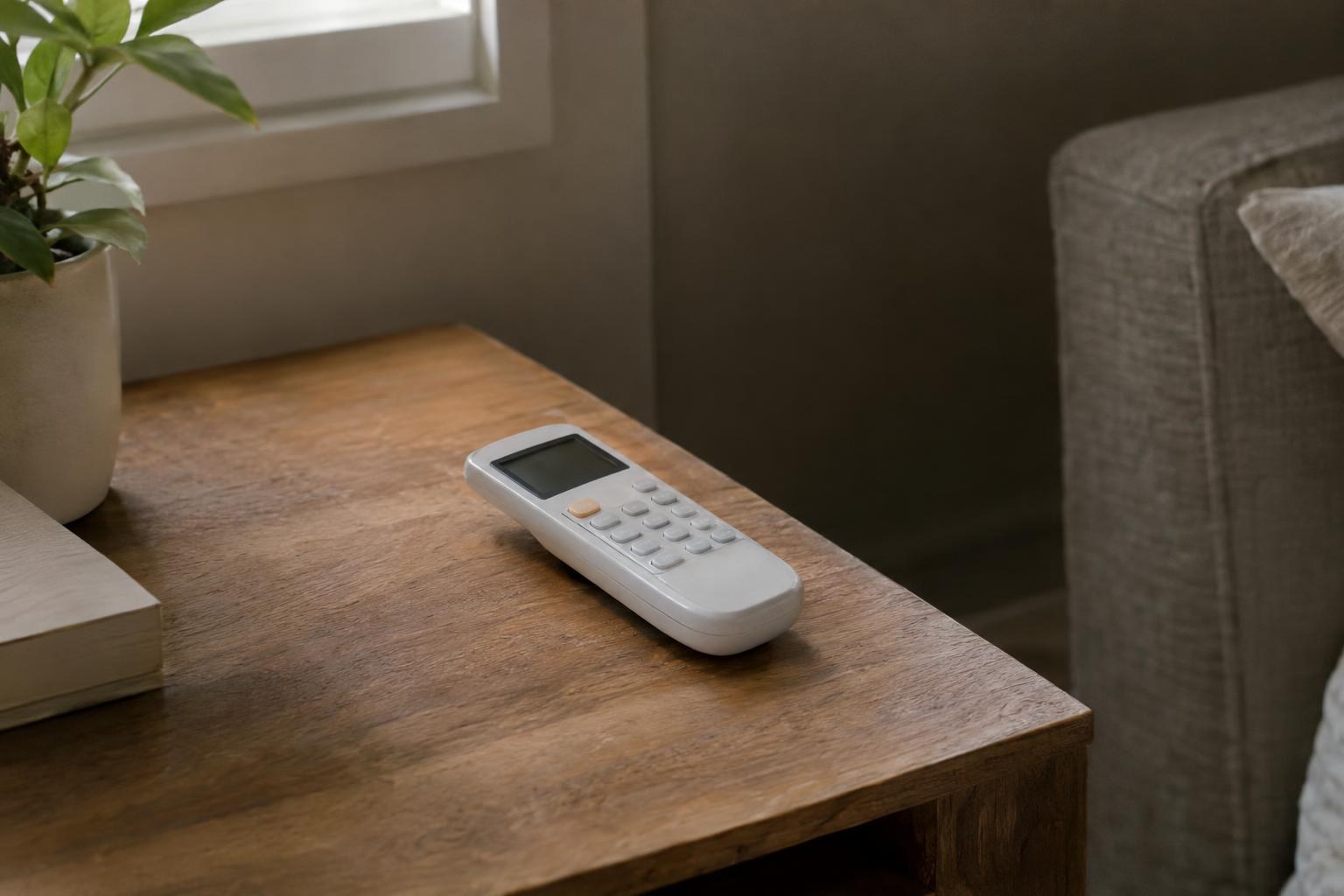
To use it well, close the doors and windows in the room, set the fan to low or auto if your remote allows, and give it time. Dry mode works gradually, so you may need an hour or more before the room feels different. Check the manual for how your unit handles the temperature setting while in this mode, since some ignore it and some use it as a limit.
When Cool Mode Is the Better Choice
On a hot Brevard County afternoon, cool mode is almost always the better tool. When the sun is beating on the walls and the room is warm, the system needs to remove heat as well as moisture. Dry mode, with its gentler cooling, may not keep up, and the room can end up at a comfortable temperature on paper yet feel cool yet damp to the skin.
That damp feeling happens because dry mode cools in short bursts and slows the airflow. The air near the unit may be dry while the rest of the room stays humid, and your skin notices the difference. If you try dry mode and the room feels damp or uneven, switch back to cool mode with a moderate temperature setting and a steady fan.
If dry mode never seems to help and humidity stays high even in cool mode, the unit may be sized or placed in a way that does not match the room. That is a conversation to have with a professional, and our ductless mini split page explains how we approach it.
Keeping the Filter and Coil Clean
Dry mode works by pulling moisture onto the indoor coil, which makes cleanliness more important, not less. A dirty filter chokes the airflow across the coil, cuts moisture removal, and can leave the coil wetter and dirtier than it should be.
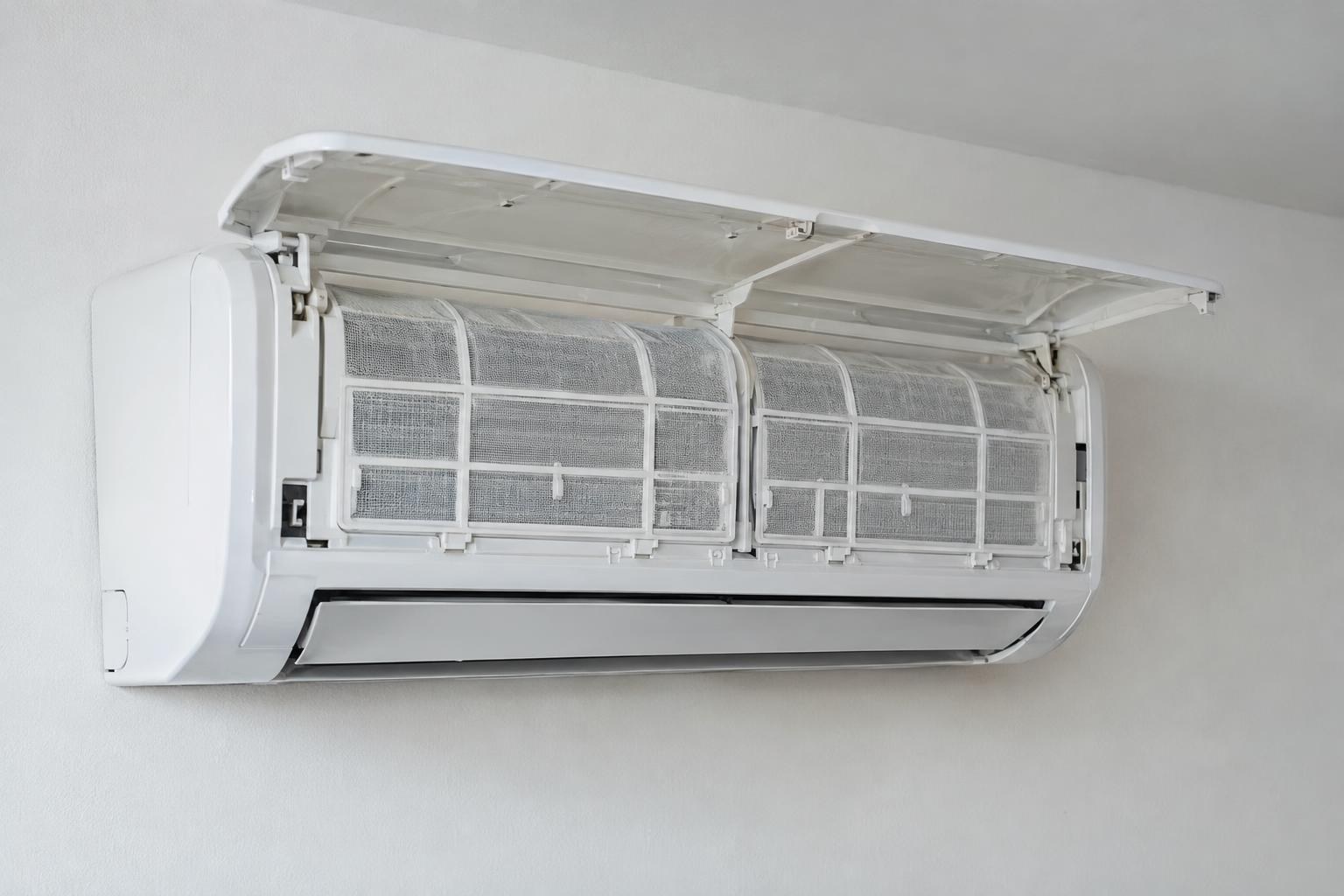
Most mini split filters slide out once the front panel is lifted. Rinse them gently, let them dry fully, and slide them back in. Many households do this every month or so in humid seasons. Use only what the manual allows, and do not take apart the unit beyond the filter. Anything involving the coil, the electrical connections, or refrigerant is work for a trained professional, never a do-it-yourself project.
Moisture control inside a home is a broader topic too. The EPA offers a helpful overview in its guide to mold, moisture, and your home, which is worth a read if damp rooms are a recurring concern.
Check the Condensate Drain
Every drop of moisture the unit pulls from the air has to leave the building. In dry mode the unit removes water steadily, so the drain line carries more than usual. If that line gets blocked, water can back up in the pan, drip from the indoor unit, or stain the wall below it.
On some models dry mode cycles the fan, which can leave moisture sitting on the coil between runs. A clear drain keeps that water moving out rather than lingering. Watch for water dripping from the unit, a musty smell, or a drain line that no longer shows moisture where it exits outside. Those are signs the drain needs attention. Clearing a blocked drain properly is a job for a cooling services technician, and it is far better than letting a slow drip damage a wall.
Frequently Asked Questions
Does dry mode use less energy than cool mode?
It depends on the model and how it cycles. Some units run lighter in dry mode, but the difference varies, and the manual is the best source for how yours behaves. Comfort should come first, because a room that stays damp is not a saving.
Why does my room feel cold and sticky in dry mode?
Dry mode cools in short bursts with a slow fan, so the air can feel cool without feeling dry throughout the room. Switching to cool mode with a steady fan usually evens things out.
Can I leave dry mode on all day?
Many people run it for stretches on mild, humid days. For hot afternoons, cool mode is typically more effective. If the unit seems to struggle, have it checked rather than leaving it to run.
Will dry mode fix humidity in the whole house?
No. It treats the air in the space the indoor unit serves. If several rooms stay damp, the cause is usually elsewhere, and a professional can help find it.
If your mini split is leaving a room damp or you are unsure which mode to use, our team at Inlet Mechanical is glad to take a look and talk it through. Visit our contact page to schedule a visit, or call us directly at (321) 723-0858.
Talk to a Licensed Inlet Mechanical Pro
Whether it’s a repair, an upgrade, or a question, our team is ready to help homeowners and businesses across Brevard & Indian River County.
Licensed FL Mechanical (CMC1250858) · 85+ years combined experience · Free install & replacement estimates
Written & Reviewed By
Inlet Mechanical Team
The Inlet Mechanical team brings over 85 years of combined experience in HVAC, plumbing, and mechanical construction across Florida. Our licensed professionals hold Florida Mechanical HVAC License (CMC1250858) and Florida Plumbing License (CFC1433105), along with EPA Section 608 certifications. Based in Brevard County, we serve residential, commercial, and industrial clients with expert knowledge of Florida building codes, climate-specific HVAC solutions, and local plumbing requirements. Every article is reviewed by our licensed technicians to ensure accuracy and practical value for Melbourne-area homeowners and businesses.
Last Updated: November 26, 2026