
Why Your Dishwasher Drain Hose Needs a Plan
Most homeowners never think about the drain hose behind the dishwasher until something goes wrong. Yet the path that hose takes matters a great deal, and it comes down to a simple idea: a dishwasher air gap high loop setup exists to keep dirty water from the sink or garbage disposal from flowing back into the machine that cleans your dishes. Without one of the two, wastewater has a clear route into a dishwasher that is supposed to be spotless.
In this guide our team explains, in plain language, what each option does, how the hose connects at the disposal, what warning signs to watch for, and which parts of the job are best left to a plumber. We will not repeat the basics of installing a dishwasher or caring for a disposal. Our focus here is only the drain hose path.
The Problem: Dirty Sink Water Looking for a Way Back
Need help with plumbing?
Inlet Mechanical’s licensed techs serve Brevard & Indian River with fast, dependable service. Estimates on new system installs and replacements are free.
A kitchen sink, a garbage disposal, and a dishwasher usually share one drain line. When the sink is full of dirty water, or when the line downstream is partly clogged, that water sits right next to the point where the dishwasher drains. If the dishwasher hose is low or flat, wastewater can creep back up the hose, or even be pulled in by a siphon effect when water rushes past.
The result is not just unpleasant. Food particles, grease, and bacteria from the sink side can end up in the bottom of the dishwasher tub, where they sit between cycles. That is the opposite of what anyone wants from an appliance used for cleaning dishes and glasses.
Both the high loop and the air gap solve this the same way. They create a break or a high point in the drain path that gravity will not let dirty water climb over. They only differ in how they do it.
What a High Loop Is and How It Works
A high loop is the simplest approach. Instead of letting the drain hose hang low behind the cabinet, the hose is lifted in a smooth arch and fastened to the underside of the countertop, as high as the space allows. From there it drops down to connect at the disposal or the sink drain.
Because the top of the loop sits well above the sink drain, water in the sink cannot rise high enough to flow over it and into the dishwasher. Gravity does the work. There are no moving parts, nothing on the counter, and nothing to clean.
The details matter, though. The hose needs to be secured so it stays high, usually with a bracket or strap, and it should not be kinked, crushed, or sagging. A loop that has slipped down over time, perhaps after someone moved items under the sink, no longer does its job even though it looks fine at a glance.
What an Air Gap Is and Where You Will See It
An air gap is a small fitting, often a short cylinder, that sits on the countertop or sink deck near the faucet. Inside the cabinet, the dishwasher hose runs up to this fitting, and a second hose runs from it down to the disposal or drain. In between, there is literally a gap of open air, so water cannot travel backward from the sink side to the dishwasher side.
During a normal cycle, the dishwasher pumps water into the fitting and it flows out the second connection and down the drain. The air space is what makes it a reliable barrier, since backflow cannot cross open air.
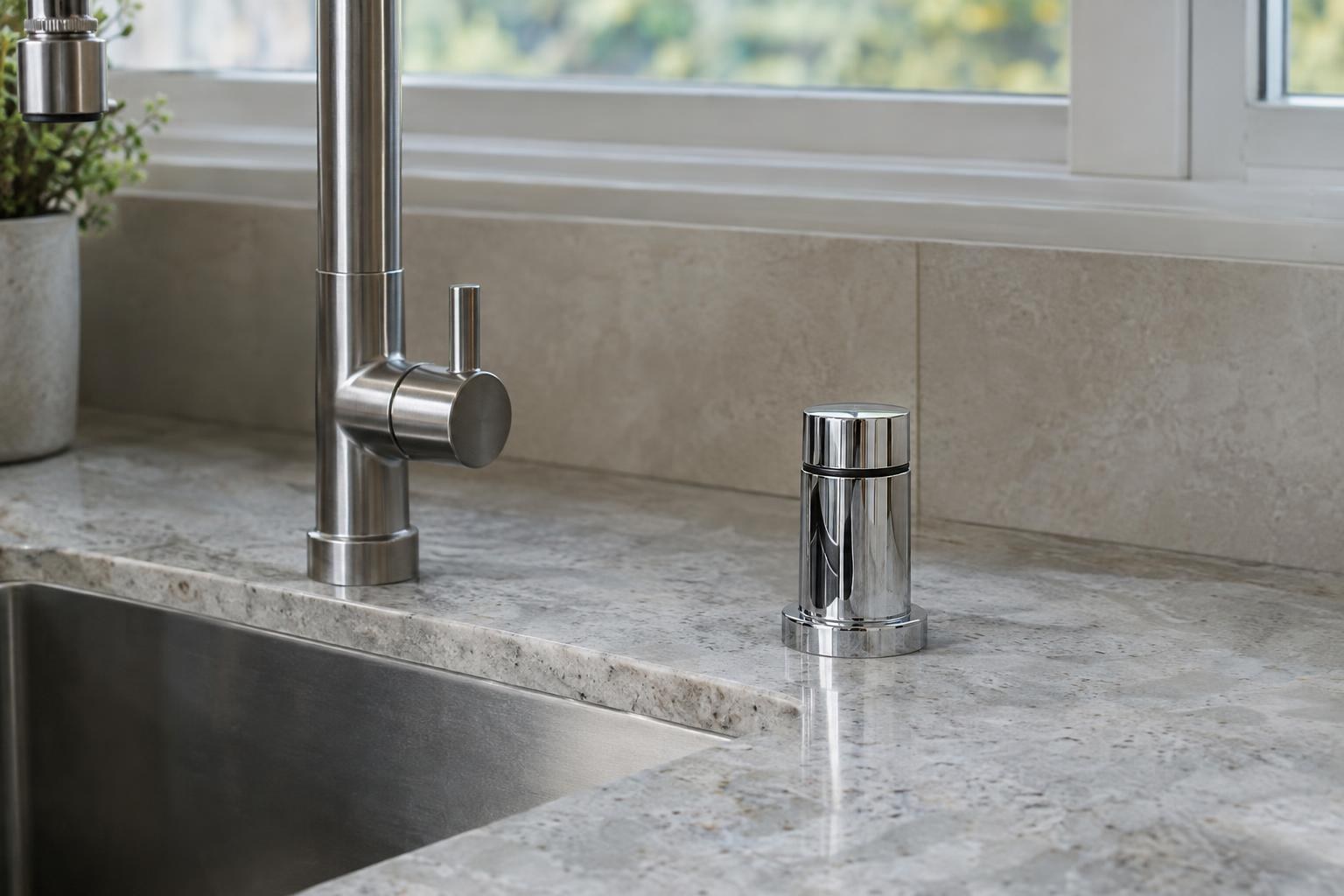
Some homes use an air gap and others rely on a high loop. Which one applies depends on local code and on how the dishwasher was installed. We would rather not guess about specific code rules, so the best step is to ask a plumber what applies to your home in Brevard County. A short conversation answers the question and avoids assumptions.
How the Drain Hose Connects at the Disposal
If you have a garbage disposal, the dishwasher hose usually attaches to a small inlet on the side of the disposal. The path is straightforward: the hose rises to the high loop or the air gap, then runs down to that side inlet, where it is held on with a clamp.
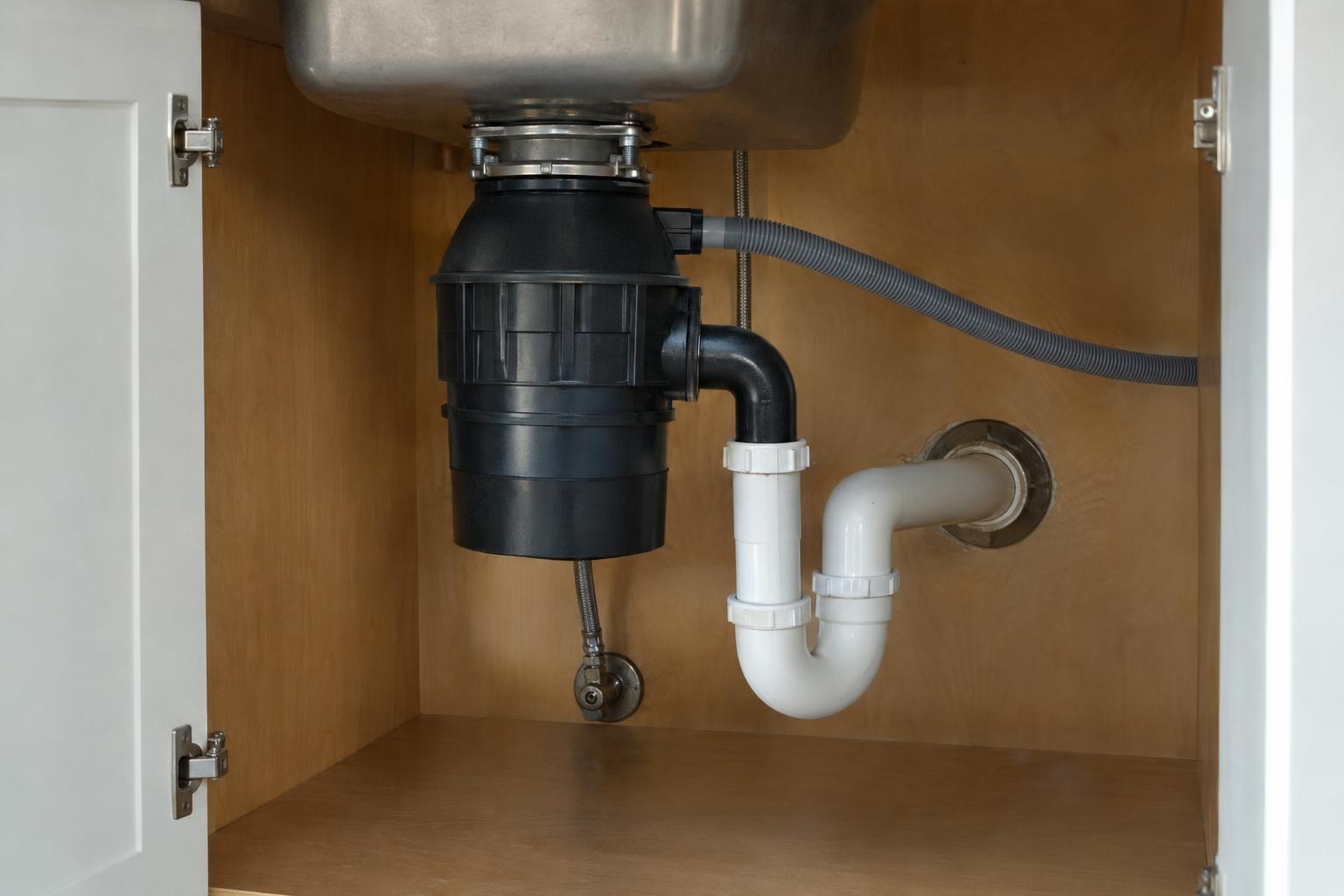
One detail catches many people out. A brand new disposal often has a small plug, sometimes called a knockout, blocking the dishwasher inlet from the factory. It has to be removed before the dishwasher hose can drain through it. If that plug is left in place, water from the dishwasher has nowhere to go, and you will see standing water in the tub after a cycle. Removing the plug properly means taking out the loose piece afterward so it does not end up in the line. If you are not comfortable with that step, a plumber can handle it quickly and cleanly.
If you have no disposal, the hose normally connects to a fitting on the sink tailpiece instead. The same principle holds: keep the hose high, or route it through an air gap.
Signs Your Setup Is Not Doing Its Job
Several symptoms point to a problem with the loop, the air gap, or the connections downstream. Watch for these:
- Standing water in the dishwasher. Water left at the bottom after a cycle can mean the hose is kinked, clogged, or blocked at the disposal inlet.
- Gurgling sounds. Noises from the sink when the dishwasher drains often mean the shared line is partly restricted.
- Sink water showing up in the dishwasher. If the sink backs up and dirty water appears in the tub, the backflow barrier is not working.
- Odors. A stale or sour smell from the dishwasher can come from trapped wastewater sitting in the hose or tub.
- Water around an air gap fitting. If the countertop fitting leaks or spits water, it is often clogged with debris, and the water has taken the only exit it could find.
Any of these deserves attention. They do not always mean a major repair, but they do mean the drain path needs a look.
Simple Checks You Can Do Safely
A few easy steps are fine for most homeowners. First, run the disposal and clear the sink so you can see whether the shared drain is moving freely. Second, if you have a countertop air gap, you can usually unscrew the cap and clear any buildup from inside with a small brush. Third, glance under the sink to see whether the hose still rises high and sits secured, rather than slumped near the cabinet floor.
There is a limit, though. Please do not cut, reroute, or reconnect under-sink plumbing unless you are comfortable doing it. A hose cut too short or clamped badly can leak into the cabinet, and leaks behind a cabinet often go unnoticed for a long time. Our residential plumbing services cover this kind of repair, and the same team also handles drain and disposal connections, which you can read about on our drain and sewer services page. If the hose connection, the disposal inlet, or an air gap needs to be changed, leave it to a plumber.
If you want general background on how dishwashers work and what to look for in one, the ENERGY STAR dishwashers page is a helpful place to read more.
Frequently Asked Questions
Do I need both an air gap and a high loop?
Generally a home uses one or the other. Which one is right depends on local requirements and how the dishwasher was set up, so ask a plumber what applies to your home.
Why is there water leaking around my air gap fitting?
A clogged air gap is the most common reason. Food debris or buildup blocks the passage, and water escapes through the openings on top. Cleaning the fitting often helps, and if it keeps happening, the downstream line may be partly blocked and should be checked.
Why does my new disposal leave water in the dishwasher?
The most likely cause is the factory knockout plug still sitting in the dishwasher inlet. Until it is removed, the dishwasher cannot drain into the disposal.
Can I adjust the drain hose myself?
Re-securing a hose that has slipped down is a simple fix for many people. Cutting, replacing, or rerouting the hose is better left to a professional so the connection stays tight and leak free.
If your dishwasher is draining slowly, smelling off, or letting sink water back in, our team at Inlet Mechanical is happy to look at the drain path and explain your options. Visit our contact page to get started, or call us directly at (321) 723-0858.
Talk to a Licensed Inlet Mechanical Pro
Whether it’s a repair, an upgrade, or a question, our team is ready to help homeowners and businesses across Brevard & Indian River County.
Licensed FL Mechanical (CMC1250858) · 85+ years combined experience · Free install & replacement estimates
Written & Reviewed By
Inlet Mechanical Team
The Inlet Mechanical team brings over 85 years of combined experience in HVAC, plumbing, and mechanical construction across Florida. Our licensed professionals hold Florida Mechanical HVAC License (CMC1250858) and Florida Plumbing License (CFC1433105), along with EPA Section 608 certifications. Based in Brevard County, we serve residential, commercial, and industrial clients with expert knowledge of Florida building codes, climate-specific HVAC solutions, and local plumbing requirements. Every article is reviewed by our licensed technicians to ensure accuracy and practical value for Melbourne-area homeowners and businesses.
Last Updated: November 25, 2026