
Most people never think about the dial on their water heater until the shower runs too hot, too lukewarm, or the dishes come out cloudy. Choosing a water heater temperature setting Florida households can live with comes down to balancing safety, comfort, and how much hot water your home actually uses. This guide explains how to think about the setting, how to check it carefully, and when it makes sense to ask a plumber to take a look.
In Brevard County, incoming water is warm for much of the year, many households run a dishwasher and washing machine daily, and plenty of families include children or older relatives who are more vulnerable to hot water injuries. Each of those factors shapes what a sensible setting looks like.
Why the Temperature Setting Matters
The thermostat on a storage water heater controls how hot the water in the tank is allowed to get. Set it too low and the household may run short of comfortably warm water during busy mornings. Set it too high and the water leaving the tank can be hot enough to burn skin in seconds, while the heater also works harder to hold that temperature around the clock.
That is why the setting is worth a deliberate decision. A good setting delivers water that is warm enough for bathing, cleaning, and laundry without creating unnecessary risk at the tap, and it keeps energy use in check, because a tank held at a higher temperature loses more heat to the surrounding air, even in a warm Florida garage.
What Temperature Do Safety Agencies Suggest?
Need help with plumbing?
Inlet Mechanical’s licensed techs serve Brevard & Indian River with fast, dependable service. Estimates on new system installs and replacements are free.
The U.S. Consumer Product Safety Commission urges households to lower water heaters to 120 degrees Fahrenheit. In its publication Avoiding Tap Water Scalds, the agency notes that most injuries and deaths from tap water scalds involve the elderly and children under the age of five, and that the lower temperature also conserves energy. The same publication suggests choosing the lowest setting that still satisfies the household’s hot water needs, including clothes washing and dishwashing machines.
The publication also explains how quickly hotter water can injure. It states that most adults will suffer third-degree burns after two seconds in 150 degree water, six seconds in 140 degree water, or thirty seconds in 130 degree water. Even at 120 degrees, a five-minute exposure could cause serious burns. In other words, 120 degrees is a sensible starting point, not a magic number that removes all risk, and hand-testing before bathing a child remains important.
Comfort at the Tap: Finding a Setting Your Household Likes
Comfort is personal. Because incoming water runs warmer through the summer months, a lower tank setting can feel perfectly comfortable then, while the same setting may feel noticeably cooler in the winter weeks when the supply water is colder. That seasonal swing is normal and does not necessarily mean anything is wrong with the heater.
If your shower feels lukewarm at 120 degrees, resist the urge to jump straight to a much higher number. Check first whether the issue is a long pipe run between the heater and the bathroom, a shower valve that mixes in too much cold water, or simply a tank that is too small for back-to-back showers. Those are different problems with different fixes.
Scald Risk, Children, and Older Adults
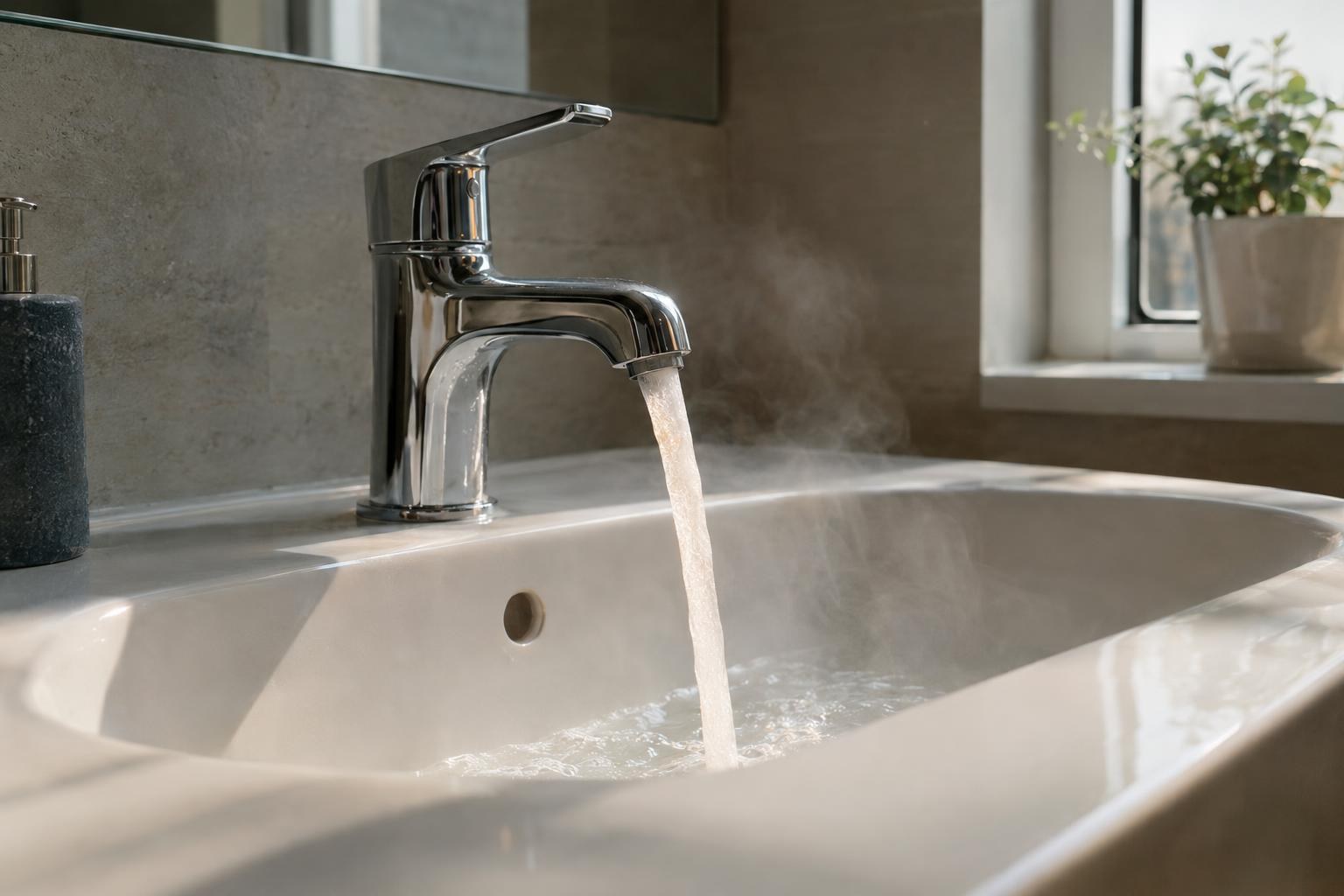
Very hot water can scald, and children and older adults are the people most at risk. Young skin burns more readily, and some older adults may notice heat more slowly or react to it more slowly. If either group lives in or regularly visits your home, treating the thermostat setting as a safety decision is reasonable.
Practical habits help as much as the dial. Hand-test the water before placing a child in the tub and never leave a young child alone in the bathroom. If a family member has limited mobility or sensation, ask a plumber about options for limiting the temperature that reaches fixtures.
Dishwashers, Laundry, and Other Household Demands
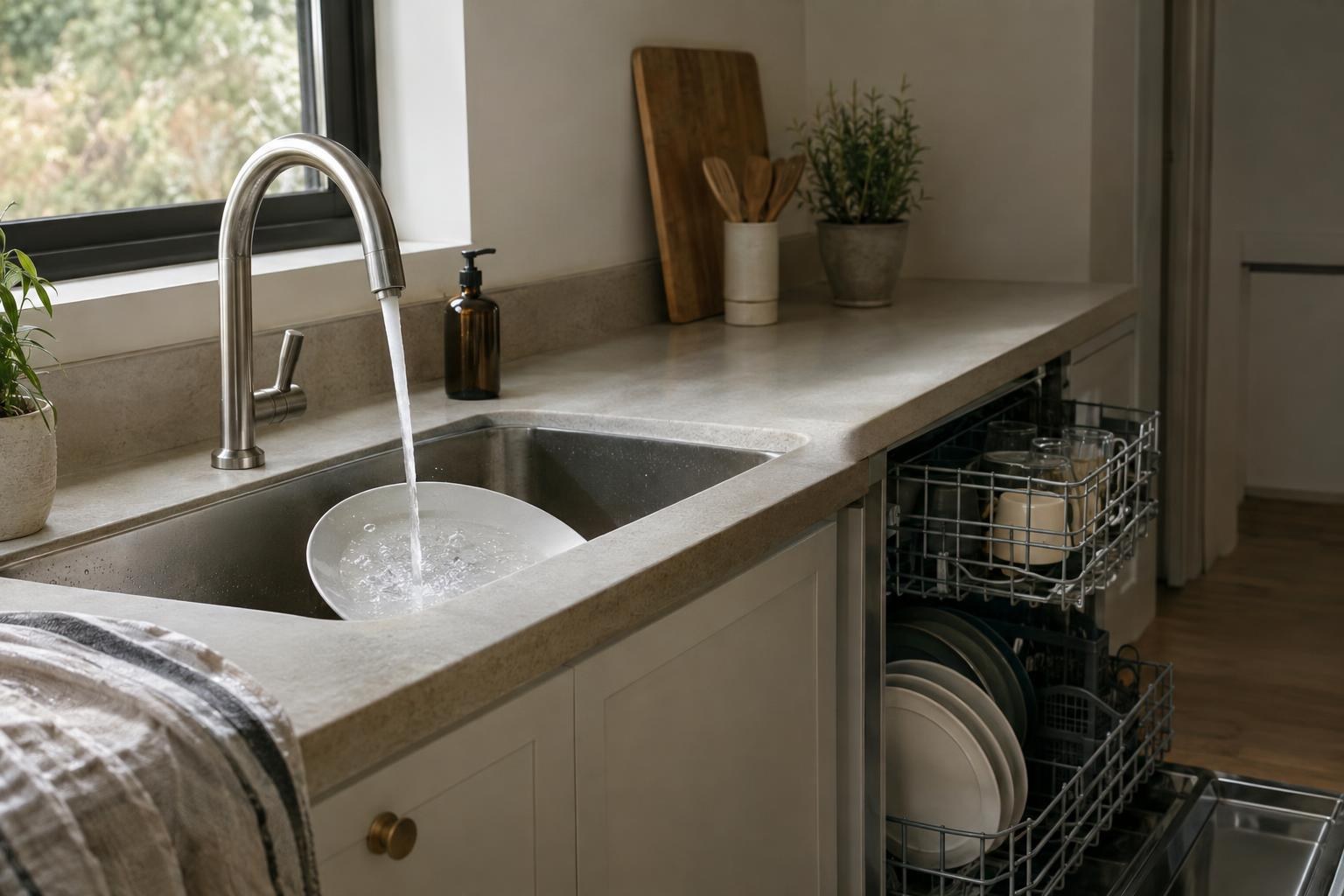
Hot water is not only for showers. Dishwashers and washing machines draw on the same supply, and some households wonder whether a lower setting will leave dishes less clean. Many modern dishwashers include their own heating element that raises the water temperature during the wash, and washing machines often offer cold or warm cycles that need less hot water than older models did. The owner’s manual for each appliance will state what incoming temperature it expects.
The household pattern matters too. A busy family that runs laundry, a dishwasher, and several showers in the same hour asks more of the tank than a couple living alone. If you run out of warm water at peak times, the answer may be staggering those tasks or checking whether the heater suits your home, rather than simply turning the temperature up. Our water heater services page explains the kinds of heater concerns a plumber can evaluate.
How to Find Your Current Setting Safely
Start with the label and the manual. Most tank heaters have a thermostat dial or knob, and some are marked with words such as warm or hot rather than degrees. Those markings are approximate, so the most reliable method is to measure the water itself. The CPSC publication suggests holding a candy or meat thermometer under the faucet, first thing in the morning or at least two hours after hot water was last used, and letting the water run until the reading stops climbing.
If the reading is higher than you want, make any change by following the manufacturer’s guidance for your specific heater. On a gas water heater, the gas control is not a place for guesswork, and electric models involve live wiring behind access panels, so call a plumber when you are unsure or uncomfortable. Wait a few hours, then measure again.
Why the Dial and the Tap Can Disagree
It is common to set a heater to one temperature and measure something different at the faucet. Dial markings are not calibrated like a thermometer, and water also cools as it travels through pipes, particularly on a long run to a far bathroom. A mixing valve or the fixture itself can blend in cold water before it reaches your hand.
Signs that a technician should look at the system include a measured temperature that stays far from the dial after the adjustment, water that swings between hot and cold during a single shower, no hot water at all, or a thermostat that seems to ignore changes. Those symptoms can point to a faulty thermostat, a heating element problem, or a mixing component that is not behaving. Our residential plumbing services team can look at the whole hot water system when the symptoms do not point to one obvious cause.
Frequently Asked Questions
What temperature should I set my water heater to?
The U.S. Consumer Product Safety Commission urges households to lower their water heaters to 120 degrees Fahrenheit, and suggests choosing the lowest setting that still meets your hot water needs. If you are unsure what your heater is producing, measure the water at a faucet before changing anything.
Is it safe to change the setting myself?
Some heaters have a dial or control knob that the label explains how to adjust, and the label and the manufacturer’s guidance come first. Because electric models have live wiring behind their access panels and gas controls carry real hazards, call a plumber if you are uncertain, if the unit is gas and you are unsure of the controls, or if the dial does not match what you measure at the tap.
Why is my water still not hot enough after I raised the setting?
The thermostat may not be the cause. Sediment, a failing heating element, a long pipe run, or a heater that is too small for your household can all leave you with lukewarm water. A plumber can sort out which one applies.
Does a lower setting save energy?
The CPSC publication notes that lowering the temperature to 120 degrees conserves energy as well as helping prevent accidents. A tank held at a lower temperature loses less heat while it waits for the next use. For more ways to trim hot water costs, see our guide to lowering water heater bills in Brevard County.
A thoughtful temperature setting protects the people in your home, keeps your hot water dependable, and avoids wasted energy. If the dial and the tap do not agree, if the water swings in temperature, or if you would simply like a professional to check the setting for a household with children or older adults, our team can help. Visit our contact page to schedule a visit, or call us directly at (321) 723-0858.
Talk to a Licensed Inlet Mechanical Pro
Whether it’s a repair, an upgrade, or a question, our team is ready to help homeowners and businesses across Brevard & Indian River County.
Licensed FL Mechanical (CMC1250858) · 85+ years combined experience · Free install & replacement estimates
Written & Reviewed By
Inlet Mechanical Team
The Inlet Mechanical team brings over 85 years of combined experience in HVAC, plumbing, and mechanical construction across Florida. Our licensed professionals hold Florida Mechanical HVAC License (CMC1250858) and Florida Plumbing License (CFC1433105), along with EPA Section 608 certifications. Based in Brevard County, we serve residential, commercial, and industrial clients with expert knowledge of Florida building codes, climate-specific HVAC solutions, and local plumbing requirements. Every article is reviewed by our licensed technicians to ensure accuracy and practical value for Melbourne-area homeowners and businesses.
Last Updated: November 12, 2026