
The outdoor unit of your air conditioner is built to sit in sun, rain and wind, yet part of it is surprisingly delicate. The thin metal fins wrapped around the coil can be flattened by a mower, a stray ball or a hard hailstorm, and bent AC condenser fins are one of the more common physical problems on units across Palm Bay, Melbourne and Brevard County. Most homeowners never notice the damage until the house starts feeling a little less comfortable, so it helps to understand what the fins do, how they get hurt and what to do, and not do, when you spot a problem.
What the Fins on Your Outdoor Coil Actually Do
The condenser is the part of your air conditioner that releases heat. Refrigerant carries heat out of your home and travels through the outdoor coil, a network of tubes surrounded by thousands of thin aluminum fins. The fins multiply the surface area that touches the air, giving the heat many more places to move out of the refrigerant and into the outdoor air.
The fan at the top of the unit pulls air through the coil and pushes it out the top. For the system to work as designed, that air needs to pass through the narrow, evenly spaced gaps between the fins without much resistance. A fin does not have to break to cause a problem. When it folds over, it narrows or closes the gap beside it, and a larger area of flattened fins can noticeably limit how easily air moves through the coil.
Common Ways Condenser Fins Get Bent
Need help with AC & heating?
Inlet Mechanical’s licensed techs serve Brevard & Indian River with fast, dependable service. Estimates on new system installs and replacements are free.
Hail is the cause most people think of first, and a hailstorm can dent fins across an entire side of the unit at once. Even without hail, afternoon storms can throw branches, palm fronds and other debris against the cabinet, and strong gusts can send loose yard items into the coil.
Yard work is probably the most frequent culprit. String trimmers and mowers kick up grit, small stones and sand that strike the fins at speed, and trimming grass right beside the unit puts the trimmer line close enough to catch them directly. Everyday household activity adds to it. Balls and toys end up against the unit, ladders get leaned on it, and bikes, trash cans and garden tools get set down against the side because it looks like a convenient wall. A pressure washer aimed at the coil can flatten fins in seconds, and a unit bumped during a move or a fence repair can pick up damage that nobody notices at the time.
What Bent Fins Do to Your System
When fins are flattened, air has a harder time moving through the coil. The fan keeps turning, but less air passes across the surface that needs to shed heat. With less heat leaving the refrigerant, the system has to work harder to do the same job.
In general terms, that can show up as longer run times, rooms that feel a little less cool on the hottest afternoons, and equipment operating under more strain than it was designed for. The system may also use more energy to deliver the same comfort. The size of the effect depends on how much of the coil is affected and how hard the system is working that day.
How to Spot Bent AC Condenser Fins From the Outside
You do not need tools to take a first look. With the system turned off at the thermostat, walk around the outdoor unit and look at the coil through the sides and back of the cabinet. Healthy fins look like a uniform, fine-lined surface, with every line running the same direction. Damage shows up as a break in that pattern: areas where fins look smeared, pressed together or folded over, or dents in the cabinet near the coil that suggest an impact.
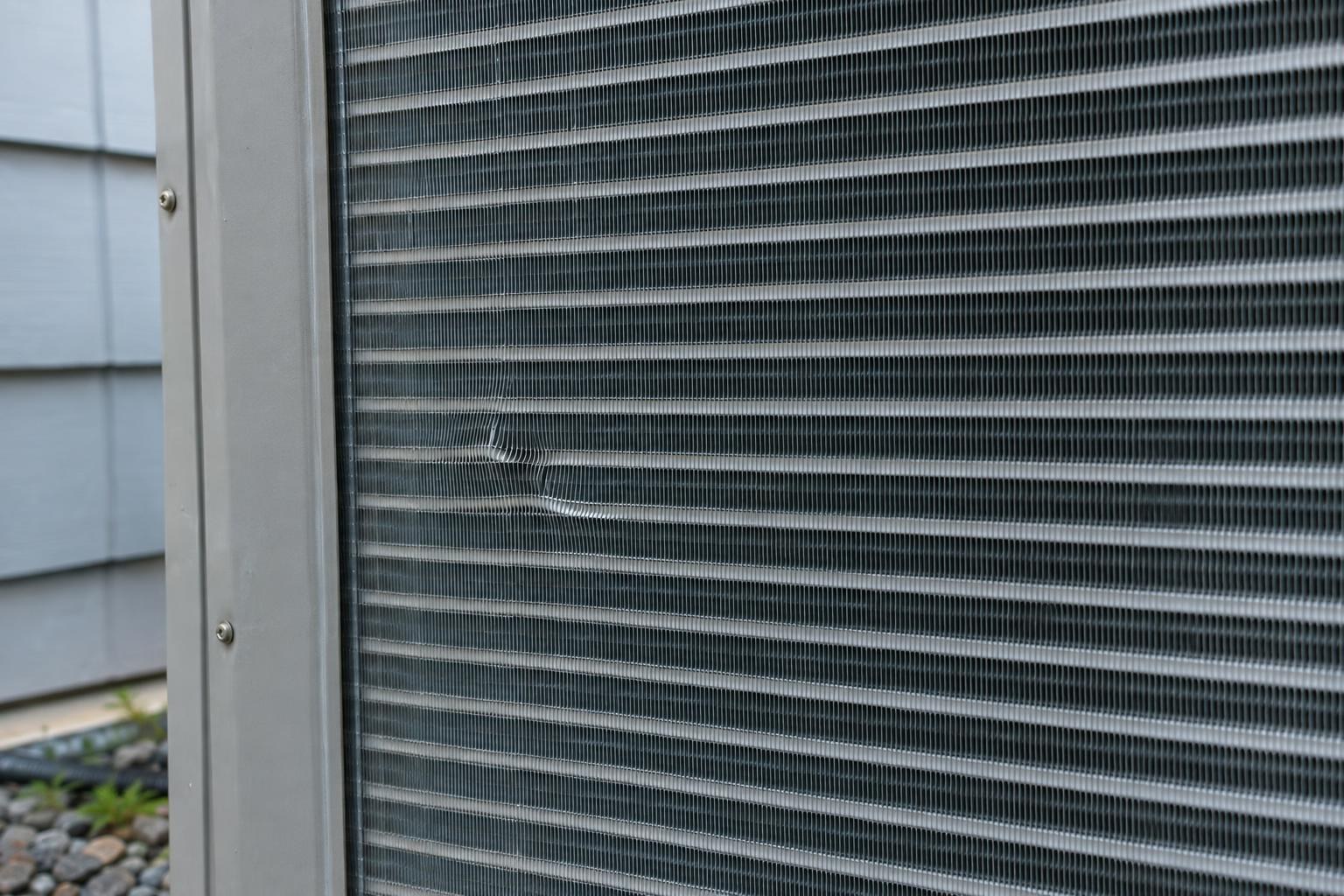
Also check for grass clippings, leaves or cottony seeds packed against the coil, since they restrict airflow in a similar way. Keep this check visual only. Do not remove the panels or grille, reach into the cabinet or touch any wiring. If you see damage, or the system seems to run longer than usual, note what you saw and when, then arrange a visit so a technician can look at it properly.
Why Straightening Fins Yourself Is Risky
It is tempting to grab a butter knife, a screwdriver or a fin comb. The coil is less forgiving than it looks. The fins are soft, and pushing them the wrong way can fold, tear or press them tighter. Behind them are thin-walled tubes carrying refrigerant, and a slip of a tool can dent or puncture one. A refrigerant leak is a far bigger problem than a patch of bent fins.
Pressure washing is another well-intended mistake. A strong, direct stream can flatten fins just as readily as a mower. Refrigerant lines and electrical connections sit close to the coil, so anything beyond looking from the outside belongs to a trained technician. For routine rinsing in salt-air neighborhoods, see our guide to condenser coil cleaning for coastal homes to understand what a proper cleaning involves.
How a Technician Assesses Fin Damage
A technician looks at more than the bent fins themselves. The first question is whether the damage is cosmetic or functional. A few dented fins at the edge of a coil may have little effect on airflow, while a wide band of collapsed fins across the face is a different story. The technician checks how much of the coil is affected and where, then looks at the coil’s cleanliness, since dirt and pollen can clog the spaces between fins. The fan, the cabinet and the surrounding clearance are checked as well, to see whether airflow is being limited by something other than the fins.
Our cooling services are the place to start when a system is not cooling the way it should. Catching damage early is easier with regular visits, which is one reason to ask about our maintenance services and having the outdoor unit looked over. ENERGY STAR’s overview of quality HVAC installation and care explains why good airflow and proper installation matter for system performance.
Protecting the Condenser From Future Damage
Most fin damage is preventable with a few habits. Give the unit room: a clear space of a couple of feet around the cabinet, and more above it, lets air move and keeps people and equipment from bumping the coil. Trim shrubs and ornamental grasses back so branches cannot rub or fall onto the unit.
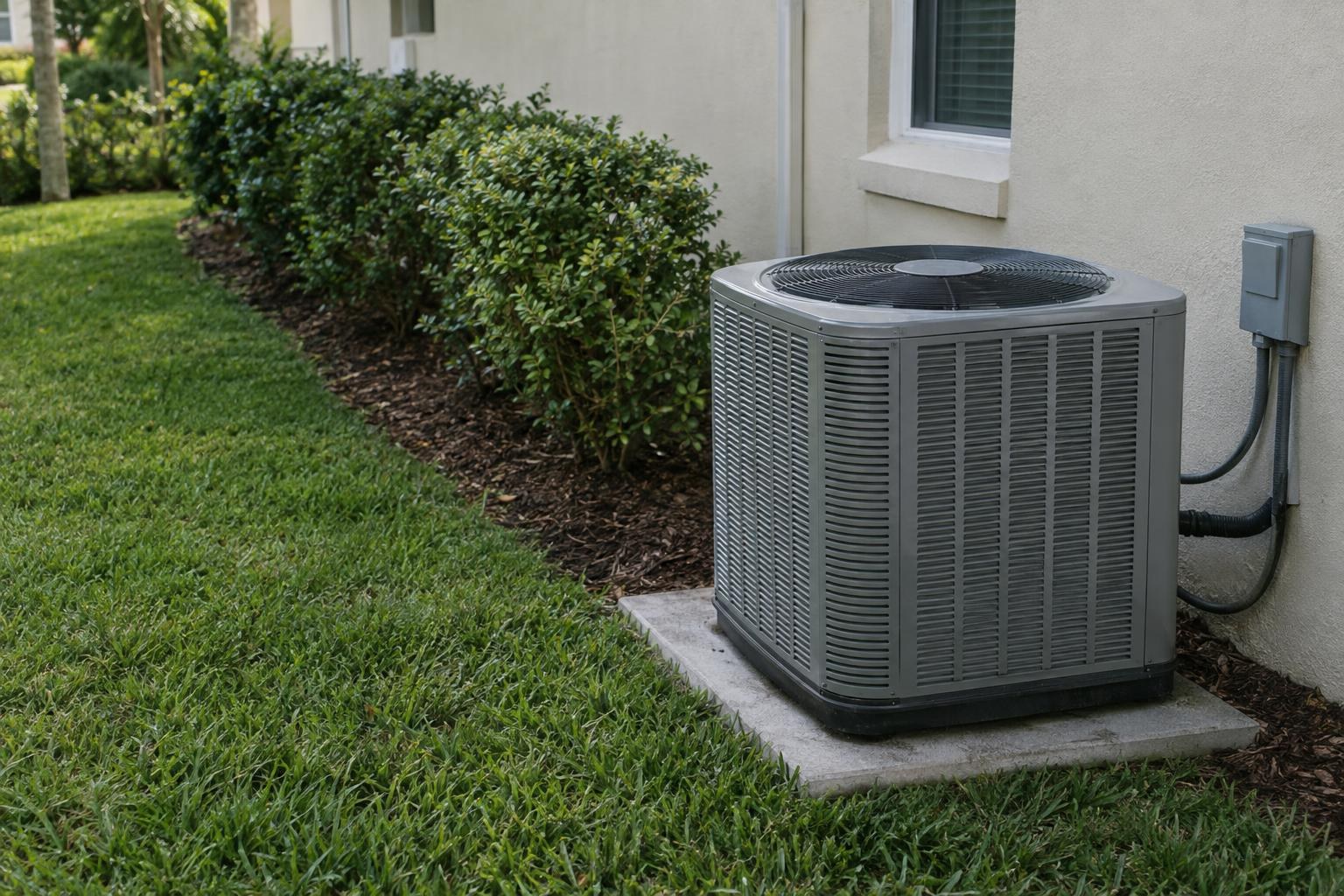
Be careful with yard tools nearby. A trimmer shield helps, and hand-trimming the grass beside the unit keeps grit and sand off the fins. Avoid storing ladders, bikes or trash cans against the cabinet. Before the next storm season, a quick walk around the yard to secure loose items and clear anything leaning on the unit reduces what can be thrown into it. That does not protect the equipment from a storm, but it removes avoidable hazards.
Frequently Asked Questions
Are a few bent fins a problem?
A small number of bent fins on the edge of a coil often has little effect on how the system runs. What matters is how much of the coil is affected and where. A technician can tell you whether the damage is cosmetic or limiting airflow.
Can I use a fin comb or a hose to fix them?
We recommend leaving the repair to a technician. Fin combs and tools can damage the thin tubing behind the fins, and a high-pressure spray can flatten more fins. Looking from the outside and keeping the area clear is the safest thing a homeowner can do.
Will bent fins make my air conditioner stop working?
Not usually on their own, but restricted airflow makes the system work harder. You might notice longer run times or rooms that feel less comfortable on hot days. If cooling seems off, have the whole system checked rather than assuming the fins are the only cause.
How often should I look at the outdoor unit?
A quick look every few weeks during the cooling season, especially after storms or yard work, helps you catch problems early. A professional maintenance visit lets a technician examine the coil, fan and clearances more closely than you can from the outside.
Bent condenser fins are easy to overlook and often easy to prevent, and a quick look around your outdoor unit can save you from discovering the problem on the hottest day of summer. If you have noticed damage or simply want a technician to check how your system is breathing, our team is ready to help. Visit our contact page to schedule a visit, or call us directly at (321) 723-0858.
Talk to a Licensed Inlet Mechanical Pro
Whether it’s a repair, an upgrade, or a question, our team is ready to help homeowners and businesses across Brevard & Indian River County.
Licensed FL Mechanical (CMC1250858) · 85+ years combined experience · Free install & replacement estimates
Written & Reviewed By
Inlet Mechanical Team
The Inlet Mechanical team brings over 85 years of combined experience in HVAC, plumbing, and mechanical construction across Florida. Our licensed professionals hold Florida Mechanical HVAC License (CMC1250858) and Florida Plumbing License (CFC1433105), along with EPA Section 608 certifications. Based in Brevard County, we serve residential, commercial, and industrial clients with expert knowledge of Florida building codes, climate-specific HVAC solutions, and local plumbing requirements. Every article is reviewed by our licensed technicians to ensure accuracy and practical value for Melbourne-area homeowners and businesses.
Last Updated: November 11, 2026