
Why Florida Changes the Pipe Insulation Question
Advice about wrapping plumbing usually comes from colder parts of the country, so the question of insulating hot water pipes in Florida deserves its own answer. Winters in Brevard County are mild, summers are long and humid, and many homes are built on a slab with the water heater in a garage or closet and the hot lines running overhead through the attic. In that setting, pipe insulation is not an automatic upgrade for every home, but it can make real sense in specific places.
Insulation slows the rate at which heat leaves a hot pipe. That helps most where a pipe is long, exposed, and surrounded by cooler air. It helps least where the pipe is short, already sitting in warm air, or buried where nobody can reach it. The sections below sort those situations out in plain terms.
What Insulation Actually Does for a Hot Water Line
Need help with plumbing?
Inlet Mechanical’s licensed techs serve Brevard & Indian River with fast, dependable service. Estimates on new system installs and replacements are free.
Hot water begins losing heat to the surrounding air the moment the tap closes. A bare copper pipe gives up that heat quickly because metal moves heat well. A layer of insulation slows the exchange, so the water inside stays warm longer between uses. If someone washes dishes and returns to the sink twenty minutes later, a wrapped pipe is more likely to still hold usable warmth.
That matters in two ways. The water reaching the tap tends to arrive warmer, and the water heater has less lost heat to make up, which can reduce how often it runs. Neither effect is dramatic in every house. The benefit depends on how long the pipe is, how much of it is exposed, and how often hot water is used.
Insulation also does not make hot water appear instantly at a faraway bathroom. The cooled water already sitting in the line still has to run out first. If the long wait is your main complaint, a dedicated circulation system addresses it more directly, and insulation is a companion rather than a substitute.
Foam, Fiberglass, and Fit: Materials in Plain Terms
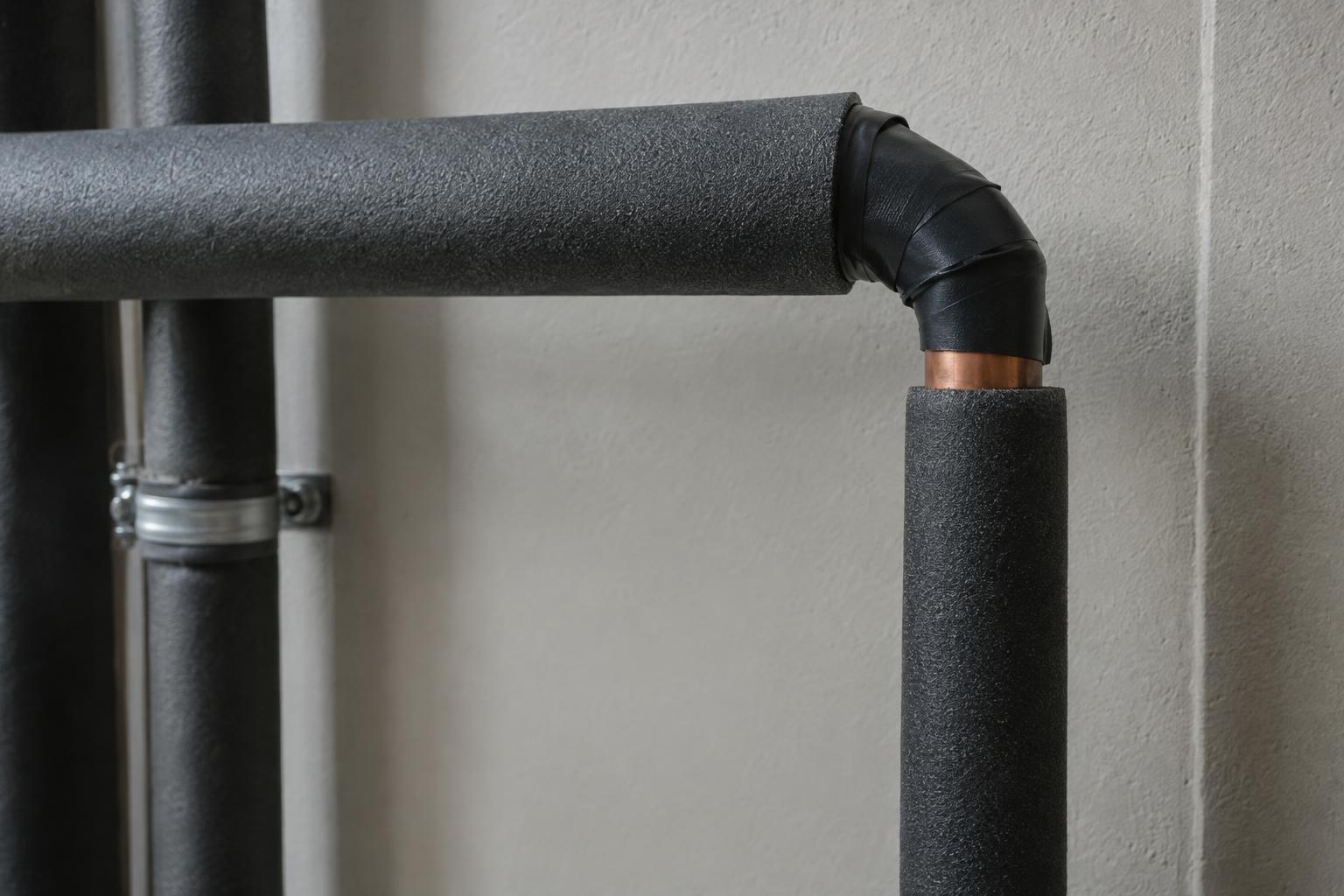
For most homeowners, the practical choice is a pre-slit foam tube. These sleeves come in sizes matched to common pipe diameters. You open the slit, slide the sleeve over the pipe, and press the seam closed. Many have a self-sealing strip, and others rely on tape or ties. Foam is lightweight, easy to cut with a utility knife, and holds up well in a garage when the seams are sealed.
Fit is where most do-it-yourself jobs go wrong. A sleeve that is too large leaves an air gap, and one that is too small will not close around the pipe. Check the label against the actual outside size of your pipe. Butt each section tightly against the next, tape the joints, and cut the sleeve at an angle at elbows so the corner wraps without an open seam.
Fiberglass wrap exists too, but in a humid climate anything that can soak up moisture needs extra thought. Damp fiberglass loses much of its usefulness and can hold moisture against the pipe, so closed-cell foam tends to be the more forgiving choice in Brevard County garages and attics.
Which Pipes Benefit Most: Start Near the Water Heater
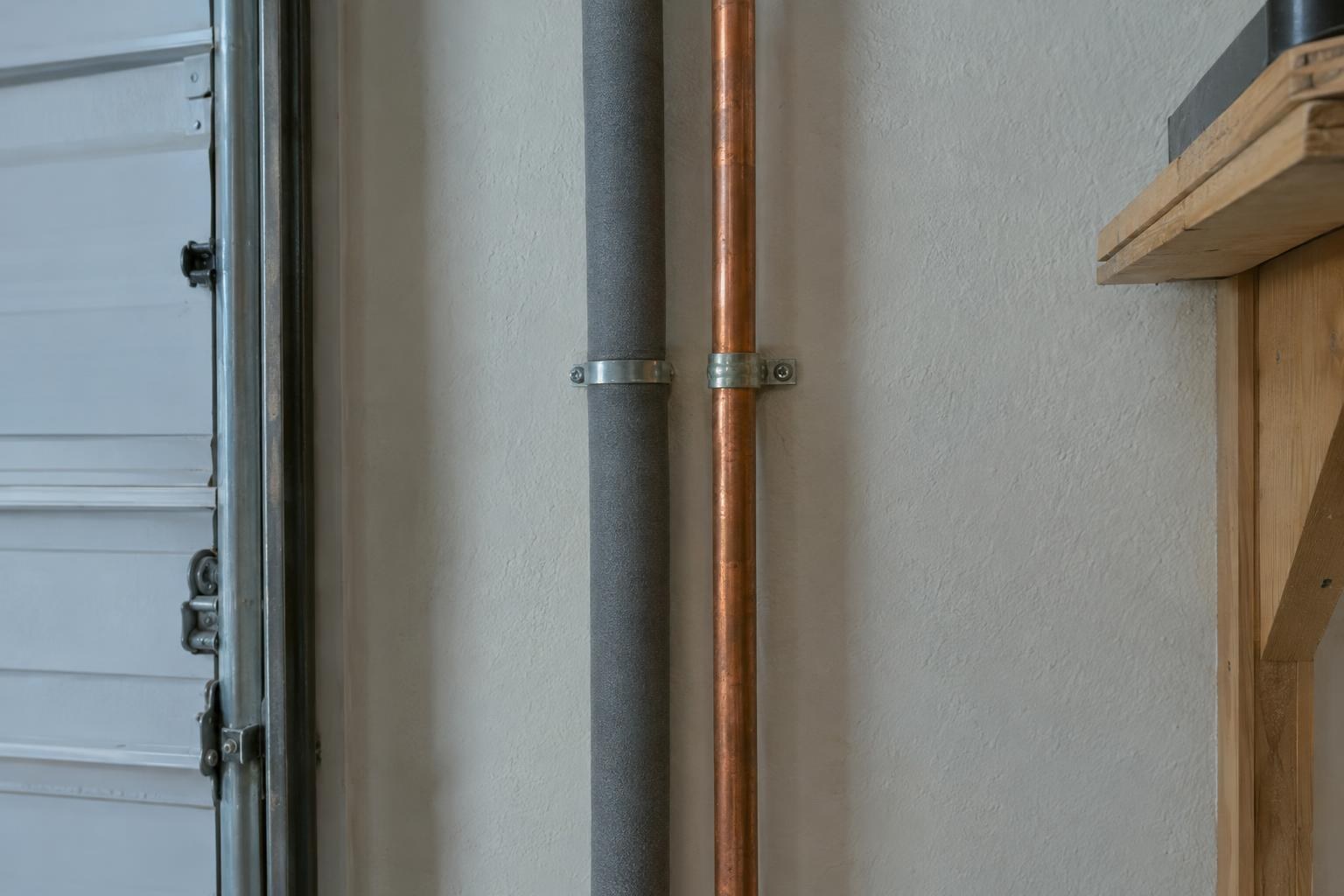
If you insulate only part of your system, the first stretch of hot outlet pipe leaving the water heater is usually the most useful place to start. That section carries the hottest water and has the largest temperature difference with the surrounding air. It is also typically the easiest to reach, because the heater sits in a garage, utility closet, or laundry area where the pipes are visible.
After that, look at runs through unconditioned spaces, such as a hot line crossing a garage ceiling. In a typical single-story Brevard County house, hot lines may spend a long stretch in the attic before dropping into walls toward the bathrooms. Attic work in summer heat is uncomfortable and sometimes unsafe, so many homeowners hand that portion to a plumber.
Where Insulation Adds Little in Florida
The most obvious case is anything buried in or under the concrete slab. You cannot insulate what you cannot reach, and the only fix for a slow supply there is a bigger plumbing project, such as rerouting, which is a conversation for a plumber.
Pipes inside conditioned living space also gain little. A hot line in an interior wall at room temperature loses heat slowly, since the temperature difference is small. Short branches to a single fixture next to the heater are in the same category.
Attic runs deserve a realistic look as well. In midsummer an attic gets very hot, so a hot pipe up there loses less heat than it would in cooler air, and the benefit of wrapping is smaller in those months. Cold water lines are a separate subject, since wrapping them is aimed at condensation rather than heat retention.
What to Leave to a Plumber
Anything near the flue or vent of a gas water heater should be left alone. Wrap must not sit against or close to the vent pipe, the draft hood, or the burner area, because those surfaces get hot and carry combustion gases. The clearance a given heater needs is set by its manufacturer, and a plumber can confirm it. If you are not sure, leave that area bare.
Leave gas piping, valves, and connections to a professional as well. Insulating is not a reason to loosen or move a gas fitting. If your heater is electric, do not open panels or handle wiring as part of a wrapping project. Insulation goes on the water lines only.
Call for help when a run is hard to reach, when you notice corrosion, green mineral staining, or a damp spot, or when you cannot tell which line is hot and which is cold. Wrapping over a slow leak hides the problem and can trap moisture against the pipe, so have a plumber inspect the line first.
How Pipe Insulation Relates to Your Water Heater
The water heater creates the heat, and the pipes carry it. If the tank is aging or the system is undersized for the household, wrapping the pipes will not fix that. Think of insulation as a way to keep heat you have already produced from leaking out on the way to the tap.
If a water heater repair or replacement is already planned, that is a natural time to ask about the pipes. The plumber will be at the heater, can see the first stretch of piping, and can point out worn connections. For a general overview of water heater types, the ENERGY STAR water heaters page is a helpful starting point, and you can read about our work on the water heater services page.
Frequently Asked Questions
Is it worth insulating hot water pipes in a Florida home?
It can be, in the right places. The strongest candidates are the first stretch of hot pipe near the water heater and long runs through a garage or other unconditioned space. Short runs inside the living area benefit very little.
Can I wrap the pipes right next to my gas water heater?
Not without checking first. The vent, draft hood, and burner area must stay clear of insulation, and the required clearance comes from the manufacturer. Have a plumber confirm what is safe for your model.
Will insulating my hot water lines give me hot water instantly?
No. Insulation helps water stay warmer between uses, but the cooled water already in the pipe still has to run out. If long waits are the main frustration, a recirculation system is a more direct solution.
Should I insulate cold water pipes too?
Cold lines are a different situation, since wrapping them is about limiting condensation rather than holding heat. If you see persistent dampness on a cold line, have a plumber take a look.
If you are weighing pipe insulation or a water heater evaluation, our team at Inlet Mechanical is glad to look at your plumbing and talk through the options. You can learn more on our residential plumbing services page. Visit our contact page to schedule a visit, or call us directly at (321) 723-0858.
Talk to a Licensed Inlet Mechanical Pro
Whether it’s a repair, an upgrade, or a question, our team is ready to help homeowners and businesses across Brevard & Indian River County.
Licensed FL Mechanical (CMC1250858) · 85+ years combined experience · Free install & replacement estimates
Written & Reviewed By
Inlet Mechanical Team
The Inlet Mechanical team brings over 85 years of combined experience in HVAC, plumbing, and mechanical construction across Florida. Our licensed professionals hold Florida Mechanical HVAC License (CMC1250858) and Florida Plumbing License (CFC1433105), along with EPA Section 608 certifications. Based in Brevard County, we serve residential, commercial, and industrial clients with expert knowledge of Florida building codes, climate-specific HVAC solutions, and local plumbing requirements. Every article is reviewed by our licensed technicians to ensure accuracy and practical value for Melbourne-area homeowners and businesses.
Last Updated: November 10, 2026