
When One Room Runs Hot While the Rest of the House Feels Fine
If you have noticed that one bedroom stays stuffy all afternoon while the living room a few doors down feels perfectly comfortable, a stuck HVAC zone damper may be the underlying cause. Zoned HVAC systems are designed to direct conditioned air precisely where it is needed, and when a damper inside the ductwork fails to open or close on command, the entire balance of the system shifts. Understanding what zone dampers do, how they fail, and what a technician looks for during a diagnostic visit can help you have a more informed conversation before any work begins.
How a Zoned HVAC System Actually Works
Need help with AC & heating?
Inlet Mechanical’s licensed techs serve Brevard & Indian River with fast, dependable service and free estimates.
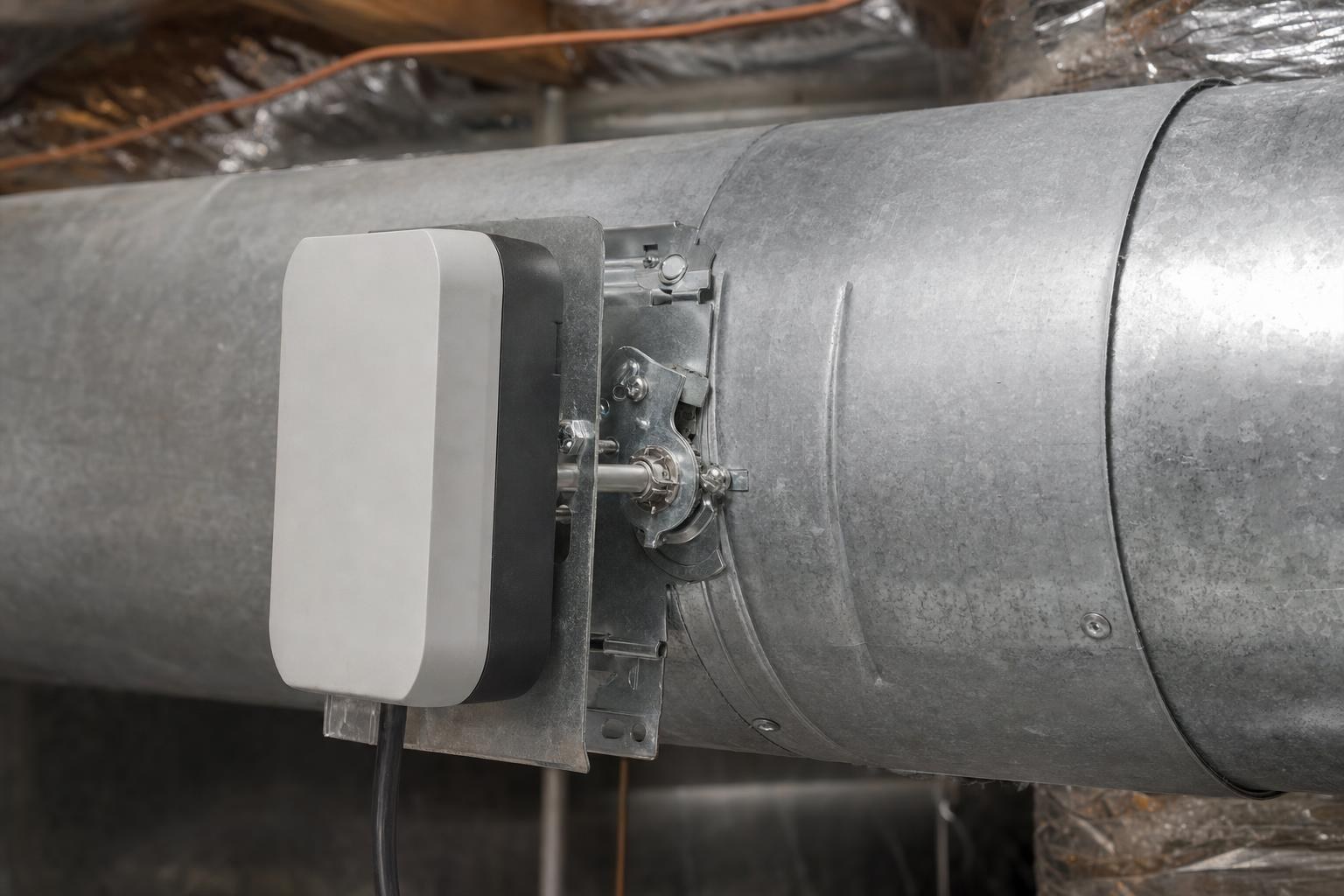
A zoned system divides your home into separate areas, each controlled by its own thermostat. When one zone calls for cooling or heating, the zone control board sends a low-voltage signal to the damper serving that area. An actuator motor rotates a metal or plastic blade inside the duct, opening it to allow airflow. When the set point is reached, the damper closes again. Multiple zones can be active at once, or a single zone can run while the others stay closed.
The control board also communicates with the air handler. On many systems, a bypass damper or a variable-speed blower helps manage static pressure when only one or two zones are open. This coordination matters because running a full-capacity blower against nearly closed dampers creates pressure that can stress seams, push air through duct leaks, and generate noise in supply registers. Florida homes with long cooling seasons put these components through a considerable number of open-and-close cycles each year, so wear is a real consideration over time.
When everything is working, the result is a home where occupied rooms receive airflow on demand and unoccupied spaces are not over-conditioned. When a damper sticks, that precision disappears.
Recognizing the Signs of a Stuck HVAC Zone Damper
The most obvious clue is a persistent temperature imbalance that correlates with a specific room or zone rather than with overall system performance. If the air handler runs, supply air comes out of most registers, and your main living area reaches its set point, but one bedroom never cools down despite having its thermostat set lower than the others, a stuck-closed damper serving that room is a logical suspect.
A damper stuck in the open position causes the opposite problem. That zone may receive conditioned air continuously, even when its thermostat is satisfied, pulling capacity away from other areas and sometimes making one room uncomfortably cold while neighbors go unconditioned. You might notice the air handler running longer cycles than usual as the system struggles to satisfy all thermostats at once.
Unusual sounds from the ductwork can also point toward a damper issue. A blade that is partially stuck may flutter or rattle at higher static pressures. A failed actuator motor may produce a faint buzzing or clicking near the damper location as it tries and fails to complete its rotation. These sounds are worth noting and mentioning to a technician, along with which zone is behaving oddly and when the problem first appeared.
In Florida’s climate, a stuck damper often reveals itself during the first genuinely hot stretch of the year. A room that seemed acceptable during mild spring temperatures becomes noticeably uncomfortable once outdoor humidity climbs and the sun loads increase on west- or south-facing walls. If a particular room has always been slightly warmer than the rest of the house, that can sometimes be explained by duct length or insulation, but a sudden change in comfort level is more suggestive of a mechanical failure.
How Technicians Diagnose a Damper That Will Not Move
Diagnosing a stuck HVAC zone damper involves both electrical and mechanical checks. A technician typically begins by consulting the zone control board, which on modern systems may display fault codes or indicate which zones are currently active. From there, the technician can send a manual command to the suspect damper and observe whether the actuator responds.
Voltage readings at the actuator terminals confirm whether the control board is delivering a proper signal. If the correct voltage is present but the damper blade does not move, the fault is almost certainly in the actuator motor itself or in a mechanical obstruction inside the duct. If no voltage reaches the actuator, the issue could be a wiring break, a failed relay on the control board, or a miswired thermostat.
Physical inspection matters as well. Actuator motors are typically accessible at duct penetrations or at designated access points, though some installations require more effort to reach. A technician may gently attempt to rotate the blade by hand to determine whether it is mechanically seized or simply not receiving a signal. Corrosion on blade pivots is a possibility in coastal Brevard County, where salt air can affect metal components inside ductwork that is not fully sealed or insulated against outdoor air intrusion.
The ENERGY STAR guidance on duct systems notes that properly functioning distribution systems are essential to achieving the efficiency ratings equipment is rated for. A damper that is stuck open in an unoccupied zone represents exactly the kind of distribution inefficiency that erodes the performance of an otherwise well-maintained system.
Actuator Replacement and Related Considerations
When the actuator motor is confirmed to be the failed component, replacement typically involves disconnecting the low-voltage wiring, releasing the motor mount from the duct collar, and installing a compatible replacement unit. Compatibility matters here: actuators vary by torque rating, rotation angle, spring-return configuration, and voltage class. Installing an actuator with the wrong torque rating for the blade size it controls can lead to another failure sooner than expected, so matching to the manufacturer’s specification is important.
It is also worth examining the blade and pivot assembly while the actuator is off. Debris accumulation, condensation-related corrosion, or a warped blade can all contribute to sticking and may need to be addressed before a new actuator is installed. If the duct section housing the damper has not been inspected for a long time, the technician may note the condition of insulation and sealing at the same visit.
On older zoned systems, a failed damper sometimes prompts a broader look at the control board itself. Zone control boards have a finite service life, and a board that is sending intermittent or incorrect signals can cause dampers to behave erratically even when the actuators themselves are functional. A thorough diagnostic will rule out board-level issues before replacing components downstream.
If you are curious about the broader context of your home’s ductwork and how it connects to your zone setup, our ductwork services page describes the types of inspections and work our technicians perform. And for a complete picture of how we approach residential cooling and heating, the residential HVAC services overview is a good starting point.
Frequently Asked Questions About Zone Damper Problems
Can a stuck damper damage the rest of the HVAC system?
Over time, yes. When one or more dampers are stuck closed and the system continues running, the remaining open zones must carry the full static pressure load. This can stress duct seams and cause air to escape through small gaps rather than reach registers. In systems without a properly functioning bypass damper, a high-static condition also puts added strain on the blower motor. Addressing a stuck damper promptly is generally better for the longevity of the broader system than leaving it unresolved.
Is it possible the thermostat for that zone is the real problem and not the damper?
That is a reasonable question, and technicians typically check thermostat function as part of the diagnostic process. A thermostat that has lost its connection to the control board, has a dead battery (on battery-operated models), or is placed poorly in the zone can mimic a damper problem by never sending a call signal. However, if the thermostat is functioning and the control board shows the zone as active but the room still receives no air, attention shifts to the actuator and damper blade. Both possibilities deserve investigation.
My house does not have a zoned system. Could something else explain uneven room temperatures?
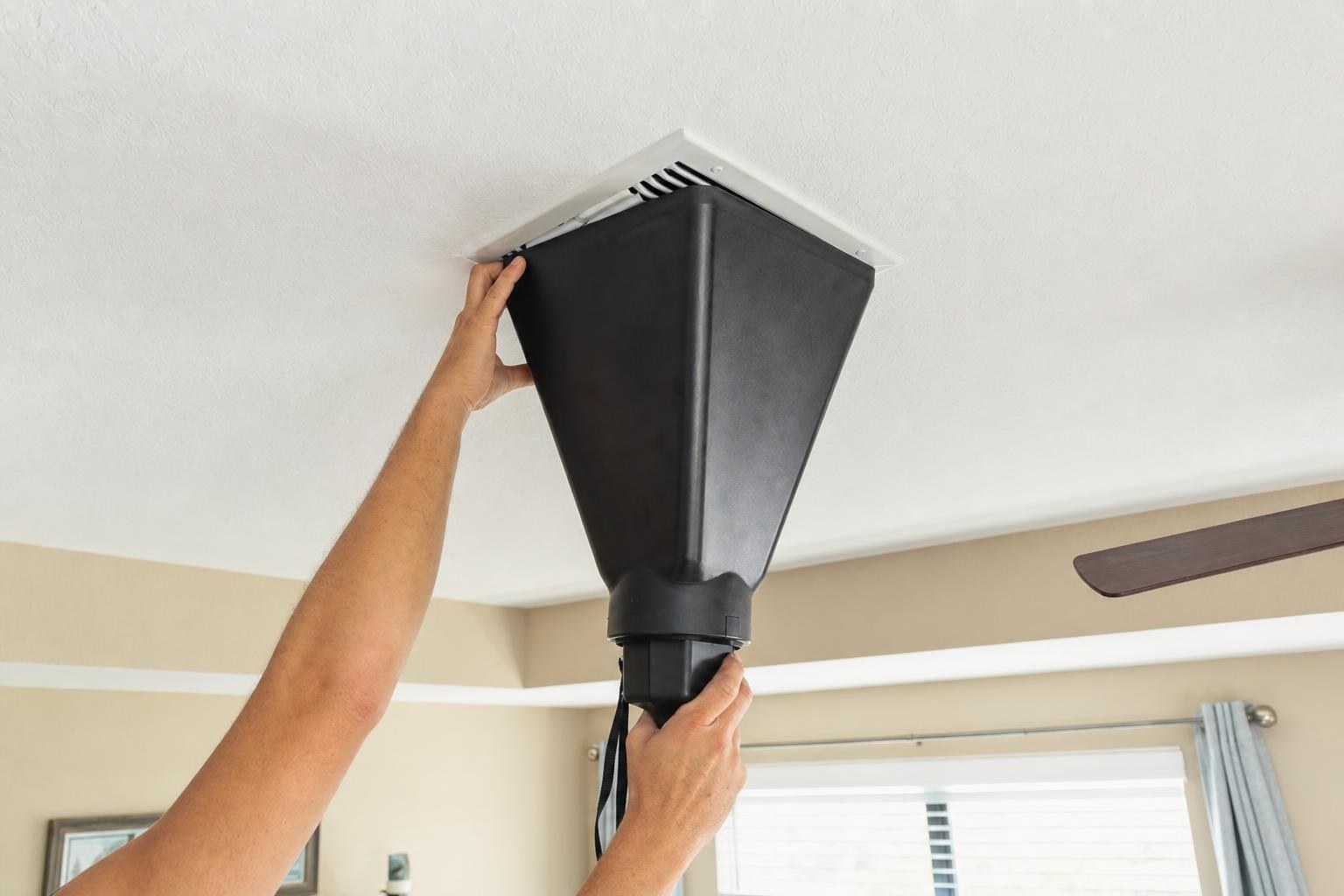
Yes. In single-zone systems without dampers, uneven temperatures are often related to duct leakage, insufficient insulation around specific duct runs, blocked or undersized registers, or rooms with higher heat loads from sun exposure. A technician can assess airflow at individual registers using a flow hood or anemometer and compare those readings to what the system should be delivering based on equipment capacity and duct design. This is a different diagnostic path than a zone damper evaluation, but the goal is the same: identifying where distribution is breaking down.
How do I know if my home actually has zone dampers?
Not every home in Brevard County has a zoned system. Indicators include multiple thermostats connected to a single air handler, a visible zone control board mounted on or near the air handler cabinet, and actuator motors attached to main trunk ducts or branch takeoffs in your attic or utility closet. If you are unsure, a technician can trace the wiring from your thermostat locations back to the air handler to determine what type of control system is installed. Homes with a single thermostat controlling one air handler generally do not have zone dampers.
Next Steps When a Room Stays Uncomfortable
A persistent temperature difference between one room and the rest of your home is worth investigating rather than dismissing as a quirk of the layout. If your system includes zone dampers and one of them has stopped responding, a qualified technician can typically identify the fault in a single diagnostic visit. The team at Inlet Mechanical works with zoned and single-zone HVAC systems throughout Brevard County and approaches each diagnostic methodically, starting with the control board and working outward to the actuator and blade. To arrange a visit, reach out through our contact page or call us directly at (321) 723-0858.
Talk to a Licensed Inlet Mechanical Pro
Whether it’s a repair, an upgrade, or a question, our team is ready to help homeowners and businesses across Brevard & Indian River County.
Licensed FL Mechanical (CMC1250858) · 85+ years combined experience · Free, no-obligation estimates
Written & Reviewed By
Inlet Mechanical Team
The Inlet Mechanical team brings over 85 years of combined experience in HVAC, plumbing, and mechanical construction across Florida. Our licensed professionals hold Florida Mechanical HVAC License (CMC1250858) and Florida Plumbing License (CFC1433105), along with EPA Section 608 certifications. Based in Brevard County, we serve residential, commercial, and industrial clients with expert knowledge of Florida building codes, climate-specific HVAC solutions, and local plumbing requirements. Every article is reviewed by our licensed technicians to ensure accuracy and practical value for Melbourne-area homeowners and businesses.
Last Updated: October 28, 2026