
Thermostat C-wire problems are one of the more quietly frustrating issues a homeowner can run into after upgrading to a smart thermostat. Everything looks right during installation — the device mounts cleanly, the app connects, and the display lights up — but then the screen goes dark, the schedule stops running, or the system short-cycles at odd hours. In many cases, the root cause is not the thermostat itself but the low-voltage wiring behind the wall, specifically a missing, loose, or improperly routed common wire. Understanding how that wire works, and why Florida homes are particularly prone to certain wiring situations, can save you a service call spent chasing the wrong problem.
What the C-Wire Actually Does in a Low-Voltage Thermostat Circuit
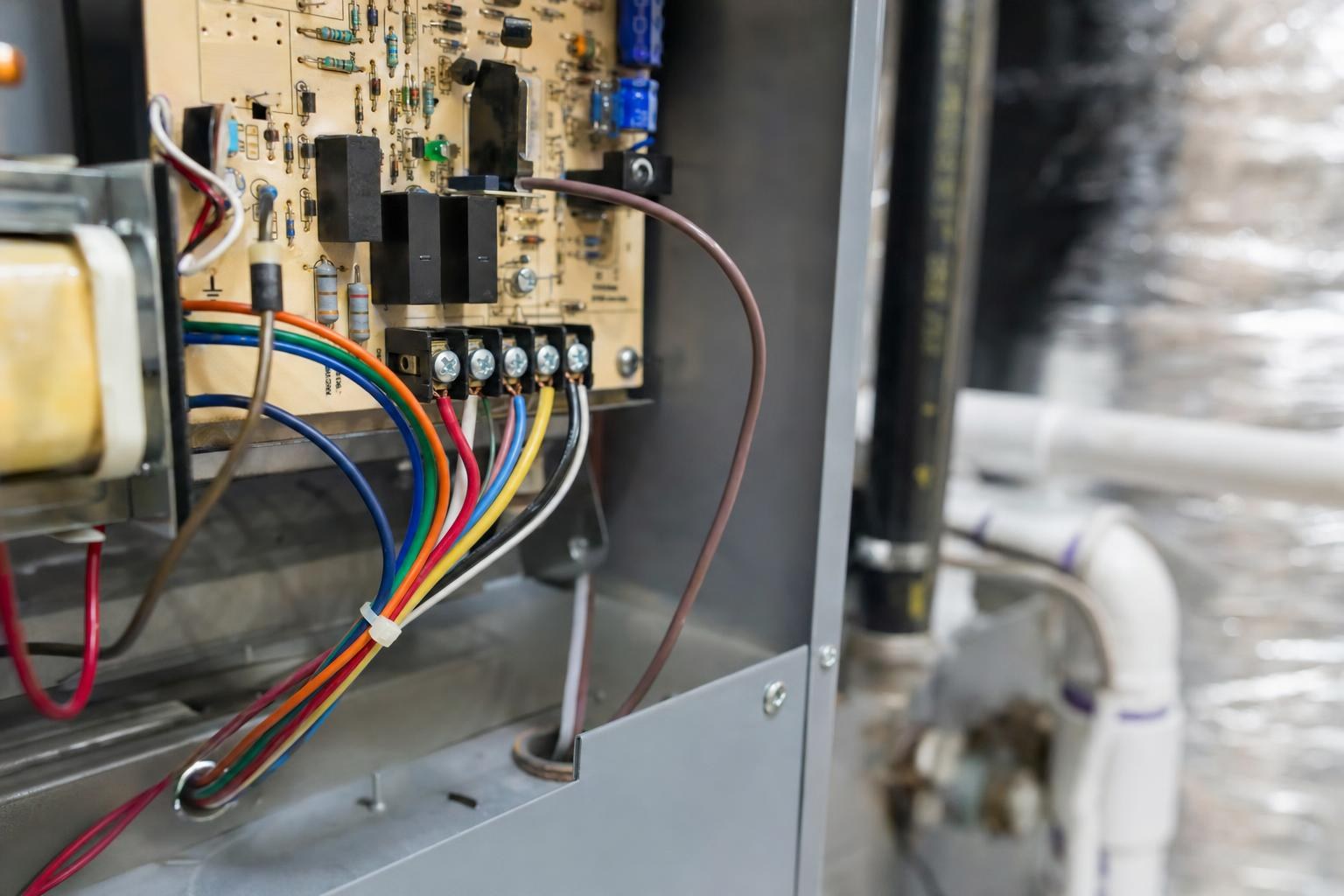
Most residential HVAC systems use a 24-volt alternating current control circuit powered by a small transformer located inside the air handler or furnace. The thermostat sits in this circuit and sends switching signals to components like the contactor, blower relay, and reversing valve. Older mechanical thermostats drew almost no power on their own because they were simple switches. Smart thermostats are different — they run a processor, a wireless radio, a color display, and sometimes a humidity sensor, all of which require a steady, continuous power supply.
The C-wire, short for common wire, completes the 24-volt circuit so the thermostat can draw that continuous power. Without it, some smart thermostats attempt to harvest energy by briefly energizing a heating or cooling call even when no call is needed. This is sometimes called “power stealing,” and it works inconsistently depending on system load, wire run length, and the impedance of the connected equipment. The result is exactly what frustrated homeowners describe: intermittent reboots, a display that dims and recovers, or a unit that seems to start for no reason.
The wire bundle running from your air handler to the thermostat location usually contains four or five conductors wrapped in a single jacket. A four-wire bundle serves most conventional heating and cooling systems with R, Y, G, and W conductors. A five-wire bundle adds the blue or black conductor that becomes the C-wire. Many homes built before smart thermostats became common were wired with only four conductors, leaving the fifth slot unused or absent entirely. That is where thermostat C-wire problems typically begin.
Why Florida HVAC Installations Often Lack a Proper C-Wire
Need help with AC & heating?
Inlet Mechanical’s licensed techs serve Brevard & Indian River with fast, dependable service and free estimates.
Florida is a cooling-dominant climate. Homes here often have heat strips inside the air handler rather than a gas furnace, and the control wiring reflects that simpler setup. A system that only needs to switch cooling, the fan, and a small electric heat stage can technically operate on three or four wires, so some Florida installations from the 1990s and early 2000s were run with the minimum conductors needed at the time. Nobody anticipated that thermostats would eventually need their own steady power supply.
Salt air and humidity in coastal Brevard County also create a secondary issue. Even when a five-wire bundle was installed, the individual conductors inside the jacket can corrode at the terminal connection points over time. A wire that measures connected with a meter may still have enough oxidation at the spade connector or screw terminal to create intermittent resistance — enough to prevent reliable C-wire power delivery even though the wire is physically present. Tight terminal screws and clean, bright copper at connection points matter more than many homeowners expect.
Heat also plays a role. Air handlers in Florida attics can reach very high temperatures during summer. Thermostat wire insulation that degrades or stiffens in sustained heat can develop hairline cracks that create intermittent shorts or open circuits. If your smart thermostat started misbehaving after a particularly hot stretch, wiring condition in the attic run is worth examining alongside the terminal connections themselves.
Diagnosing Thermostat C-Wire Problems Before Opening Walls
Before assuming you need new wire, it helps to trace what you actually have. Start at the thermostat base plate. Remove the thermostat from its mount and look at the terminal block. If you see a wire connected to the terminal labeled C, you technically have a C-wire. Check whether it is tight, whether the copper at the stripped end looks bright or greenish, and whether the conductor jacket shows any damage near the terminal.
Then go to the air handler. Locate the control board and find the same C terminal there. Confirm that the wire from the thermostat connects to C on the board, not to a different terminal where someone may have placed it during a previous service visit. Mis-labeling and terminal substitution are more common than you might think, especially in systems that have been serviced by multiple technicians over the years.
If you have a wire in both places but the thermostat still loses power, measure voltage between R and C at the thermostat location with the system in standby. You should read close to 24 volts AC. A reading significantly below that, or one that fluctuates, points to resistance somewhere in the wire run or a transformer that is undersized or failing. An HVAC technician with a meter and familiarity with low-voltage circuits can quickly distinguish between a wiring problem and a transformer problem, both of which can look identical from the thermostat’s perspective.
Practical Solutions When the C-Wire Is Truly Missing
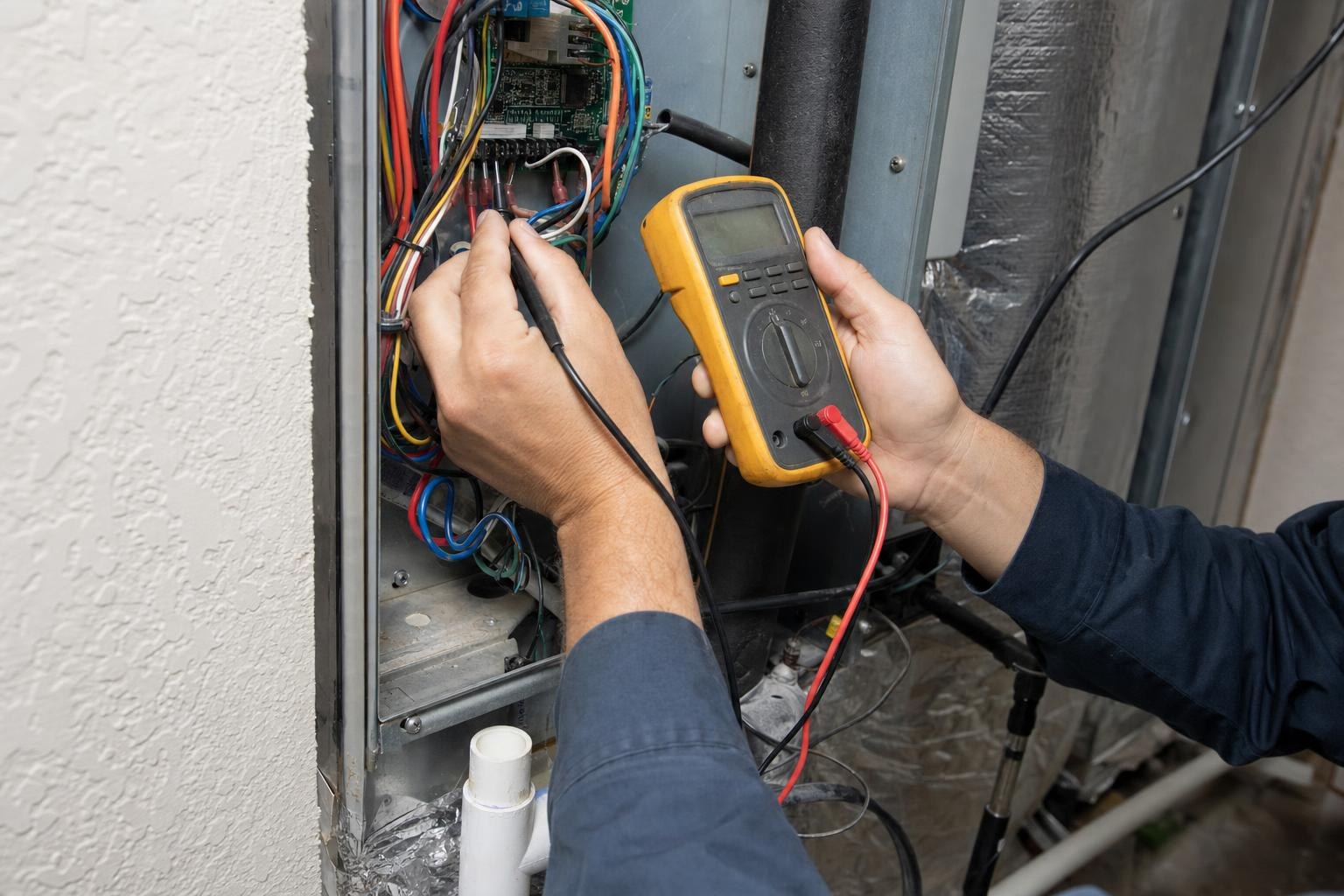
When a fifth conductor simply does not exist in the existing wire bundle, there are several approaches that can restore reliable power without opening walls. The most common is a C-wire adapter, a small add-on device that installs at the air handler and uses a different switching method to provide the common terminal function. These adapters are widely used and generally reliable, though their compatibility with specific smart thermostat models and system types varies. A technician familiar with your specific equipment can determine whether an adapter is appropriate before you purchase one.
Another option is running a new low-voltage wire. In attic-mounted systems — which are very common in Florida — the wire run from air handler to thermostat may be relatively accessible if the thermostat is on an interior wall below the attic. A new five-conductor or eight-conductor thermostat wire can be fished through the existing path in many homes without significant disruption. This approach removes all the uncertainty about conductor condition and gives you spare wires for future upgrades or zone additions.
Some homeowners consider using the G wire, which normally controls the fan, as a repurposed C-wire and then enabling continuous fan operation through the thermostat software to compensate. This workaround has tradeoffs and is not appropriate for all system types. It is the kind of modification worth discussing with a technician rather than implementing based on online instructions alone, since the implications differ depending on whether you have a single-stage, multi-stage, or heat pump system.
You can read more about how smart thermostats and HVAC system compatibility interact on the ENERGY STAR guidance on smart thermostats, which covers efficiency considerations alongside operational basics.
For a broader picture of how thermostat service fits into your overall HVAC care, our thermostat services page covers what a professional evaluation typically involves, and our residential HVAC services overview describes the full range of system support we provide in Brevard County.
How Thermostat C-Wire Problems Affect Smart Home Schedules and Energy Use
A thermostat that loses power and reboots does not simply pause — it loses its runtime context. Many smart thermostats resume in a default or hold mode after a reboot rather than returning to the scheduled program. This means a thermostat that has been silently rebooting every few days may have been running your system in a completely different mode than you intended, without any obvious indication on the display once power is restored.
The power-stealing behavior mentioned earlier also creates a subtle efficiency concern. When a thermostat energizes the Y terminal briefly to harvest power during what should be a standby period, the outdoor condensing unit may receive a brief voltage signal. How the unit responds depends on its low-voltage lockout settings and the contactor design, but repeated micro-signals are not what the equipment was designed to handle. This is a low-probability concern rather than a certainty, but it is one more reason to address thermostat C-wire problems rather than tolerate them as a minor inconvenience.
Once a proper C-wire connection is established, smart thermostat scheduling, learning algorithms, and remote access all function as intended. The device can maintain its program through Florida’s long cooling season without the interruptions that a power-stealing arrangement introduces.
Frequently Asked Questions About C-Wire Power Issues
Can I use the G wire as a C-wire if my bundle only has four conductors?
Technically, the G wire can be reassigned as a C-wire in some situations, but this means your thermostat will no longer have a dedicated fan control wire. Some smart thermostats can manage fan operation through the Y terminal logic instead, which works on certain system types. However, this approach does not suit all equipment configurations, particularly heat pumps or systems with variable fan speeds. An HVAC technician can assess your specific wiring and system type before you make that change.
My thermostat runs fine most of the time but resets overnight. Could that be a C-wire issue?
Overnight resets are a recognizable symptom of C-wire power problems, particularly in power-stealing mode. System load drops at night when cooling demand decreases, which reduces the current available for the thermostat to harvest through the call terminals. A device that managed to stay powered during peak afternoon demand may lose power when the system cycles less frequently after midnight. Installing a proper C-wire connection usually resolves this pattern.
How do I know if my home’s wiring bundle has a fifth conductor that was never connected?
Remove your thermostat from the wall plate and look at the bundle where it enters the back of the box. Count the individual conductors, including any that are capped, folded back, or tucked behind the plate without being connected to a terminal. If you see a blue, black, or unmarked wire that is not terminated, it may be the unused common conductor. The same check applies at the air handler control board. An HVAC technician can confirm conductor count and condition during a service visit.
Will a C-wire adapter work with my heat pump system in Florida?
C-wire adapters are designed to be broadly compatible, but heat pump systems use more terminals than conventional systems — typically adding an O or B wire for the reversing valve. Some adapters handle this well, while others are designed primarily for conventional heating and cooling wiring. Compatibility depends on the specific adapter model and the smart thermostat you are using. Review the adapter’s published compatibility list for your thermostat brand, and consider having an HVAC technician install and test the combination to confirm proper operation before the peak cooling season.
Thermostat C-wire problems are solvable with the right diagnosis and a clear picture of what wiring is actually present in your home. If you have been living with a smart thermostat that reboots, dims, or behaves erratically, the solution is usually straightforward once someone takes a methodical look at the low-voltage circuit. To schedule a thermostat wiring evaluation or ask about your specific setup, visit our contact page or call Inlet Mechanical at (321) 723-0858.
Talk to a Licensed Inlet Mechanical Pro
Whether it’s a repair, an upgrade, or a question, our team is ready to help homeowners and businesses across Brevard & Indian River County.
Licensed FL Mechanical (CMC1250858) · 85+ years combined experience · Free, no-obligation estimates
Written & Reviewed By
Inlet Mechanical Team
The Inlet Mechanical team brings over 85 years of combined experience in HVAC, plumbing, and mechanical construction across Florida. Our licensed professionals hold Florida Mechanical HVAC License (CMC1250858) and Florida Plumbing License (CFC1433105), along with EPA Section 608 certifications. Based in Brevard County, we serve residential, commercial, and industrial clients with expert knowledge of Florida building codes, climate-specific HVAC solutions, and local plumbing requirements. Every article is reviewed by our licensed technicians to ensure accuracy and practical value for Melbourne-area homeowners and businesses.
Last Updated: October 27, 2026