
That Drip at the Secondary Outlet Is Not Random
When water begins trickling from an unfamiliar pipe near your roofline, soffit, or exterior wall, your first instinct might be to assume a plumbing leak or a recent rainstorm finding its way inside. But if you have central air conditioning and that drip appears during or shortly after a long cooling cycle, there is a good chance your AC secondary drain clogged situation is already underway — or more precisely, your primary drain is already clogged and the secondary outlet is doing exactly what it was designed to do. That distinction matters because most homeowners have never been told what the secondary drain line is for, where it exits the home, or why seeing water there is a signal rather than a nuisance. This article walks through what that backup outlet is telling you, what typically happens inside the system before water reaches it, and how to respond in a way that protects your home from water damage during Florida’s long, humid cooling seasons.
How a Two-Drain System Is Designed to Work
Need help with AC & heating?
Inlet Mechanical’s licensed techs serve Brevard & Indian River with fast, dependable service and free estimates.
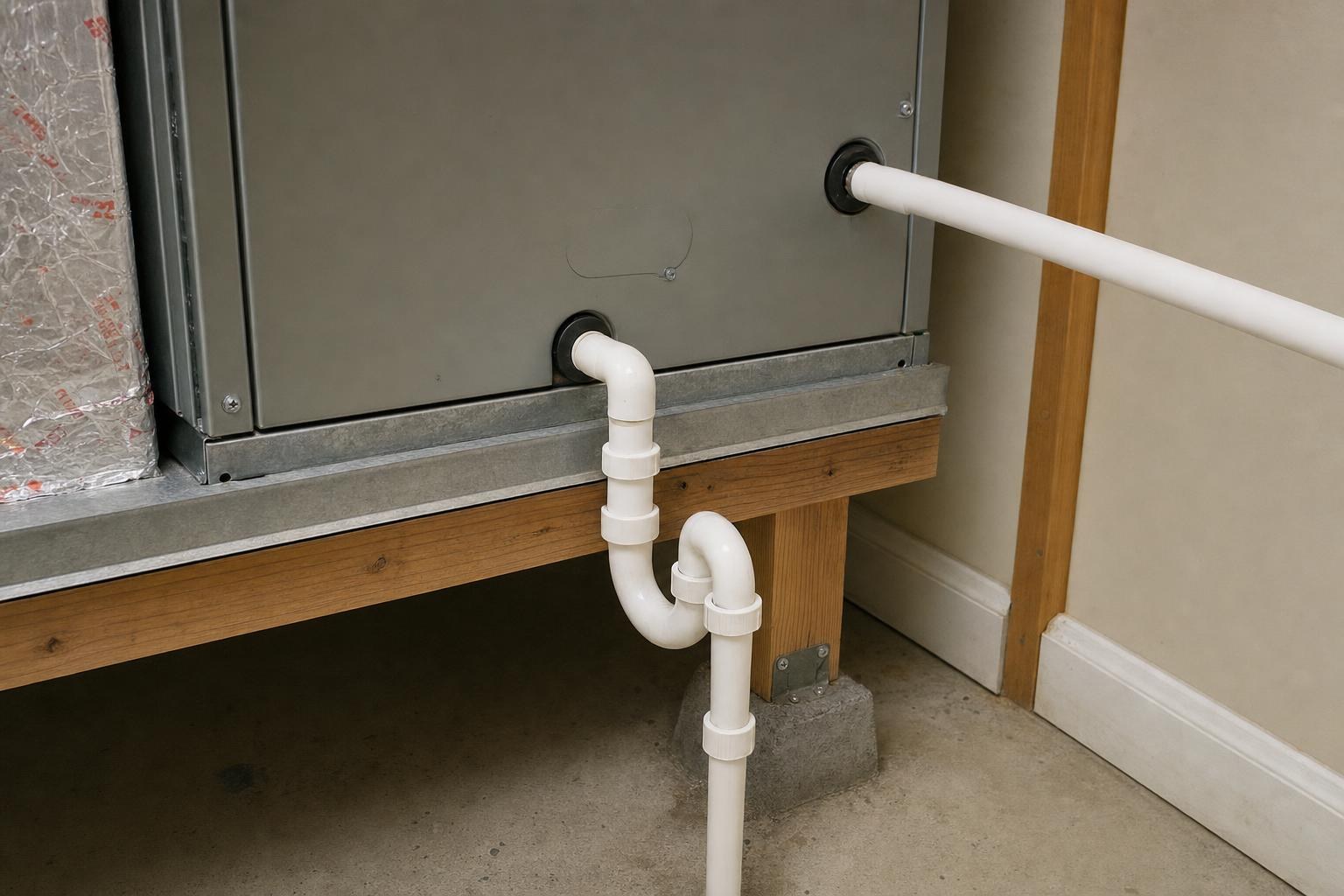
Central air conditioning systems remove moisture from indoor air as a byproduct of cooling. As warm, humid air passes over the evaporator coil, water vapor condenses into liquid and drips into a collection pan beneath the coil — the primary drain pan. From there, a PVC pipe called the primary condensate drain carries that water away, usually to a floor drain, a utility sink, or outside the home.
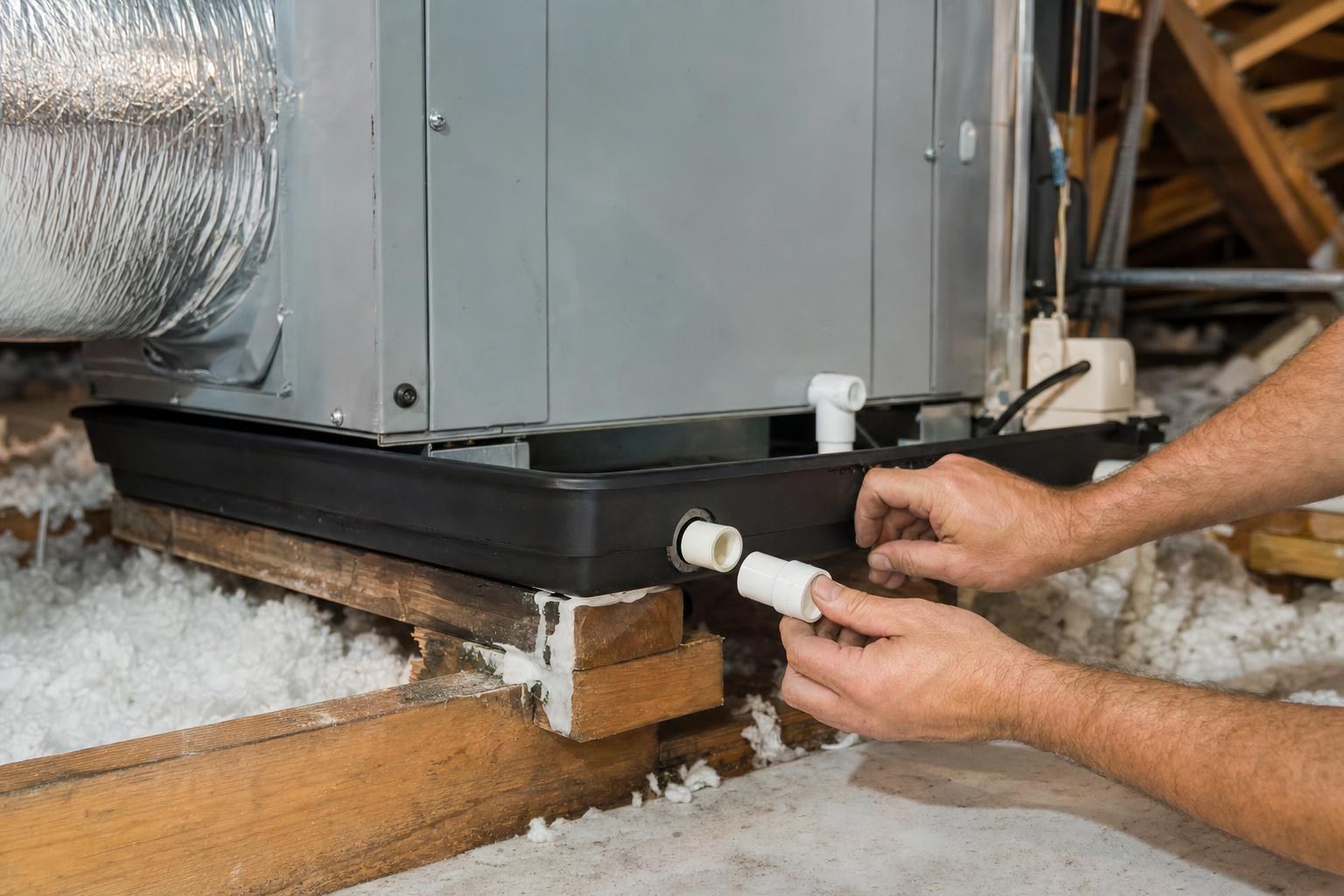
Because this drain line runs through living spaces and often over finished ceilings, designers added a second layer of protection: a secondary drain pan that sits beneath the primary pan, and a separate drain line — the secondary condensate drain — that exits the home at a visible location. When the primary line flows freely, the secondary pan stays dry and the secondary outlet produces nothing. That outlet is quiet by design. Water appearing there is the system’s built-in alert that the primary path is blocked.
In Florida, condensate volume is substantial. Brevard County’s summers combine heat, high relative humidity, and long daily runtimes, which means an air handler can remove several gallons of moisture per hour during peak conditions. That volume has to go somewhere. When the primary drain cannot accept it, the water level rises, eventually reaches the secondary pan, and exits through the secondary line. Seeing that drip outdoors is not a malfunction of the secondary system — it is confirmation the secondary system is working. The malfunction is upstream, in the primary drain.
What Causes an AC Secondary Drain Clogged Scenario
The most frequent culprit is biological growth inside the primary condensate line. The drain pipe’s interior stays moist and dark — ideal conditions for algae, mold, and biofilm to accumulate. Over time, that growth narrows the pipe’s interior diameter. Eventually, the restriction becomes significant enough that water backs up into the primary pan instead of flowing freely to the exit point. Once the primary pan fills, water overflows into the secondary pan and travels out the secondary line.
Other contributors include debris — dust, fiberglass particles from deteriorating duct liner, or rust flakes from an aging pan — settling at the trap or the lowest point of the drain run. Improper slope in the drain line is another factor; if a previous installation left a section of pipe running level or slightly uphill, standing water collects and organic matter accumulates faster. In coastal areas of Brevard County, salt air can also accelerate corrosion in metal components near the drain pan, adding particulate matter that contributes to blockages.
A float switch — a small sensor that detects rising water in the primary pan — is often installed to shut down the air handler before overflow occurs. If yours is functioning, you may notice the system stopping mid-cycle rather than seeing water at the secondary outlet. If water is reaching the secondary outlet, either the float switch is absent, has failed, or the system does not have one installed at all.
Reading the Signal Before It Becomes Damage
Water at the secondary outlet tells you the primary drain is compromised, but it does not tell you how long that condition has existed. In some cases, the blockage developed slowly and the secondary pan caught the first overflow. In others, an older home’s secondary pan may have been draining quietly for days before anyone noticed.
The concern with a prolonged blockage is what happens if the secondary pan or line also becomes restricted, or if the secondary pan itself is cracked, corroded, or undersized for the volume it is receiving. At that point, water has no safe exit and will find its own path — typically through ceiling drywall, insulation, or framing. Brevard County homeowners with air handlers installed in attic spaces should treat water at the secondary outlet as time-sensitive, because water damage in attic framing and drywall can escalate quickly in a warm, humid environment.
If you see the drip, note when it started, how steady it is, and whether the air handler is still running or has shut itself off. That information is useful when you describe the situation to a technician. You can also inspect the primary pan — if you have safe access — to see whether it contains standing water. Do not attempt to clear the blockage by blowing compressed air into the line without understanding where the debris will go, as forcing material back into the pan can create secondary problems.
The U.S. Environmental Protection Agency guidance on indoor air quality notes that regular maintenance, including keeping drain lines clear, is one of the primary ways homeowners can preserve system efficiency and avoid preventable breakdowns.
Routine Maintenance as the Longer-Term Response
Clearing an existing blockage addresses the immediate signal, but the conditions that created that blockage — biological growth, accumulated debris, stagnant moisture — will reassert themselves without a consistent maintenance approach. Periodic flushing of the condensate line with an appropriate solution helps interrupt the growth cycle before it narrows the pipe again. The frequency that makes sense for a given home depends on factors like run hours, indoor air quality, duct condition, and whether the system has a UV light or other biological growth mitigation installed.
Filter changes are also relevant here in a less obvious way. A dirty air filter restricts airflow over the evaporator coil, which can cause the coil to run colder than intended. A coil that runs too cold can form excess condensation or even ice, and when that ice melts — often when the system cycles off — it can overwhelm the drain pan’s capacity to handle the sudden volume. Keeping filters clean is part of keeping the drain system manageable.
Our residential HVAC maintenance services include condensate drain inspection and cleaning as part of a scheduled visit, which allows a technician to assess line condition, float switch operation, and pan integrity before a secondary drain event occurs rather than in response to one.
If your system is older or has not had recent professional attention, a cooling system service visit can evaluate the full condensate pathway — from pan to exit point — and identify whether any components need replacement rather than just cleaning.
Frequently Asked Questions
Is it safe to keep running the AC when water is dripping from the secondary drain?
Running the system continues to produce condensate, which continues to flow through the secondary path. If the secondary pan and line are handling the volume, the immediate risk to the system may be limited, but you are adding wear time without addressing a known problem. If the secondary outlet also becomes restricted, or if your secondary pan has any defect, you lose that safety buffer. Most technicians would recommend turning the system off or to fan-only mode and scheduling service promptly rather than running it indefinitely in a known backup condition.
My system has a float switch. Why is water still reaching the secondary outlet?
Float switches can fail, shift out of position, or become coated with residue that prevents them from rising with the water level. It is also possible the switch is wired to the system in a way that interrupts the call for cooling but does not fully shut down the blower, allowing latent moisture to continue draining. A technician can verify whether the float switch is functional and properly calibrated during a service visit.
How do I find my secondary drain outlet?
The secondary outlet is typically a short PVC pipe that exits through the soffit, an exterior wall near the air handler, or occasionally near the roofline. It is usually positioned so that a drip from it would be noticeable from outside the home — that visibility is intentional. If you are unsure which pipe is the secondary outlet versus a plumbing vent or other line, a technician can trace it during a service call. Avoid probing or modifying any pipe you have not positively identified.
Can I clear the primary drain myself?
Some homeowners pour diluted solutions into the primary drain access port — usually a capped T-fitting near the air handler — to help dissolve light biological growth, and this can be part of a reasonable maintenance routine. However, if the line is fully blocked or if there is standing water in the primary pan, DIY flushing may not be sufficient to restore full flow, and some approaches can inadvertently push debris further into the line or into the pan drain fitting itself. If the secondary outlet is actively dripping, the blockage is likely significant enough to warrant professional clearing and a condition assessment rather than a home remedy.
Water at your secondary drain outlet is one of the cleaner diagnostic signals a home HVAC system can give you — it tells you something specific is wrong and where to look. Responding to it promptly gives you the best chance of avoiding the water damage that follows when that backup path is eventually overwhelmed. If you are seeing this issue at your Palm Bay or Brevard County home, our team at Inlet Mechanical is ready to help you work through it. Visit our contact page to schedule a visit, or call us directly at (321) 723-0858.
Talk to a Licensed Inlet Mechanical Pro
Whether it’s a repair, an upgrade, or a question, our team is ready to help homeowners and businesses across Brevard & Indian River County.
Licensed FL Mechanical (CMC1250858) · 85+ years combined experience · Free, no-obligation estimates
Written & Reviewed By
Inlet Mechanical Team
The Inlet Mechanical team brings over 85 years of combined experience in HVAC, plumbing, and mechanical construction across Florida. Our licensed professionals hold Florida Mechanical HVAC License (CMC1250858) and Florida Plumbing License (CFC1433105), along with EPA Section 608 certifications. Based in Brevard County, we serve residential, commercial, and industrial clients with expert knowledge of Florida building codes, climate-specific HVAC solutions, and local plumbing requirements. Every article is reviewed by our licensed technicians to ensure accuracy and practical value for Melbourne-area homeowners and businesses.
Last Updated: October 26, 2026