
Inlet Mechanical installs reverse osmosis systems as part of our water treatment work, and the question we get most often is how it’s different from the whole-house softener or filter a homeowner might already have. The short answer is that they solve different problems. A softener and a whole-house filter treat the water running through your entire plumbing system, while a reverse osmosis system focuses on the water you actually drink and cook with. Here’s how it works and where it fits into a Brevard County home.
How Reverse Osmosis Actually Works
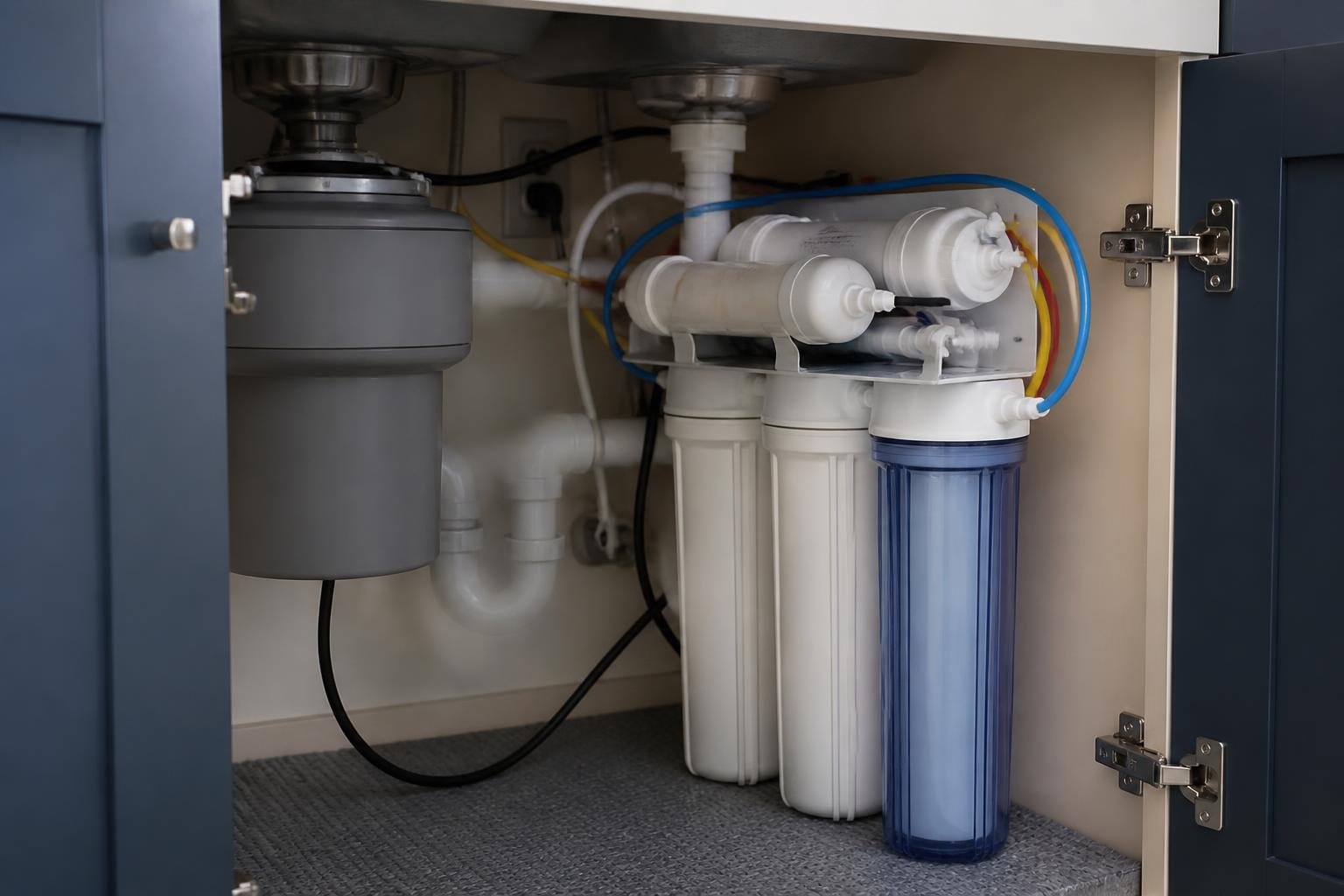
A reverse osmosis system pushes water through a semi-permeable membrane under pressure, which filters out dissolved solids, sediment, and many contaminants that a standard carbon filter can’t catch. Most residential systems are installed under the kitchen sink and include a few stages: a sediment pre-filter, a carbon filter to handle chlorine and taste, the RO membrane itself, and often a final polishing filter before the water reaches a dedicated faucet. The result is water that’s noticeably cleaner-tasting than straight tap water, which is why it’s a popular add-on even in homes that already have a whole-house filtration system.
Why Florida Tap Water Often Benefits From It
Need help with plumbing?
Inlet Mechanical’s licensed techs serve Brevard & Indian River with fast, dependable service and free estimates.
Municipal water across Brevard County is treated to meet safety standards, but that doesn’t mean it tastes great straight from the tap. Chlorine used for disinfection, along with dissolved minerals common in Florida’s groundwater sources, can leave water with a taste or odor some homeowners want to filter out before drinking it. A whole-house softener addresses hardness throughout the home, but it isn’t designed to filter drinking water to the same degree an RO system can. For homes on well water, the value can be even more noticeable, since well water quality varies more from property to property.
Reverse Osmosis vs. a Whole-House Filter: How They Work Together
These systems aren’t competing with each other, they’re usually paired. A whole-house filter or softener protects your pipes, water heater, and appliances from scale and sediment across the entire home. A reverse osmosis system then gives you a dedicated, higher level of filtration at the tap where you actually drink and cook. Homeowners sometimes assume one system replaces the need for the other, but it depends on what you’re trying to solve. If your goal is better-tasting drinking water without replumbing the whole house, RO alone can be enough. If you’re also dealing with hard water affecting fixtures and appliances, pairing it with a softener addresses both issues.
What to Expect From Installation and Upkeep
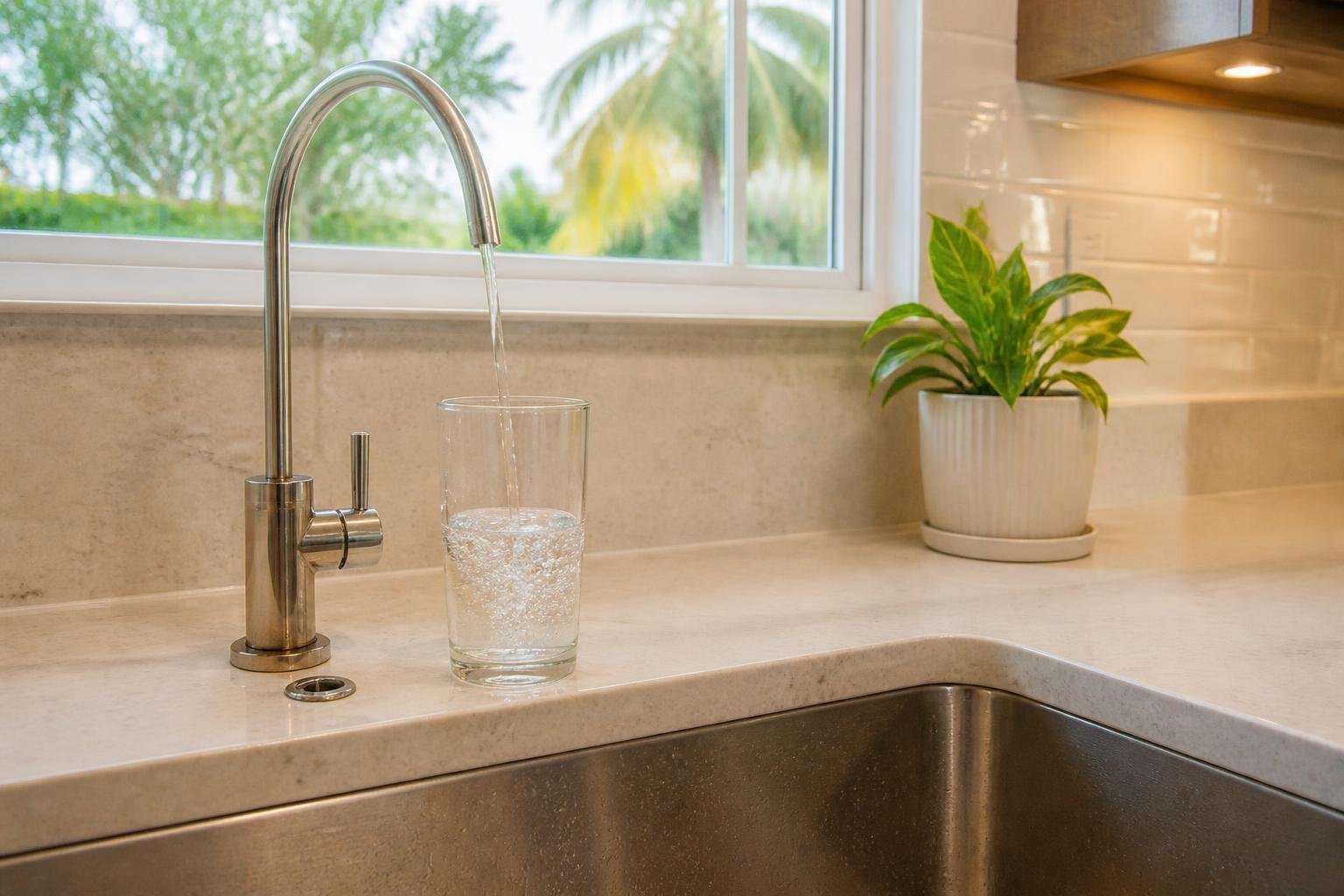
A standard under-sink RO system installs without major plumbing changes in most kitchens, connecting to the cold water supply line and adding a small dedicated faucet at the sink. The filters inside the system need periodic replacement, and the membrane itself typically lasts longer than the pre- and post-filters, though the exact schedule depends on your water quality and how much the system is used. It’s a reasonable idea to build filter changes into the same routine as other seasonal home maintenance so it doesn’t get forgotten.
- Sediment and carbon pre-filters: These work hardest and typically need attention most often.
- RO membrane: The core filtration component, with a longer service interval than the pre-filters.
- Post-filter or polishing stage: A final pass before water reaches the faucet, refreshed on its own schedule.
Signs Your Kitchen Might Benefit From One
Not every home needs reverse osmosis to have perfectly usable tap water, so it’s worth thinking about what’s actually driving the interest. A noticeable chlorine taste or smell right after the water utility adjusts treatment levels is one common trigger. Buying bottled water regularly because the tap water doesn’t taste right is another, since an RO system at the sink often replaces that habit for less ongoing effort. Homes on well water where a recent test showed elevated dissolved solids or other contaminants are a more direct case for filtration, since well water quality can vary significantly even between neighboring properties in the same part of Brevard County.
If none of that applies and your only concern is hardness affecting fixtures and appliances rather than the taste of your drinking water, a whole-house softener alone may cover what you need without adding a dedicated drinking water system on top of it.
What Gets Left Behind: Wastewater and Efficiency
One thing worth understanding before installing a reverse osmosis system is that the process produces some wastewater as part of filtering out dissolved solids, since the membrane concentrates what it removes and flushes it down the drain rather than trapping it entirely. Older RO systems were considerably less efficient in this regard than newer designs, which have improved the ratio of filtered water to wastewater significantly. If efficiency is a priority, it’s worth asking about the specific system’s ratio rather than assuming all reverse osmosis units perform the same way, since the technology has changed meaningfully over the past several years. A system’s storage tank size also affects how it performs under demand, since filtration through the membrane happens gradually rather than instantly, and a properly sized tank keeps filtered water available even during periods of heavier kitchen use.
Check Your Water Quality Report Before You Decide
Before deciding whether reverse osmosis is worth adding to your kitchen, it’s worth looking at what’s actually documented about your water rather than going by taste alone. Every community water system is required to publish an annual water quality report, and the EPA’s Consumer Confidence Report program is where to find it, showing which contaminants were detected in your area’s water and how those levels compared against federal standards. Brevard County utility customers can typically find their system’s report through their provider’s website or by contacting the utility directly.
A report showing elevated levels of a particular contaminant, even one still within legal limits, can be a more direct reason to consider RO filtration than taste preference alone. On the other hand, a clean report doesn’t mean RO isn’t worth it, since taste and chlorine odor aren’t flagged as violations even though they’re the most common reasons homeowners look into filtration in the first place. For homes on well water, there’s no CCR to check, which is part of why a private water test carries more weight for those households than it does for someone on municipal service.
Frequently Asked Questions
Will a reverse osmosis system fix hard water throughout my whole house?
No, it’s designed to filter water at a single point of use, typically the kitchen faucet. A whole-house softener is the right tool if hardness is affecting your pipes, fixtures, or water heater across the home, and the two systems address different parts of your water quality picture rather than overlapping.
Does reverse osmosis remove minerals I actually want in my water?
It removes most dissolved solids, including some minerals along with contaminants. Some homeowners choose a system with a remineralization stage if they’d rather not filter those out completely, which is worth discussing based on your preferences and what matters most to your household.
How much space does an under-sink RO system need?
Most systems fit within a standard kitchen cabinet, though the exact footprint depends on the model and number of filtration stages. We can confirm fit during an in-home look at your kitchen plumbing before recommending a specific configuration.
If you’re curious whether a reverse osmosis system makes sense for your kitchen, our water treatment team can walk through your options, including our reverse osmosis installation service. Contact Inlet Mechanical to talk through what’s actually in your water before you decide.
Talk to a Licensed Inlet Mechanical Pro
Whether it’s a repair, an upgrade, or a question, our team is ready to help homeowners and businesses across Brevard & Indian River County.
Licensed FL Mechanical (CMC1250858) · 85+ years combined experience · Free, no-obligation estimates
Written & Reviewed By
Inlet Mechanical Team
The Inlet Mechanical team brings over 85 years of combined experience in HVAC, plumbing, and mechanical construction across Florida. Our licensed professionals hold Florida Mechanical HVAC License (CMC1250858) and Florida Plumbing License (CFC1433105), along with EPA Section 608 certifications. Based in Brevard County, we serve residential, commercial, and industrial clients with expert knowledge of Florida building codes, climate-specific HVAC solutions, and local plumbing requirements. Every article is reviewed by our licensed technicians to ensure accuracy and practical value for Melbourne-area homeowners and businesses.
Last Updated: September 24, 2026