
A hot garage or bonus room is one of the most common comfort complaints we hear across Palm Bay, Melbourne, and the rest of Brevard County. Whether you’re turning that space into a gym, workshop, home office, or hangout room, the Florida heat makes it nearly unusable for half the year. The good news is that several proven garage cooling options in Florida can fix it. The trick is matching the right system to how the space is built and how you plan to use it. Below, we walk through the choices honestly, including the ones we’d steer you away from.
Why Garages and Bonus Rooms Get So Hot in Florida
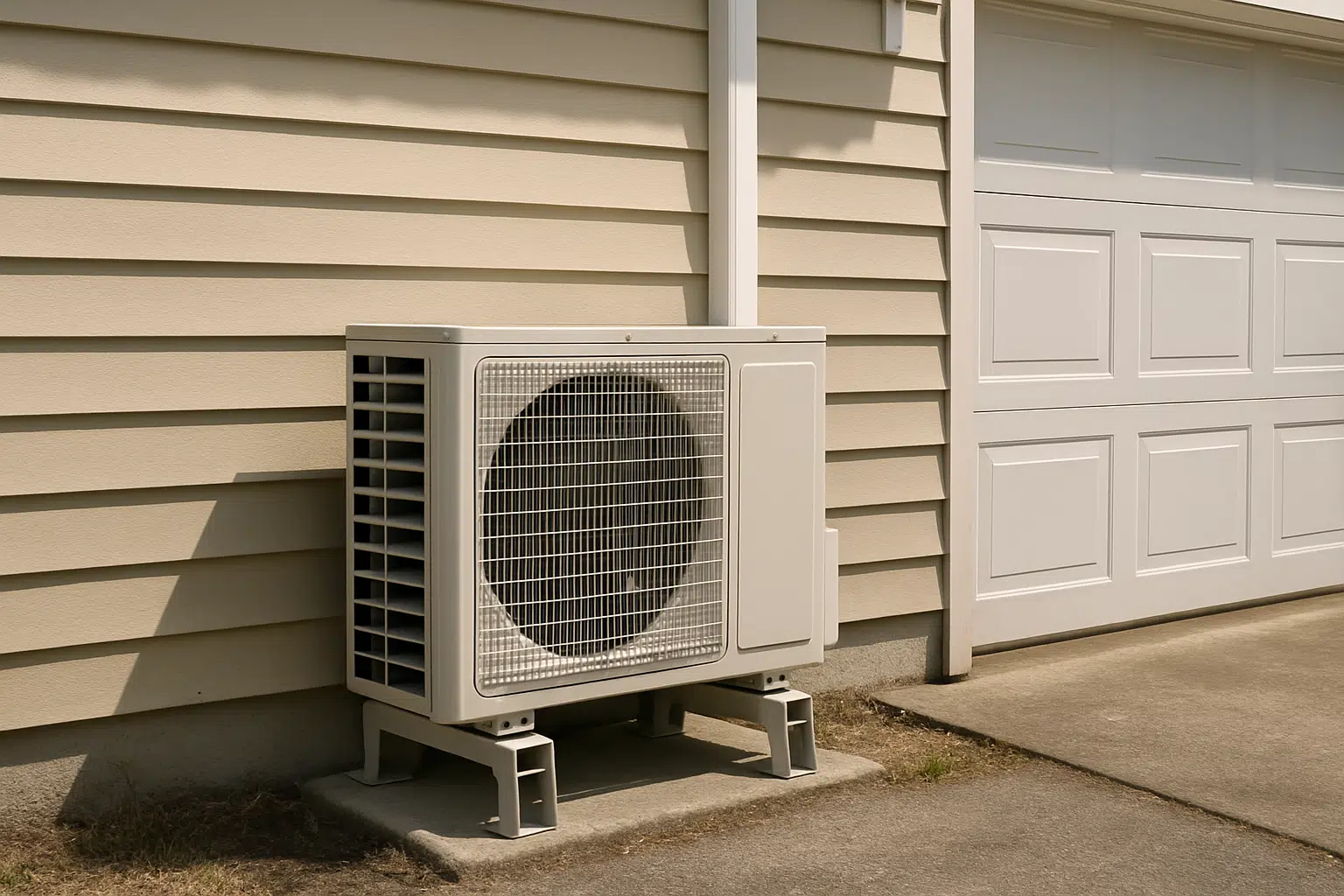
Before choosing equipment, it helps to understand why these spaces run hotter than the rest of your home. Most garages sit under uninsulated roof decks, have thin or no wall insulation, and feature a large metal door that soaks up afternoon sun. That heat radiates inward for hours, a phenomenon we call heat soak. The concrete slab stores warmth too, releasing it well into the evening. Bonus rooms over a garage face the same battle from below, with hot air rising into the space and minimal insulation between floors.
An attached garage adds another wrinkle: it shares a wall with your conditioned living space and often houses a water heater, vehicles, or chemicals. That matters a great deal when we discuss why extending your home’s ductwork is usually the wrong move.
Option 1: Ductless Mini-Split (Usually Our Top Pick)
Need help with AC & heating?
Inlet Mechanical’s licensed techs serve Brevard & Indian River with fast, dependable service and free estimates.
For most garage and bonus room projects, a ductless mini-split system installed here in Brevard County is the option we recommend most often. A mini-split pairs a small outdoor condenser with a wall- or ceiling-mounted indoor head, connected by a slim line set instead of bulky ducts. That design solves several Florida-specific problems at once.
First, efficiency: mini-splits are inverter-driven, so they ramp output up and down instead of cycling hard on and off. In a heat-soaked garage, that steady operation holds temperature without spiking your power bill. Second, humidity control: a properly sized mini-split pulls moisture out of the air continuously, which matters enormously in our climate and protects tools, equipment, and stored belongings from rust and mildew. Third, independence: the unit conditions only the garage, so you’re not robbing comfort from the rest of the house or oversizing your main system.
The trade-off is upfront cost. A mini-split is a permanent, professionally installed system, so it costs more than a plug-in unit out of the box. In our experience, that investment pays back through lower operating costs, a quiet comfortable space, and equipment built to handle Florida summers year after year.
Option 2: Extending Your Existing Ductwork (Usually a Bad Idea)
It seems logical to just run a duct from your central system into the garage. In practice, we rarely recommend it, and for attached garages it can create real problems. Your home’s air handler is sized for your living space, not the extra heat load of a garage. Adding a room downstream typically starves the rest of the house of airflow and leaves both areas uncomfortable.
More importantly, there’s a code and safety issue. Florida and national mechanical codes generally prohibit supply or return air connecting an attached garage to the home’s HVAC system. Doing so can pull car exhaust, fumes, and other contaminants into the air you breathe indoors. For a detached structure the rules differ, but the capacity problem remains. When homeowners ask us about tapping into existing ducts, we walk them through these concerns as part of our residential HVAC services so they understand why a standalone solution is almost always safer and more effective.
Option 3: Portable and Window Units (Short-Term Only)
Portable air conditioners and window units are the cheapest way to get cool air moving, and for a garage you use occasionally they can be a reasonable stopgap. They’re inexpensive, require no installation, and you can move them around.
The limits show up fast in Florida. Most portable and window units are undersized for a heat-soaked garage, so they run constantly and struggle to keep up. Portable units vent hot air through a hose out a window or door, which means you’re leaving an opening that lets humid outdoor air right back in. Their dehumidification is weak, they’re noisy, and many garage windows aren’t built to hold a window unit securely. For a true workshop, gym, or office you’ll spend more on electricity fighting a losing battle than you would have on a properly sized system.
Insulation and Weatherstripping Come First
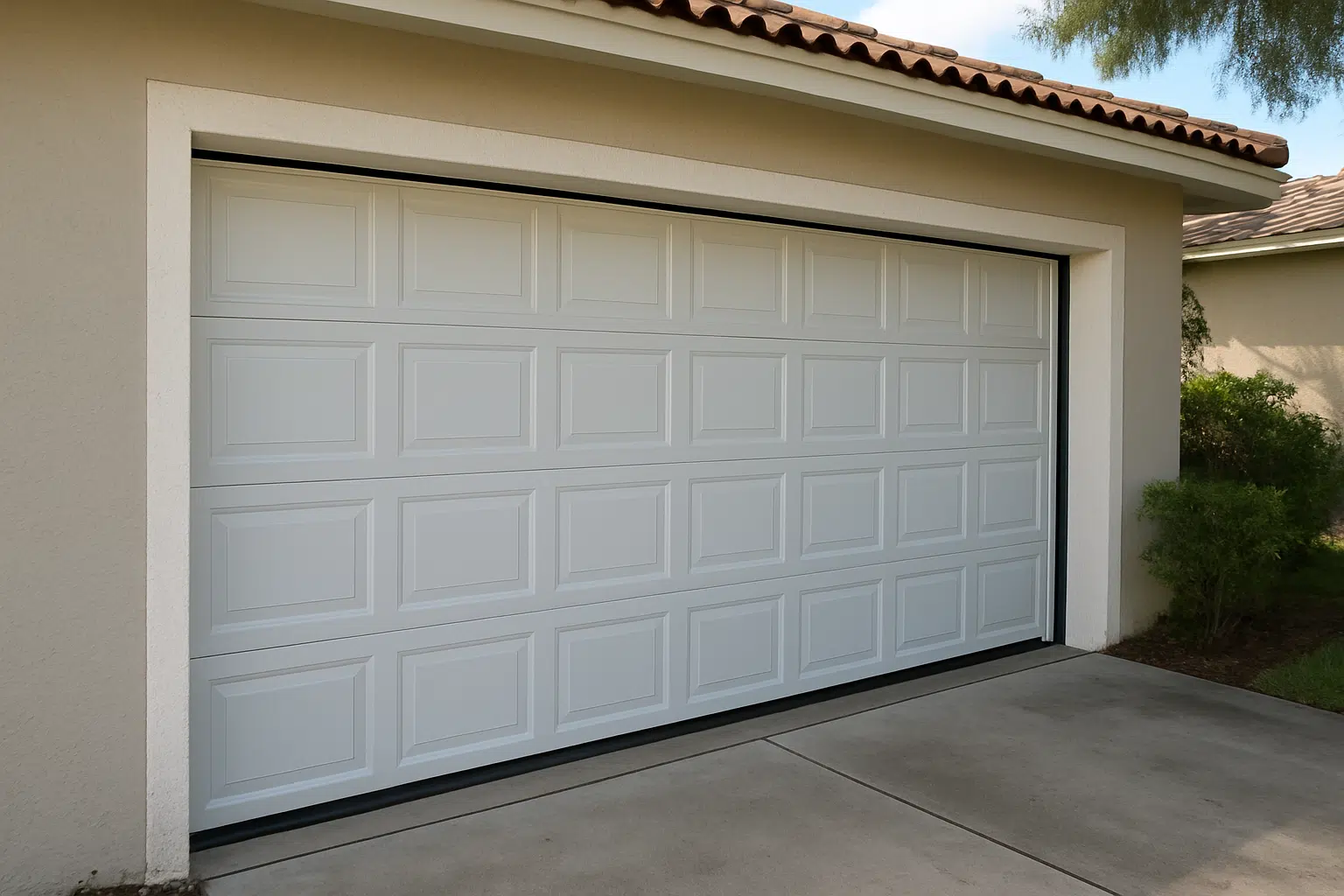
No cooling system can win if the space leaks heat as fast as you remove it. Before or alongside any equipment, we always look at the envelope. Insulating the garage door with a dedicated kit, sealing gaps around the door with fresh weatherstripping, and adding insulation to the attic or roof deck can dramatically reduce the heat load. A radiant barrier under the roof helps reflect that Florida sun before it ever reaches the space.
These steps do more than improve comfort. They let us install a smaller, less expensive cooling system that runs more efficiently for years. Tightening the envelope first is one of the highest-value things you can do, and it’s often overlooked.
Getting the Sizing Right
Sizing a garage system isn’t a guess based on square footage alone. A heat-soaked, uninsulated garage with a west-facing door and a concrete slab needs more capacity than the floor area suggests, while a well-insulated bonus room may need less. Oversizing seems safe but actually hurts you: an oversized unit cools the air quickly, shuts off before it removes enough humidity, and leaves the space clammy. Undersizing means the unit never catches up. We perform a proper load calculation that accounts for insulation, the door, sun exposure, ceiling height, and how you’ll use the room, so the equipment is matched to the real conditions.
Our Recommendation for Brevard County Homeowners
If you want a garage or bonus room that’s genuinely comfortable through a Florida summer, our honest recommendation is to tighten up the insulation and install a properly sized ductless mini-split. It delivers the efficiency, humidity control, and independence the space needs without the code risks of extending your ductwork or the ongoing frustration of a portable unit. As a licensed, family-owned contractor serving Brevard since 2000, we’re happy to look at your space, run the numbers, and recommend exactly what fits your goals and budget.
Ready to reclaim that hot garage or bonus room? Call Inlet Mechanical at (321) 723-0858 to schedule an in-home assessment. We’ll walk your space, talk through the options, and give you a straight answer on what we recommend.
For independent guidance on choosing efficient cooling equipment like a mini-split, the U.S. EPA’s ENERGY STAR heating and cooling resource is worth a look.
Frequently Asked Questions
What is the best way to cool a garage in Florida?
For most homeowners, a properly sized ductless mini-split paired with better insulation is the best garage cooling option in Florida. It handles our heat and humidity efficiently, conditions only the garage, and avoids the code problems that come with extending your home’s ductwork into an attached garage.
Can I just extend my home’s air conditioning into the garage?
We rarely recommend it. Your central system is sized for your living space, so adding a garage usually starves the rest of the home of airflow. For attached garages, mechanical codes generally prohibit connecting HVAC ducts because it can pull exhaust and fumes into your indoor air. A standalone system is safer and more effective.
Will a portable or window AC cool my Florida garage?
It can help short-term in a garage you use occasionally, but these units are usually undersized for a heat-soaked Florida garage. They run constantly, control humidity poorly, and the venting lets humid outdoor air back in. For a workshop, gym, or office, a mini-split is the better long-term value.
Do I need to insulate my garage before adding cooling?
We strongly recommend it. Insulating the garage door, sealing gaps with weatherstripping, and adding attic or roof-deck insulation cut the heat load significantly. That lets us install a smaller, more efficient system that costs less to run and keeps the space comfortable through the summer.
Talk to a Licensed Inlet Mechanical Pro
Whether it’s a repair, an upgrade, or a question, our team is ready to help homeowners and businesses across Brevard & Indian River County.
Licensed FL Mechanical (CMC1250858) · 85+ years combined experience · Free, no-obligation estimates
Written & Reviewed By
Inlet Mechanical Team
The Inlet Mechanical team brings over 85 years of combined experience in HVAC, plumbing, and mechanical construction across Florida. Our licensed professionals hold Florida Mechanical HVAC License (CMC1250858) and Florida Plumbing License (CFC1433105), along with EPA Section 608 certifications. Based in Brevard County, we serve residential, commercial, and industrial clients with expert knowledge of Florida building codes, climate-specific HVAC solutions, and local plumbing requirements. Every article is reviewed by our licensed technicians to ensure accuracy and practical value for Melbourne-area homeowners and businesses.
Last Updated: June 20, 2026