
When your air conditioner stops working in the middle of a Florida summer, the first question is whether you can fix it yourself or need to call a professional. Knowing when to call an HVAC technician vs DIY troubleshooting can save you time, money, and potentially prevent a dangerous situation. Some AC problems have simple fixes that any homeowner can handle, while others require a licensed professional with the right tools and training.
Homeowners across the Space Coast rely on Inlet Mechanical for HVAC repair and maintenance in Melbourne.
At Inlet Mechanical (HVAC License CMC1250858), we want homeowners in Melbourne and Palm Bay to feel confident about when to troubleshoot and when to pick up the phone. This guide draws a clear line between safe DIY fixes and situations that demand a licensed technician.
When Call HVAC Technician vs DIY: Safe DIY Troubleshooting Steps You Can Try First
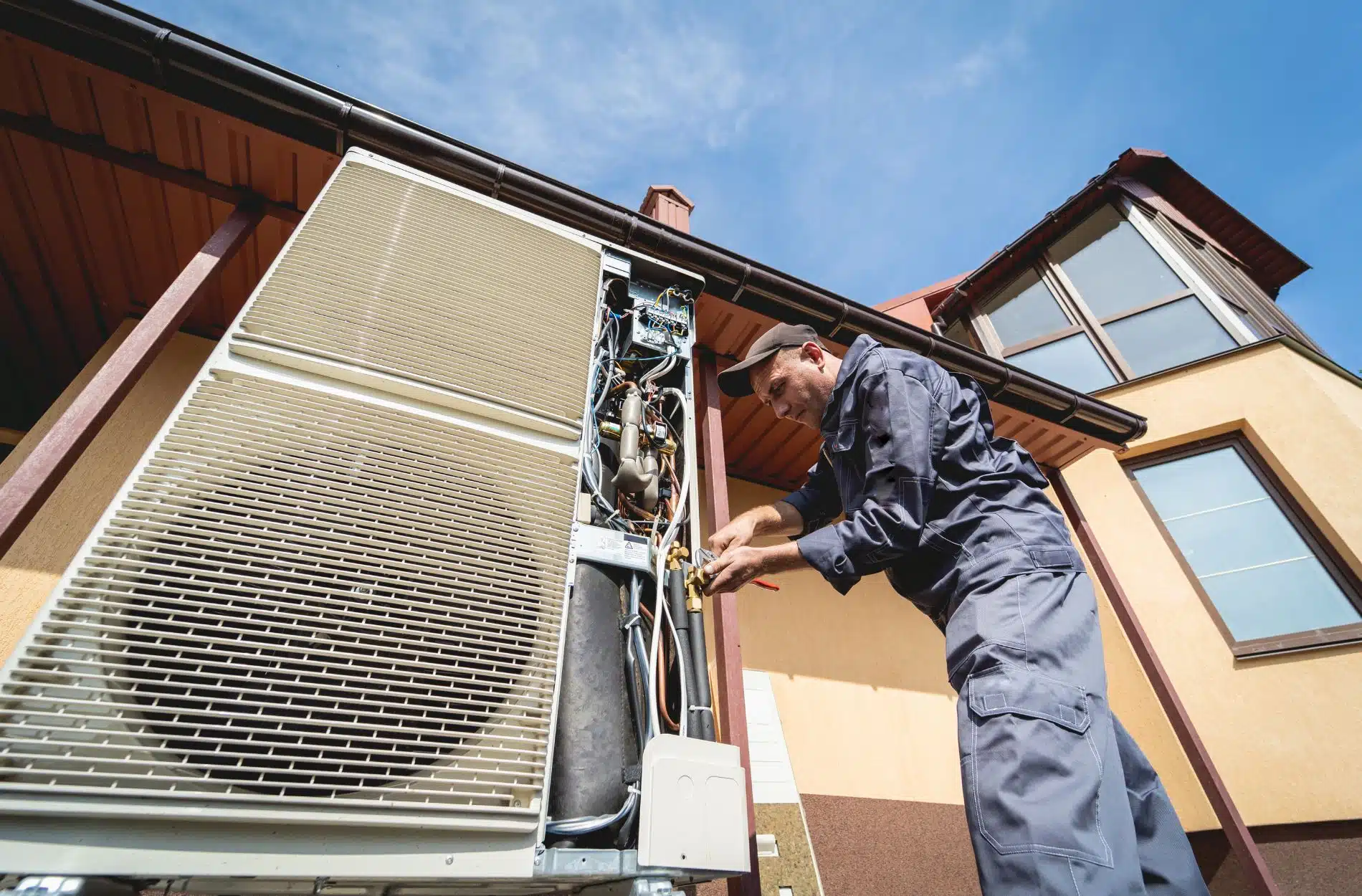
Before calling for a service visit, run through these basic checks. You would be surprised how often one of these simple steps resolves the issue:
- Check the thermostat settings. Confirm the thermostat is set to COOL (not HEAT or OFF), the fan is set to AUTO, and the temperature is set below the current room temperature. Also check the batteries if your thermostat uses them. A dead battery is one of the most common “AC failure” calls we receive.
- Check the air filter. A clogged filter restricts airflow and can cause the evaporator coil to freeze, the system to short cycle, or the unit to shut down entirely. Pull out the filter and hold it up to a light. If you cannot see light through it, replace it. In Florida, filters should be changed every 30 to 60 days during cooling season.
- Check the circuit breakers. Your HVAC system uses two breakers: one for the indoor air handler and one for the outdoor condensing unit. If either has tripped, reset it once. If it trips again immediately, do not keep resetting it—that indicates an electrical fault that requires a technician.
- Check the outdoor unit. Walk outside and look at the condensing unit. Is it running? Is it blocked by vegetation, debris, or a cover someone forgot to remove? Clear at least 2 feet of space around all sides. Rinse the condenser coil gently with a garden hose (from the inside out) if it is visibly dirty.
- Check the condensate drain line. The PVC drain line that exits near the indoor unit can clog with algae and slime, especially in Florida’s humidity. Many systems have a safety switch that shuts down the AC when the drain line backs up. Pouring a cup of white vinegar into the drain line access point once a month helps prevent clogs.
- Check the disconnect switch. Near the outdoor unit, there is a disconnect box. Open it and make sure the pull-out handle or fuses are properly seated. Sometimes landscapers or painters accidentally pull the disconnect.
These steps are safe, require no special tools, and resolve the problem roughly 20 to 30 percent of the time.
When You Must Call a Licensed HVAC Technician
Need help with AC & heating?
Inlet Mechanical’s licensed techs serve Brevard & Indian River with fast, dependable service and free estimates.
If the basic troubleshooting steps above do not solve the problem, or if you encounter any of the following situations, stop and call a professional. These issues involve high voltage, refrigerant, or complex mechanical components that require training and specialized equipment:
- The breaker trips repeatedly. A breaker that trips once may have been caused by a power surge (common during Florida thunderstorms). A breaker that trips repeatedly indicates a short circuit, ground fault, or failing component like a compressor. Continuing to reset the breaker can cause a fire.
- The system makes grinding, screeching, or banging noises. These sounds indicate mechanical failure—a failing bearing in the blower motor, a loose fan blade striking the housing, or a compressor with internal damage. Running the system with these symptoms can cause secondary damage that turns a $300 repair into a $3,000 one.
- Ice on the refrigerant lines or evaporator coil. While a dirty filter can cause icing, ice can also indicate low refrigerant, a failing blower motor, or a restricted metering device. Refrigerant is a regulated substance under EPA Section 608, and only certified technicians can legally handle it.
- The system blows warm air continuously. If the indoor fan runs but the air is not cold, the problem could be a failed compressor, a refrigerant leak, a bad capacitor, or a faulty reversing valve (on heat pumps). All of these require professional diagnosis and repair.
- You smell burning, electrical odors, or rotten eggs. A burning smell from the vents can indicate an overheating motor or melting wire insulation. Shut the system off immediately and call for service. A rotten egg smell could indicate a natural gas leak if you have a gas furnace—leave the house and call your gas company first, then an HVAC technician.
- The outdoor unit is running but the indoor fan is not (or vice versa). The two units must work in tandem. If one runs without the other, a control board, relay, or wiring issue is likely involved.
- Water is leaking into your home. A backed-up condensate line or cracked drain pan can dump water into your ceiling, walls, or floor. While the root cause may be as simple as a clogged line, water damage escalates quickly in Florida’s humid environment, so prompt professional service is important.
If you need a technician, our AC repair team in Melbourne, FL is available to diagnose and fix the issue quickly.
Common Mistakes Homeowners Make with DIY HVAC Repairs
Even well-intentioned troubleshooting can backfire. Avoid these common mistakes:
- Adding refrigerant yourself. Online videos make it look easy, but adding the wrong type or amount of refrigerant can damage the compressor and void your warranty. It is also illegal to vent refrigerant into the atmosphere.
- Replacing the capacitor without proper knowledge. Capacitors store electrical charge even when the power is off. A discharged capacitor can deliver a shock strong enough to cause serious injury. If you suspect a bad capacitor (humming outdoor unit that will not start), call a technician.
- Ignoring the root cause. Resetting a tripped breaker or thawing a frozen coil addresses the symptom, not the cause. If the underlying issue is not identified, the problem will recur and may cause progressive damage.
- Using a pressure washer on the condenser coil. High-pressure water bends the delicate aluminum fins and can push debris deeper into the coil. Always use a gentle garden hose spray.
Knowing when to call an HVAC technician versus attempting your own troubleshooting comes down to risk and refrigerant: filter swaps, thermostat checks, and breaker resets are fair DIY territory, but anything involving refrigerant, wiring, or gas is not. Inlet Mechanical is straightforward about repair costs upfront so you’re not guessing whether a service call is worth it.
Frequently Asked Questions
How much does an HVAC service call cost in Brevard County?
A diagnostic service call in the Melbourne and Palm Bay area typically costs $79 to $149. This covers the technician’s time to travel to your home, inspect the system, and diagnose the problem. Repair costs are in addition to the diagnostic fee. Many companies waive the diagnostic fee if you proceed with the recommended repair, and maintenance agreement customers often receive free or discounted diagnostics.
Can I void my AC warranty by attempting DIY repairs?
Yes, in some cases. Most HVAC manufacturers require that repairs be performed by a licensed contractor to maintain warranty coverage. If you attempt a repair that causes additional damage or if the manufacturer determines that unauthorized work was performed, the warranty claim could be denied. Always check your warranty terms before working on your system beyond basic filter changes and thermostat adjustments.
Should I turn off my AC if something seems wrong?
As a general rule, yes. If you hear unusual noises, smell burning, see ice forming, or notice water leaking, shut the system off at the thermostat. Running a malfunctioning system can cause additional damage. The one exception is a frozen coil—switch the system to FAN ONLY (not off) to circulate warm air across the coil and help it thaw, but do not switch it back to cooling mode until a technician has identified the cause of the freezing.
Knowing when to call an HVAC technician vs DIY troubleshooting helps you avoid unnecessary service calls and dangerous situations alike. When you need professional help in Melbourne, Palm Bay, or anywhere in Brevard County, call Inlet Mechanical at (321) 723-0858 or schedule service online. Our licensed technicians are ready to get your comfort restored safely.
Related Reading
- Are HVAC Maintenance Agreements Worth It in Florida?
- AC Fan Motor Failure: Warning Signs and What to Expect
Also Read: AC Fan Motor Failure: Warning Signs and What to Expect
From when to call an HVAC technician vs. DIY to emergency repairs, Inlet Mechanical has Palm Bay and Melbourne covered.
If when call hvac technician vs diy is affecting comfort or efficiency, Inlet Mechanical can inspect the equipment, confirm the root issue, and recommend the most practical HVAC solution for your property.
Talk to a Licensed Inlet Mechanical Pro
Whether it’s a repair, an upgrade, or a question, our team is ready to help homeowners and businesses across Brevard & Indian River County.
Licensed FL Mechanical (CMC1250858) · 85+ years combined experience · Free, no-obligation estimates
Written & Reviewed By
Inlet Mechanical Team
The Inlet Mechanical team brings over 85 years of combined experience in HVAC, plumbing, and mechanical construction across Florida. Our licensed professionals hold Florida Mechanical HVAC License (CMC1250858) and Florida Plumbing License (CFC1433105), along with EPA Section 608 certifications. Based in Brevard County, we serve residential, commercial, and industrial clients with expert knowledge of Florida building codes, climate-specific HVAC solutions, and local plumbing requirements. Every article is reviewed by our licensed technicians to ensure accuracy and practical value for Melbourne-area homeowners and businesses.
Last Updated: June 18, 2026