
If you hear a loud bang, thud, or hammering noise in your walls when you turn off a faucet, flush a toilet, or when your washing machine changes cycles, you are likely experiencing water hammer. This common plumbing phenomenon is more than just an annoying noise. Left unaddressed, water hammer can damage pipes, loosen joints, and eventually cause leaks that lead to water damage in your Melbourne, FL home. Understanding what causes water hammer and how to fix it can save you from costly repairs.
Water Hammer Banging Pipes Fix: What Causes Water Hammer
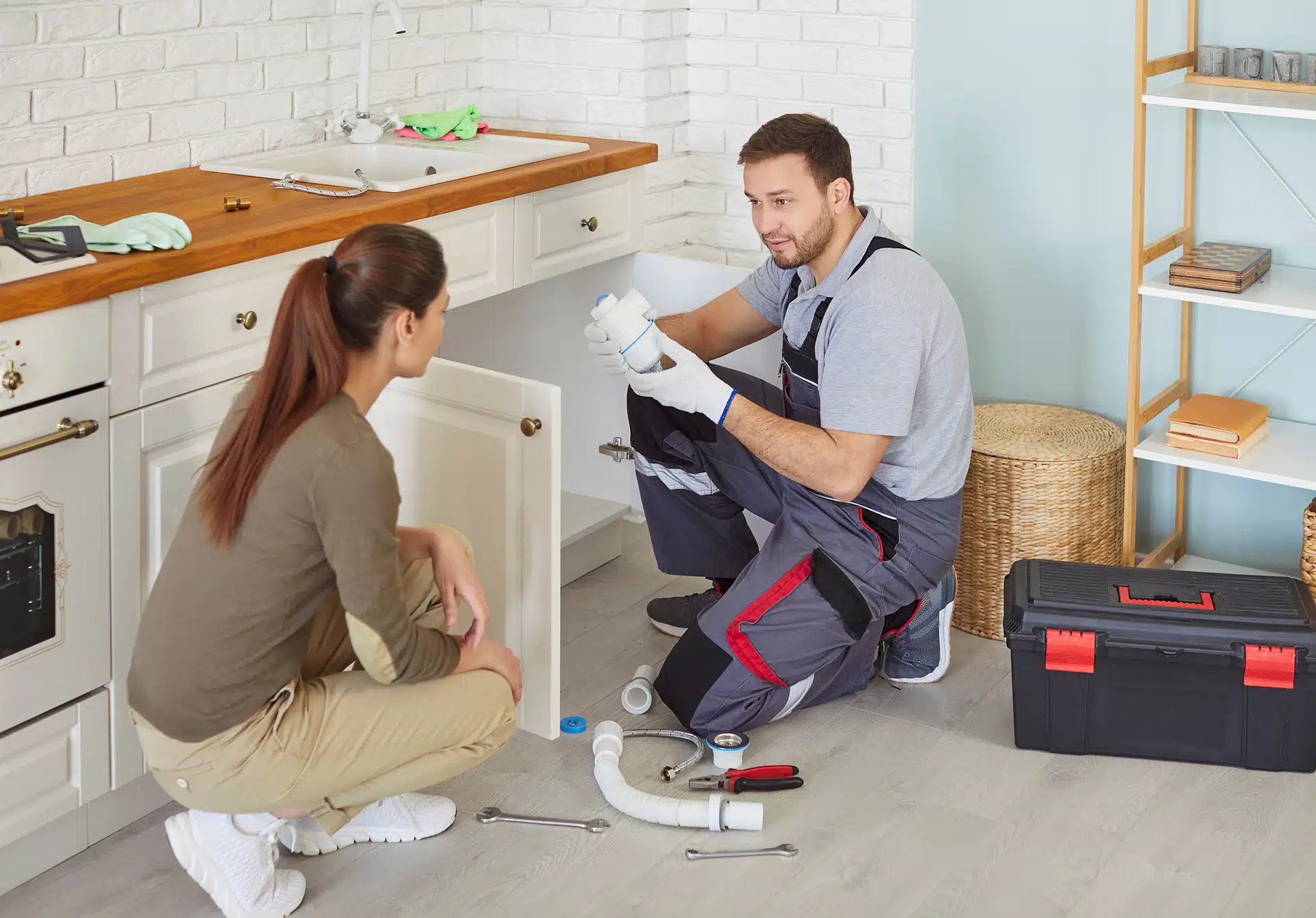
Water hammer, technically known as hydraulic shock, occurs when the flow of water in a pipe is suddenly stopped or redirected. Water is essentially incompressible, so when a valve closes quickly, the moving water has nowhere to go. The kinetic energy of the flowing water converts into a pressure wave that travels back through the piping system at the speed of sound, creating the characteristic banging noise and physical vibration in the pipes.
To put this in perspective, a half-inch copper pipe carrying water at a normal household velocity of about 8 feet per second can generate pressure spikes of 300 to 500 pounds per square inch when a valve closes suddenly. Normal household water pressure is typically 40 to 80 PSI, so these pressure spikes represent a dramatic, though momentary, increase that stresses every joint, connection, and fitting in the path of the wave.
Not sure what it will cost? Use our free plumbing cost estimator to get an instant estimate for your Brevard County home.
Several conditions in your Melbourne or Palm Bay home can cause or worsen water hammer:
Quick-closing valves. Modern single-handle faucets and quarter-turn ball valves close much faster than the older multi-turn gate valves they replaced. While convenient, these fast-closing valves are more likely to create water hammer because they stop the water flow almost instantaneously. Solenoid valves in washing machines, dishwashers, and ice makers also close very quickly and are among the most common triggers for water hammer.
High water pressure. If your home’s water pressure exceeds 60 PSI, you are more susceptible to water hammer because the water is moving faster through the pipes. In some areas of Melbourne and Palm Bay, municipal water pressure can reach 80 to 100 PSI or higher, depending on your elevation and proximity to the water system pumping stations. The Florida Plumbing Code limits residential water pressure to 80 PSI at any fixture, and a pressure reducing valve should be installed at the meter if the supply pressure exceeds this limit.
Failed air chambers. Many plumbing systems include short vertical sections of pipe, called air chambers, installed near fixtures and appliances. These chambers contain a cushion of air that compresses when a pressure wave hits, absorbing the shock and preventing the banging noise. Over time, the air in these chambers can become absorbed into the water, rendering them ineffective. This is a common issue in older Brevard County homes where the air chambers have been waterlogged for years.
Loose or improperly secured pipes. Pipes that are not adequately strapped or supported can move when hit by pressure waves, amplifying the noise and potentially causing damage at stress points. In Florida homes with attic-run water lines, which are common in single-story construction, pipes that are loosely laid across ceiling joists are particularly prone to movement and noise.
How to Fix Water Hammer in Your Home
Need help with plumbing?
Inlet Mechanical’s licensed techs serve Brevard & Indian River with fast, dependable service and free estimates.
The appropriate fix for water hammer depends on the underlying cause. Here are the most effective solutions, starting with the simplest.
Recharge your air chambers. If your home has air chambers, you can attempt to restore them by turning off the main water supply, opening the highest and lowest faucets in the house, and allowing all the water to drain from the system. This process empties the waterlogged air chambers and allows them to refill with air. Close the faucets, turn the water back on, and test for improvement. This simple procedure resolves water hammer in many cases and costs nothing to try.
Install water hammer arrestors. Water hammer arrestors are purpose-built devices that contain a sealed, gas-charged chamber and a piston or diaphragm that absorbs pressure shocks. Unlike air chambers, arrestors do not become waterlogged because the gas is permanently sealed. They are installed on the supply lines near the fixtures or appliances causing the problem. For washing machines, which are one of the most common sources of water hammer, stainless steel braided hoses with built-in arrestors are available at most hardware stores.
Install or adjust a pressure reducing valve. If your water pressure exceeds 60 PSI, installing a pressure reducing valve (PRV) at the main water entry point can significantly reduce water hammer. If you already have a PRV, it may need adjustment or replacement. PRVs typically last 7 to 12 years, and a failing valve can allow pressure to creep up over time. Your plumber can test your water pressure with a gauge and determine whether a PRV is needed or needs service.
Secure loose pipes. Adding pipe straps, cushioned hangers, or foam insulation around pipes that are rattling or banging against framing members can reduce noise and prevent damage. In accessible areas such as under sinks, in utility rooms, and in attic spaces, this is a relatively straightforward improvement. Pipes that are inaccessible inside walls may require opening the wall to properly secure them.
Replace problematic valves. In some cases, replacing a quick-closing valve with a slower-closing model can eliminate water hammer at a specific fixture. For automated valves in appliances, installing an arrestor on the supply line is usually more practical than modifying the appliance.
For businesses in Melbourne and Brevard County, Inlet Mechanical also offers commercial plumbing services including backflow testing, grease trap maintenance, and tenant buildouts.
Cocoa and Cocoa Beach residents can count on our Cocoa FL plumbing and HVAC team for fast, licensed service throughout northern Brevard County.
Palm Bay homeowners needing plumbing help can reach our local Palm Bay FL plumber team for same-day service and upfront pricing.
Trusted Resources: The U.S. Environmental Protection Agency addresses the importance of maintaining safe water supply through proper pipe maintenance. The U.S. Environmental Protection Agency recommends water-efficient fixtures when replacing or upgrading plumbing.
Banging pipes aren’t just annoying — water hammer puts real stress on fittings and valves that eventually gives way to a leak. Inlet Mechanical can diagnose the cause, whether it’s a missing air chamber, pressure spikes, or a faulty check valve, and fix it before the noise becomes a repair bill.
Frequently Asked Questions
Can I troubleshoot water hammer banging pipes fix myself before calling a technician?
You can perform basic checks like verifying your thermostat settings, checking the circuit breaker, inspecting the air filter, and ensuring vents are not blocked. However, if these steps do not resolve the issue, continuing to run the system could cause further damage. A licensed plumbing technician can diagnose the root cause safely and prevent costly repairs.
How urgent is it to address water hammer banging pipes fix?
The urgency depends on the severity of the symptoms. Minor issues like unusual noises or slight temperature fluctuations may allow you to schedule a convenient appointment. However, water leaks, complete system failures, gas odors, or electrical problems require immediate professional attention. In Brevard County, FL, Inlet Mechanical offers prompt service — call (321) 723-0858.
How much does it cost to fix water hammer banging pipes fix?
Repair costs vary depending on the specific cause, parts needed, and labor involved. Minor repairs such as replacing a capacitor or clearing a clog may cost $150 to $400, while major component replacements can range from $500 to $2,000 or more. A licensed technician will provide a detailed diagnosis and upfront quote before beginning any work.
When to Call a Professional
If recharging air chambers does not resolve the problem, or if the banging is severe, widespread, or accompanied by visible pipe movement, it is time to call a licensed plumber. Persistent water hammer can cause cumulative damage to pipe joints, particularly at copper solder joints and threaded connections in older Brevard County homes. The repeated stress can eventually lead to pinhole leaks or joint failures that cause water damage to walls, ceilings, and floors.
A professional plumber can measure your water pressure, evaluate your piping layout, identify the specific source of the problem, and recommend the most effective and economical solution. In some cases, a combination of approaches, such as a pressure reducing valve plus arrestors at key locations, is the best strategy.
Inlet Mechanical provides expert plumbing diagnosis and repair services throughout Melbourne, Palm Bay, and Brevard County. If water hammer is causing concern in your home, our licensed plumbers (CFC1433105) can evaluate your system and implement a lasting solution. Contact us for emergency plumbing service or call (321) 723-0858 to schedule an appointment.
Related Reading
- Palm Bay Water Quality: Should You Test Your Home Water
- Crawl Space Plumbing Issues Common in Brevard County
Also Read: Crawl Space Plumbing Issues Common in Brevard County
For expert help with fixing water hammer and banging pipes, call Inlet Mechanical at (321) 723-0858.
If water hammer banging pipes fix is starting to affect your home, Inlet Mechanical can inspect the plumbing, confirm the cause, and recommend the most practical next step before the repair grows.
Talk to a Licensed Inlet Mechanical Pro
Whether it’s a repair, an upgrade, or a question, our team is ready to help homeowners and businesses across Brevard & Indian River County.
Licensed FL Mechanical (CMC1250858) · 85+ years combined experience · Free, no-obligation estimates
Written & Reviewed By
Inlet Mechanical Team
The Inlet Mechanical team brings over 85 years of combined experience in HVAC, plumbing, and mechanical construction across Florida. Our licensed professionals hold Florida Mechanical HVAC License (CMC1250858) and Florida Plumbing License (CFC1433105), along with EPA Section 608 certifications. Based in Brevard County, we serve residential, commercial, and industrial clients with expert knowledge of Florida building codes, climate-specific HVAC solutions, and local plumbing requirements. Every article is reviewed by our licensed technicians to ensure accuracy and practical value for Melbourne-area homeowners and businesses.
Last Updated: May 15, 2026